
“The damages calculation is unrelated to the evidence, and the expert’s testing method differs from the one described in the patent documents.”
A San Diego jury awarded $5.72 billion on September 25, the largest verdict in U.S. patent litigation history. It rejected the claim that the infringement was willful.
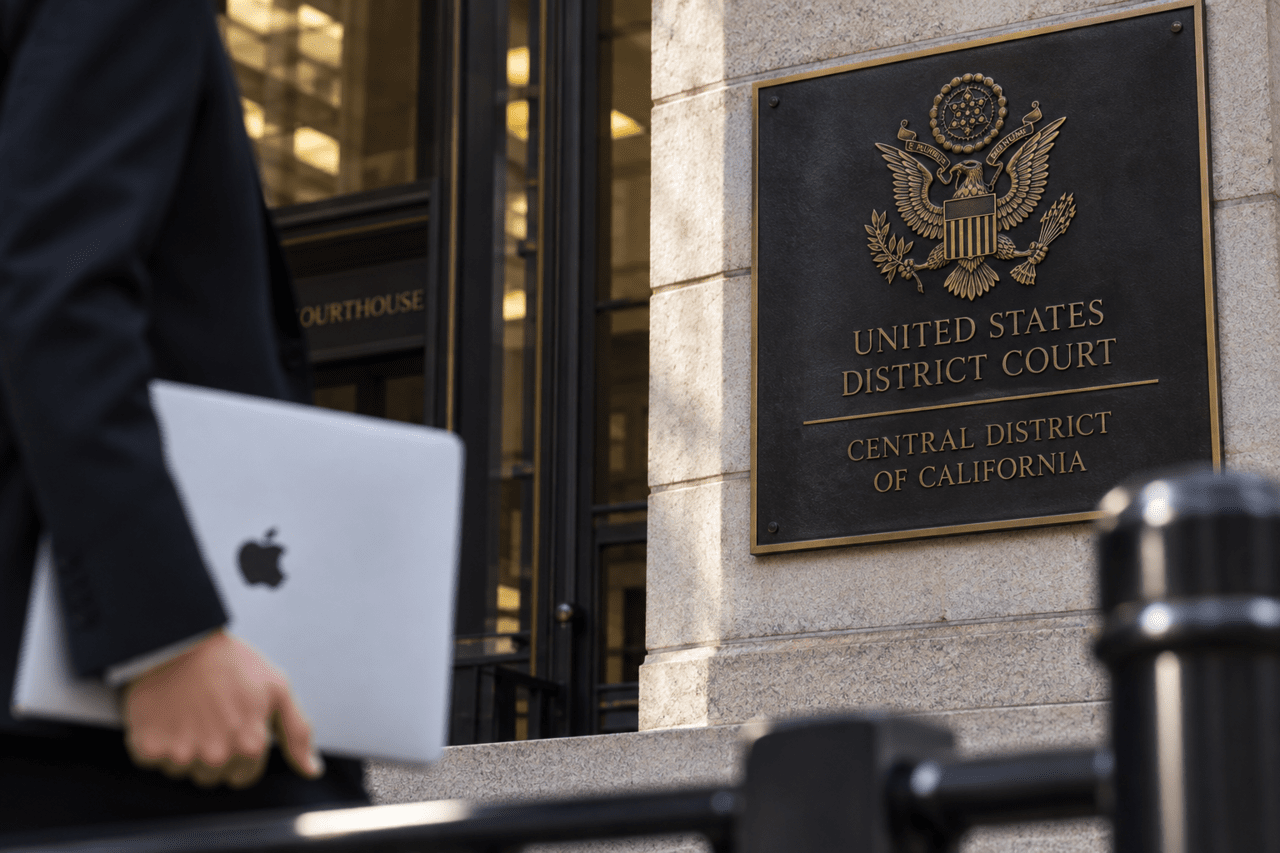
Apple has challenged the largest damages verdict in U.S. patent litigation history.
On October 15 (local time), Apple filed a post-trial motion in federal court in the Southern District of California seeking to overturn a jury’s $5.72 billion verdict in its patent lawsuit against vibration technology company Taction Technology, Reuters and Bloomberg reported.
Apple argued that the damages calculation was based on speculation without legal grounds, and asked the court to vacate the verdict or order a full retrial.
◆ Jury finds iPhone vibration device infringed two patents
The dispute centers on the Taptic Engine, the haptic-feedback device used in iPhones and Apple Watches. San Diego-based Taction makes vibration devices for headphones and gaming headsets. In 2021, it sued Apple, alleging infringement of two patents (U.S. Patent Nos. 10,659,885 and 10,820,117).
The patents cover haptic transducer technology that lets users feel low-frequency vibrations of 40 to 200 hertz through the skin. The technology uses magnetic fluid to dampen a moving mass and reduce resonance.
On September 25, a federal jury in San Diego found that Apple had infringed both patents and ordered it to pay Taction $5.72 billion. The jury rejected the claim of willful infringement.
The verdict form listed only the total amount; it did not disclose a royalty rate or the number of units covered. The previous record, a $2.18 billion verdict in the 2021 VLSI v. Intel case, was overturned on appeal in 2023.
◆ Apple says the jury “made up the number”
In its motion, Apple argued that there was a decisive error in the damages calculation. Patent damages require proof of a causal link between the actual value of an invention and the infringement, it said, but the $5.7 billion figure was inflated speculation rather than the result of a reliable economic analysis. Apple said Taction failed to establish the value of its patents, leaving the jury to make up a number.
Apple also challenged the technical testing. It argued that the testing method used by Taction’s expert at trial differed from the procedure specified in the patent documents and failed to show that Apple’s products fell within the patents’ claims. Apple said the Taptic Engine works differently from the technology covered by Taction’s patents.
Apple also cited remarks by the trial judge. Shortly before the verdict was read, U.S. District Judge Todd Robinson said he was unsure whether the amount written on the verdict form accurately reflected the jury’s intent.
Apple asked the court to vacate the verdict and enter judgment that it had not infringed. If the court declined, it requested a new trial to reconsider infringement, damages and patent validity from the beginning.
◆ Apple won in 2023, but the ruling was overturned on appeal
Apple had previously won the case. In 2023, Judge Robinson excluded the opinion of Taction’s infringement expert, ruling that it went beyond the scope of the infringement allegations submitted earlier in the case. He also narrowly interpreted the patent claim term “highly damped output” as mechanical damping with a Q factor below 1.5, and granted Apple summary judgment of noninfringement.
On August 13 last year, the U.S. Court of Appeals for the Federal Circuit overturned the ruling, finding that excluding the expert’s testimony was an abuse of discretion and that the claim had been misinterpreted. The case returned to San Diego, where a jury trial began on September 14 this year. The verdict came 11 days later.
Taction has not yet made a public statement on Apple’s new motion. After the verdict, a lawyer for Taction said the company had waited more than five years to protect its patents. The verdict has not yet been finalized as a judgment. If Judge Robinson denies Apple’s motion, Apple can appeal to the Federal Circuit, and the company has said it intends to do so.