
One-minute news
▶ On Nov. 9 (local time), the U.S. Food and Drug Administration (FDA) required drugmakers to add the risk of nonarteritic anterior ischemic optic neuropathy (NAION) to the “Warnings and Precautions” sections of the prescribing information for all glucagon-like peptide-1 (GLP-1) receptor agonists, including Wegovy, Ozempic, Mounjaro and Zepbound.
▶ NAION is a condition in which reduced blood flow to the front of the optic nerve causes a sudden, painless loss of vision in one eye. It can lead to permanent vision damage.
▶ The evidence came from a pooled analysis of 126 clinical trials involving 134,253 patients. There were 15 cases considered likely to be NAION. Per 100,000 patient-years of observation, the rate was 6.4 cases in the GLP-1 treatment group, compared with 3.8 in the placebo or other glucose-lowering drug control groups.
The FDA has required a warning about the risk of a rare optic nerve disorder to be added to the prescribing information for all GLP-1 drugs, including Wegovy and Mounjaro. An analysis of clinical trials found that the condition occurred at a rate about 1.7 times higher in the treatment group than in the control group. (Photo: Solution News/Magnific; reproduction and database use prohibited.)
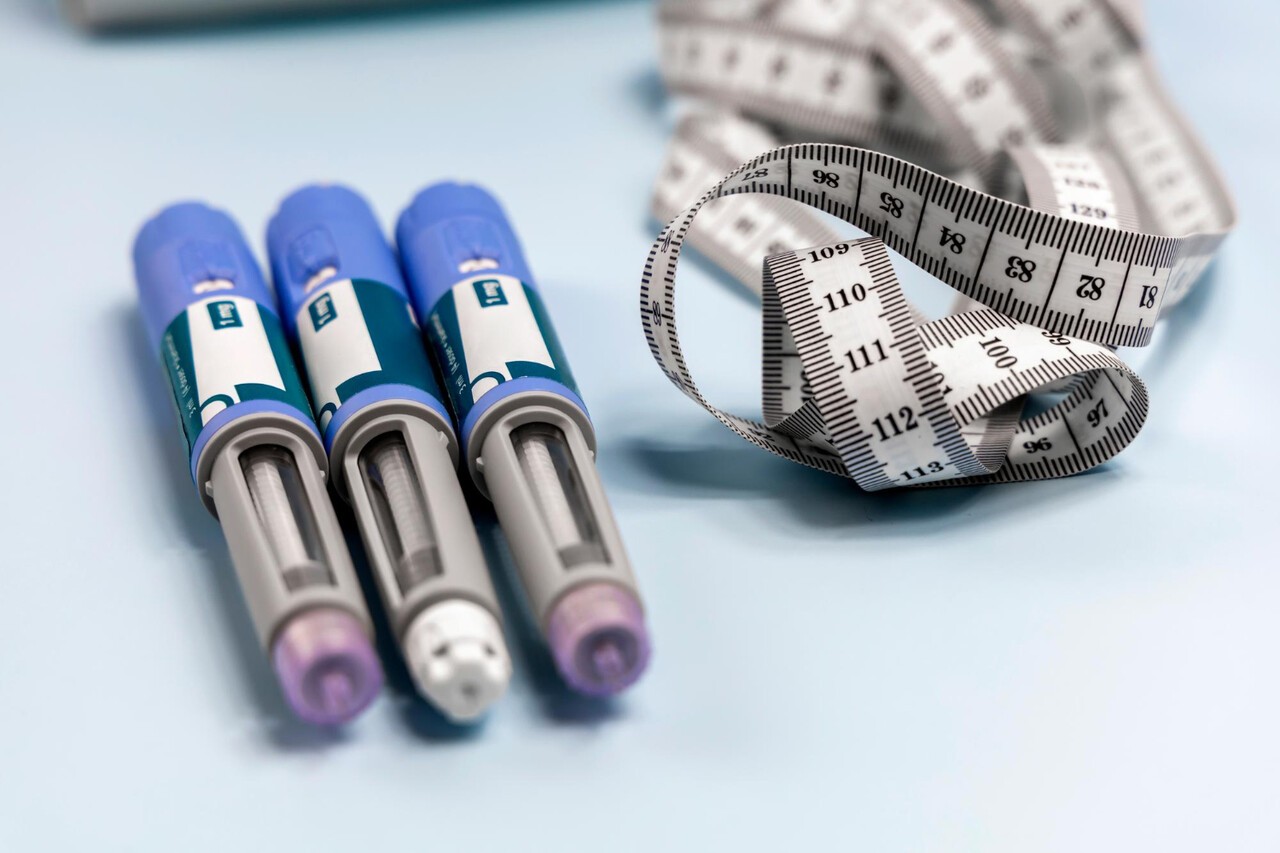
Warnings about vision damage are to be added to obesity and diabetes drugs such as Wegovy and Mounjaro. The FDA has required that the prescribing information for all GLP-1 drugs reflect the risk of a rare optic nerve disorder.
In a safety notice on Nov. 9 (local time), the FDA said it had asked drugmakers to state in the “Warnings and Precautions” section of the prescribing information for all glucagon-like peptide-1 (GLP-1) receptor agonists that the drugs may increase the risk of nonarteritic anterior ischemic optic neuropathy (NAION).
The drugs covered include Wegovy and Ozempic, sold by Novo Nordisk, and Mounjaro and Zepbound, made by Eli Lilly. The measure applies to the entire GLP-1 class, rather than to a specific ingredient or product.
The measure is distinct from a “Boxed Warning,” the FDA’s strongest warning. The agency recommended that patients be advised to contact a health care professional immediately if they experience sudden vision loss or changes in their field of vision. Anyone suspected of having NAION should receive prompt eye care. If the condition occurs, discontinuing treatment should be considered unless the benefits of the medication clearly outweigh the risks.
What is NAION?
NAION is a condition in which reduced blood flow to the front of the optic nerve damages the nerve. It is commonly known as an “eye stroke.”
The typical symptom is a sudden, painless loss of vision in one eye. Part of the visual field may disappear, or vision may decline significantly. Because damage to the optic nerve is difficult to reverse, the condition can lead to permanent vision loss.
It occurs mainly in people aged 50 and older. Diabetes, high blood pressure and sleep apnea are known risk factors. The FDA puts the annual incidence in the general population at 2.3 to 10.2 cases per 100,000 adults aged 50 and older.
To assess the risk, the FDA pooled data from 126 randomized controlled trials conducted during the development of GLP-1 drugs. The analysis included 134,253 patients: 78,217 in the GLP-1 treatment groups and 56,036 in the control groups.
The analysis identified 15 cases considered likely to be NAION: 10 in the GLP-1 treatment groups and five among patients given a placebo. No cases were identified in the control groups using other classes of glucose-lowering drugs.
After accounting for the total observation period, the incidence was 6.4 cases per 100,000 person-years in the GLP-1 treatment groups. The rate in the control groups, which included patients given a placebo or other glucose-lowering drugs, was 3.8.
The incidence in the treatment groups was about 1.7 times higher. The absolute difference was 2.6 cases per 100,000 person-years. A person-year is a statistical measure that combines the number of patients with the duration of observation. One hundred thousand person-years is equivalent to following 100,000 patients for one year.
The FDA said cases of NAION have been reported with all GLP-1 products sold in the United States. Animal studies did not identify a mechanism by which the drugs might cause the condition. The agency also said postmarketing adverse-event reports have limitations, in part because of existing risk factors such as diabetes and high blood pressure.
A 2024 Harvard study set the process in motion
The potential link between GLP-1 drugs and NAION came under serious discussion in July 2024. Researchers at Harvard Medical School and Massachusetts Eye and Ear published an observational study reporting an elevated risk of NAION among patients prescribed semaglutide, the active ingredient in Wegovy and Ozempic.
The FDA subsequently reviewed clinical trials, postmarketing adverse-event reports and medical records. The findings varied depending on the comparator drug and analytical method used.
In an analysis of real-world care data, the FDA found that new users of GLP-1 drugs had a 43% higher risk of NAION than users of DPP-4 inhibitors, a statistically significant difference. However, there was no statistically significant difference compared with users of SGLT-2 inhibitors.
Studies in Scandinavia and analyses of U.S. medical records observed signals of increased risk. A Cleveland Clinic study did not find a statistically significant increase.
The FDA said it required the labeling change because several studies showed signals of increased risk. In its official announcement, the agency did not state definitively that the drugs directly cause NAION, instead referring to the possibility that they may increase the risk of the condition.
The European Medicines Agency (EMA) took safety action before the United States. In June 2025, the EMA’s safety committee concluded that there was sufficient evidence of a causal relationship between semaglutide and NAION. It classified NAION as a “very rare side effect” of semaglutide and recommended adding it to the product information for Wegovy, Ozempic and Rybelsus.
The EMA’s decision applies to semaglutide. The FDA’s measure differs in that it extends coverage to the entire GLP-1 class, including tirzepatide.
Drugmakers say causal link is unproven; 247 lawsuits filed
The FDA announced on Nov. 9 (local time) that GLP-1 drugs may be associated with an increased risk of a rare optic nerve disorder and required warnings to be added to their prescribing information. (Photo: Screenshot from the official FDA website.)
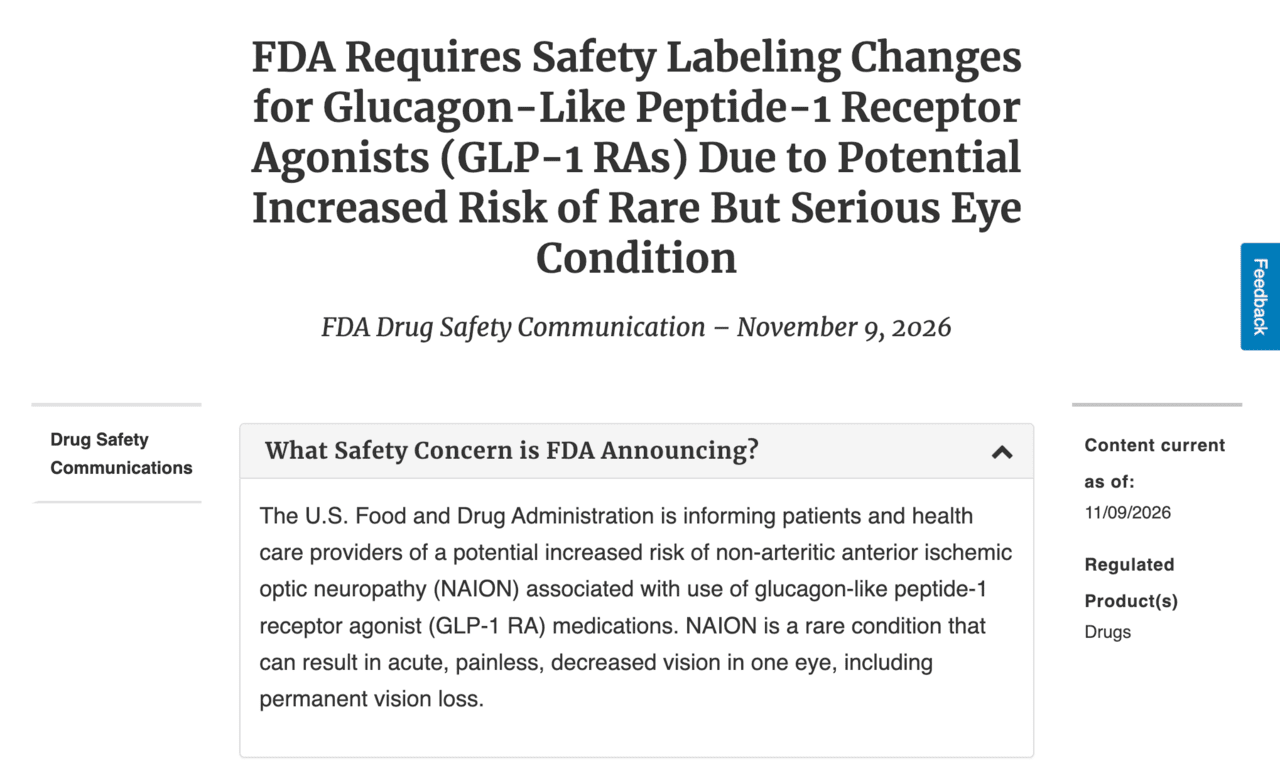
Drugmakers are responding to the FDA’s action while maintaining that a causal relationship between the drugs and the optic nerve disorder has not been established.
Novo Nordisk told Reuters on Nov. 9 that the data currently available do not establish a causal relationship between semaglutide and NAION. The company also expressed confidence in the overall assessment of the benefits and risks of its medicines.
Eli Lilly said it was reviewing the FDA’s announcement. It also emphasized that the measure applies to the entire GLP-1 class, rather than to a specific product.
In the United States, patients who say they lost their vision after using GLP-1 drugs have filed lawsuits against drugmakers. The plaintiffs allege that manufacturers failed to adequately inform them of the relevant risks.
There have also been compensation cases in Europe. In November 2025, Denmark’s Patient Compensation Association decided to award a total of about 800,000 Danish kroner to four patients who developed NAION after using Wegovy or Ozempic.
104 patients in South Korea treated for NAION after prescriptions: 67 Wegovy users and 37 Mounjaro users
Patients in South Korea have also been identified as having received treatment for an optic nerve disorder after using GLP-1 obesity drugs.
According to data submitted by the Health Insurance Review and Assessment Service to Nam In-soon, a Democratic Party lawmaker on the National Assembly’s Health and Welfare Committee, 104 patients received treatment for NAION after being prescribed Wegovy or Mounjaro. Of these, 67 had been prescribed Wegovy and 37 Mounjaro. The data cover October 2024 through August 2026 for Wegovy, and August 2025 through August 2026 for Mounjaro. These figures count patients with a record of NAION treatment after receiving a prescription; they should not be confused with the number of patients whose condition was caused by the drugs.
Last month, Food and Drug Safety Minister Oh Yu-kyoung told a parliamentary audit by the National Assembly’s Health and Welfare Committee that one suspected case of NAION after Wegovy use had been reported in December 2024. On the 7th of last month, the Ministry of Food and Drug Safety added information about the NAION risk to Wegovy’s approved product labeling—about a month before the FDA issued its safety notice.
The FDA’s action is expected to bring renewed attention to the safety oversight of GLP-1 drugs in South Korea as well.