
Key points
▶ The U.S. technology publication The Information reported on November 6 (local time) that Nvidia had asked TSMC to produce 3D DRAM to address memory supply shortages. TSMC has reportedly begun drawing up plans for related production.
▶ On November 7, TSMC reaffirmed its commitment to focusing on its foundry business. However, it did not give a specific answer about whether Nvidia had made the request or whether it had plans to develop or produce 3D DRAM.
▶ 3D DRAM is an emerging technology that stacks memory cells vertically to increase density. Samsung Electronics, SK Hynix and Micron are also developing the technology, but commercialization is expected to take considerable time.
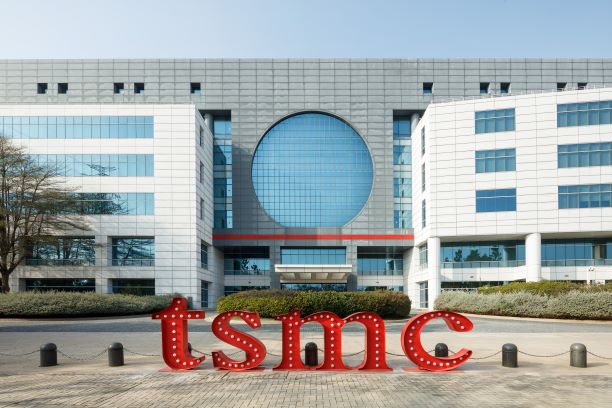
Reports have emerged that TSMC, the world’s largest semiconductor foundry, is considering producing 3D DRAM, a next-generation memory technology. The reports say Nvidia asked the company to produce it in response to memory supply shortages.
Tom’s Hardware, a U.S. technology publication, reported on November 7 (local time) that a TSMC spokesperson said, “TSMC has always focused on its core business of semiconductor foundry services.”
TSMC added, “Our mission is to provide the global logic semiconductor industry with reliable technology and production capacity.” The company emphasized its existing business principles but did not explicitly rule out entering the 3D DRAM market.
Nvidia’s request for 3D DRAM
The reports began with an article published by The Information on November 6. Citing two sources, the publication said Nvidia had asked TSMC to produce 3D DRAM and that TSMC had begun preparing production plans.
The report also said the effort is being led by a TSMC vice president in charge of advanced packaging, who previously headed Micron’s Taiwan operations.
The specific investment approach has not been confirmed. It is also unclear whether TSMC would build a new factory or acquire and convert an existing production facility. The size of the investment and the timing of mass production are likewise uncertain.
The backdrop is growing pressure on memory supplies in the AI semiconductor market. As investment in AI data centers expands, demand for high-bandwidth memory (HBM) and server DRAM is rising rapidly. Higher memory prices and supply constraints are also weighing on Nvidia as it seeks to expand AI chip production.
TSMC is a key partner in manufacturing Nvidia GPUs. It also plays an important role in advanced semiconductor manufacturing and high-performance packaging. If Nvidia were to secure TSMC as a new memory supplier, it could diversify a supply chain currently concentrated among existing memory makers.
3D DRAM stacks memory like NAND, but presents greater technical challenges
3D DRAM is a next-generation semiconductor technology that increases density by arranging memory cells vertically.
Conventional DRAM has mainly pursued miniaturization using a planar structure. By contrast, 3D DRAM aims to store more data in the same area by stacking cells vertically. Three-dimensional NAND flash, which stacks hundreds of layers, is already commercially available. DRAM, however, faces different challenges.
DRAM has a complex structure involving capacitors that store data and transistors that control them. Stacking cells vertically makes manufacturing processes and wiring design more difficult. Heat management and achieving acceptable yields are also challenges.
Samsung Electronics, SK Hynix and Micron are all developing related technologies, but none has reached the stage of full-scale commercial production. Micron has included first- and second-generation 3D DRAM in its technology roadmap, but has not disclosed the specific structures or production schedules. For the time being, it also plans to continue scaling conventional planar DRAM.
At its Future Forum last September, SK Hynix outlined an approach to developing 3D DRAM that uses logic foundry processes. The plan is to advance not only memory-cell technology but also the manufacturing of peripheral circuits.
DRAM production is a separate challenge
For TSMC to enter the memory market, it would first have to overcome significant technical barriers. The company has achieved world-leading capabilities in advanced logic semiconductor manufacturing.
DRAM uses different structures and process conditions. In particular, memory-cell and capacitor manufacturing depend on process expertise and patents accumulated over many years. The ability to produce advanced logic chips does not mean a company can immediately begin mass-producing DRAM.
Even if TSMC acquired an existing memory maker, it could take years of research and development and investment totaling billions of dollars.
TSMC’s business structure is a consideration no less important than the technical challenges. Its growth has been built on a pure-play foundry model in which it does not compete directly with its customers.
Samsung Electronics, SK Hynix and Micron compete in the memory market, but they work with TSMC in semiconductor manufacturing and packaging.
A prominent example is the next-generation HBM partnership announced by SK Hynix and TSMC in 2024. The companies are working together to develop base dies for next-generation HBM and to advance packaging technology. A base die sits beneath the HBM stack and supports memory operation and signal transmission. TSMC is expanding its role in the AI memory supply chain without manufacturing memory itself.
If TSMC were to produce DRAM directly, it could end up competing with memory makers that are already its customers. That could conflict with the business principles the company has maintained.
Some observers say TSMC’s past experience in memory-related production leaves open the possibility that it could consider a new business in the sector.
Attention turns to diversification in South Korea’s semiconductor industry
The most notable aspect of the report is the influence Nvidia has on the memory supply chain.
Today, the AI semiconductor market is structured around Nvidia designing chips, TSMC manufacturing them, and companies including Samsung Electronics, SK Hynix and Micron supplying memory. Each company plays a distinct role in the supply chain based on its core technologies.
If Nvidia secures a new memory supplier, it could reduce its dependence on existing manufacturers. A broader supplier base could also give it an advantage in negotiations over pricing and supply volumes. This makes technological competitiveness and stable customer relationships even more important for memory makers.
The development could also create a new business opportunity for TSMC. If the company, which currently handles logic chip manufacturing and advanced packaging, expanded into memory production, its role in the AI semiconductor supply chain would grow. The investment burden of expanding its business and its existing partnerships with customers are likely to be key considerations.
Securing next-generation memory technology is becoming an important task for South Korea’s semiconductor industry. 3D DRAM differs from HBM in both structure and use. If vertical stacking technology advances and commercialization takes off, it could create a new competitive landscape in the memory market.
Samsung Electronics and SK Hynix will need to maintain their competitiveness in the HBM market while also strengthening next-generation DRAM development and advanced packaging capabilities.
The reports of a possible market entry show that competition in AI semiconductors is expanding beyond chip design and manufacturing into the memory supply chain. Access to memory technology and reliable production capacity are likely to become major factors shaping competition among semiconductor companies.