
One-minute news
▶ The Roadster Tesla demonstrated on Oct. 15 at SpaceX’s test site in McGregor, Texas, flew using two devices.
▶ One was a fan system that sucked the car down onto the road; the other was a cold-gas thruster that propelled and lifted it by expelling compressed air.
▶ The fan kept the car attached to an upside-down track, while the thrusters made it rotate in midair and leap over five vehicles.
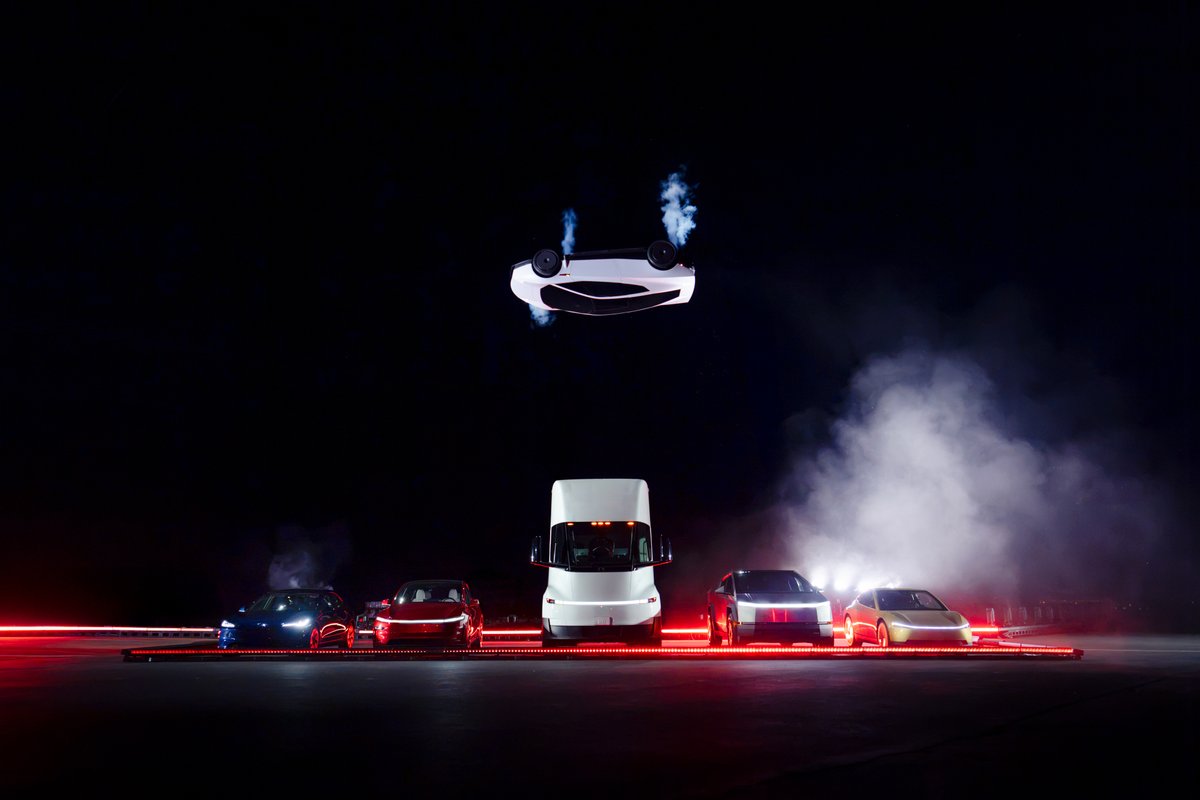
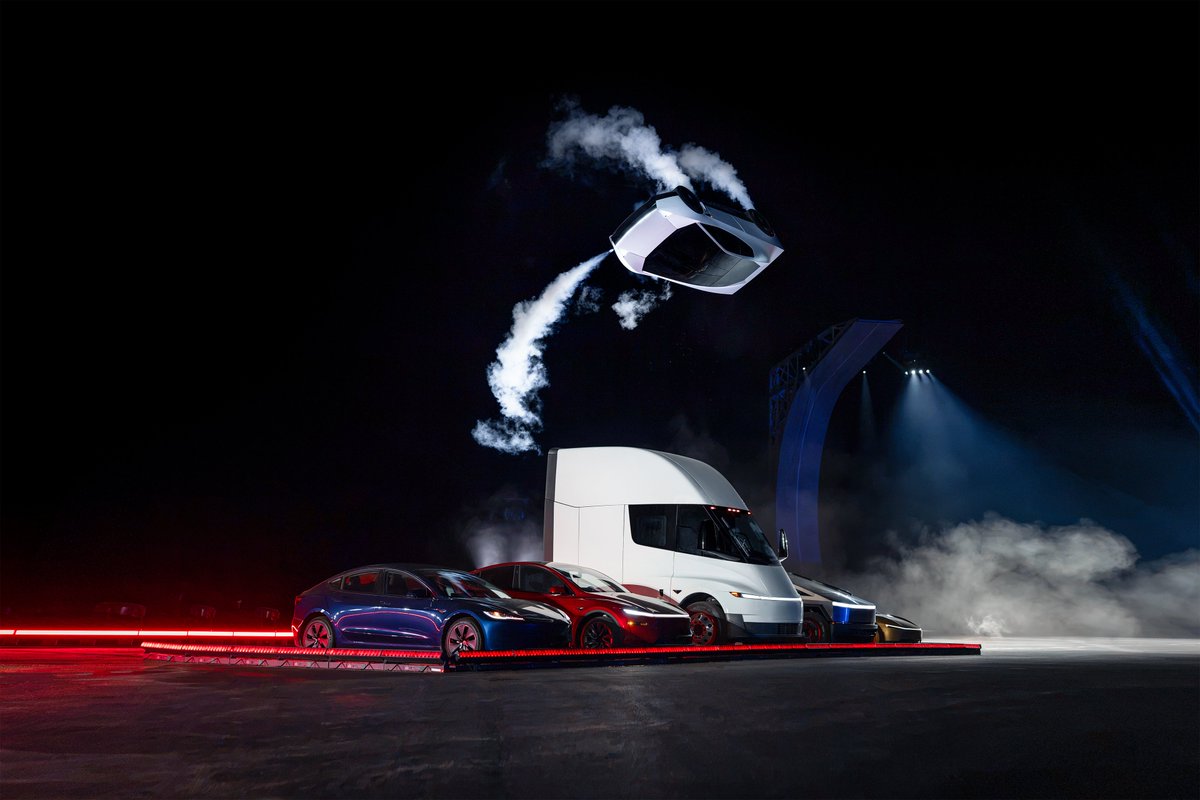
The Roadster Tesla demonstrated on Oct. 15 (local time) at SpaceX’s test site in McGregor, Texas, dropped from an upside-down track, completed a full rotation in the air and landed.
It also cleared five vehicles, including a truck. Tesla said the feat was made possible by compressed-air thrusters and a fan system that creates suction beneath the car.
It was the first time an automaker had demonstrated aerial maneuvers using rocket components installed in a production car.
Based on Tesla’s materials, technical analyses published after the demonstration and analysts’ assessments, this article examines the devices that lifted the Roadster, what they can and cannot do, and why Elon Musk brought in SpaceX engineers to work on a car that is unlikely to make money. It also looks at how close flying cars have come to reality.
◆ Device 1: Fans that suck the car down onto the road
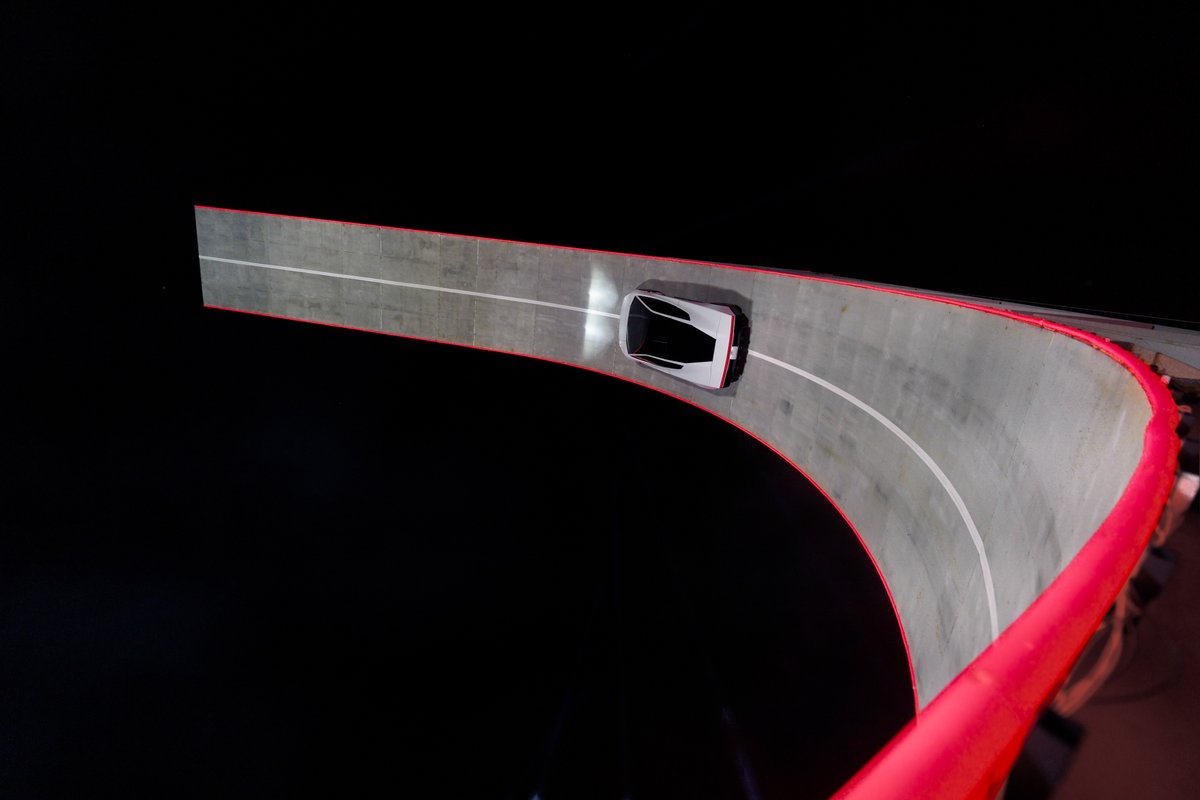
Look again at the first scene of the demonstration. The Roadster raced up a roller-coaster-like curved track and attached itself upside down to the ceiling. The reason it did not fall was not the thrusters. It was a large fan mounted underneath the car.
The principle is the same as that of a vacuum cleaner. When the fan draws air out from beneath the car, the pressure under the vehicle falls below the pressure outside it. The surrounding air then pushes the car toward the road. A skirt around the car prevents outside air from leaking underneath.
Tesla calls it a “multi-mode adhesion system.” Its purpose is similar to that of the wings that press a race car down onto the track at speed, but the fan works even when the car is stationary. British company McMurtry once demonstrated its Spéirling race car sticking upside down to a surface using the same approach, generating two tonnes of downforce on a one-tonne car.
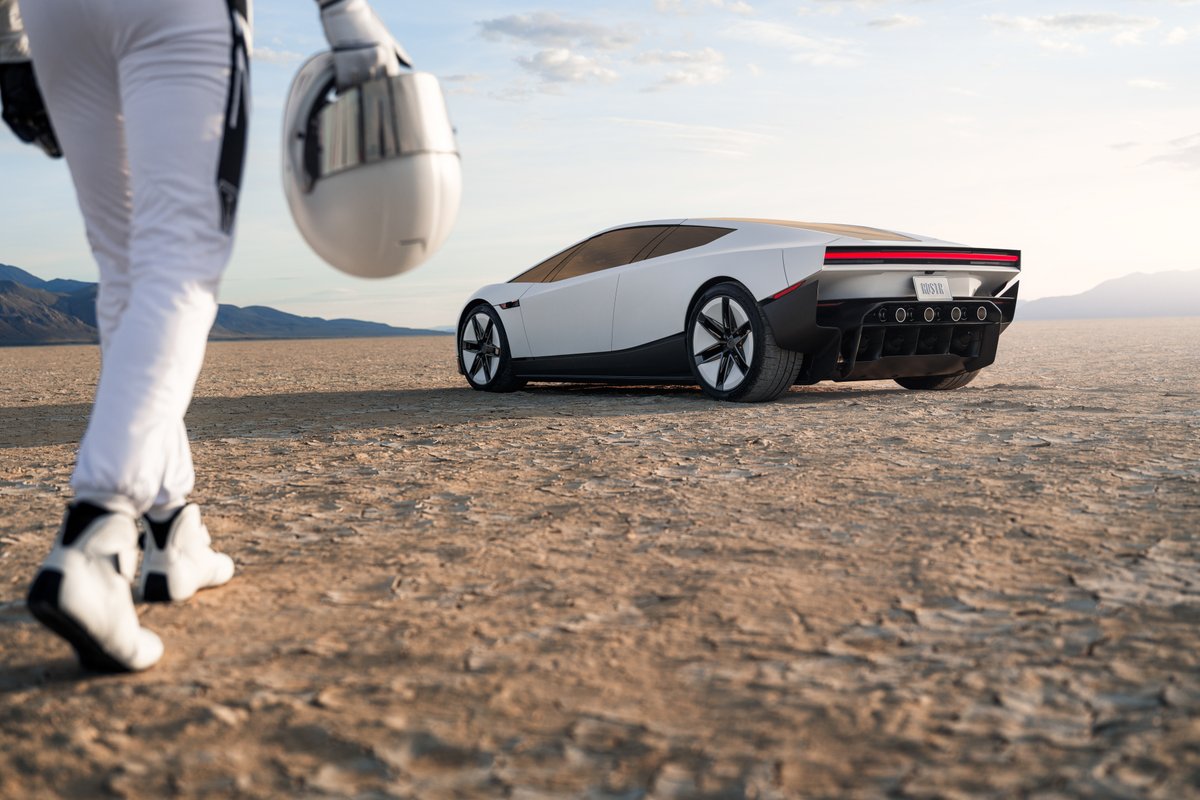
Tesla displayed a downforce figure of 4,700 kilograms during the demonstration. Electric-vehicle publication Electrek questioned the figure, saying it seemed excessive for a car weighing less than two tonnes. In September, Tesla also filed a patent for an “electric fan car” equipped with four ducted fans underneath. The road-going Performance version will also have a suction system, intended to keep the car planted during cornering.
◆ Device 2: A rocket without fuel—the cold-gas thruster
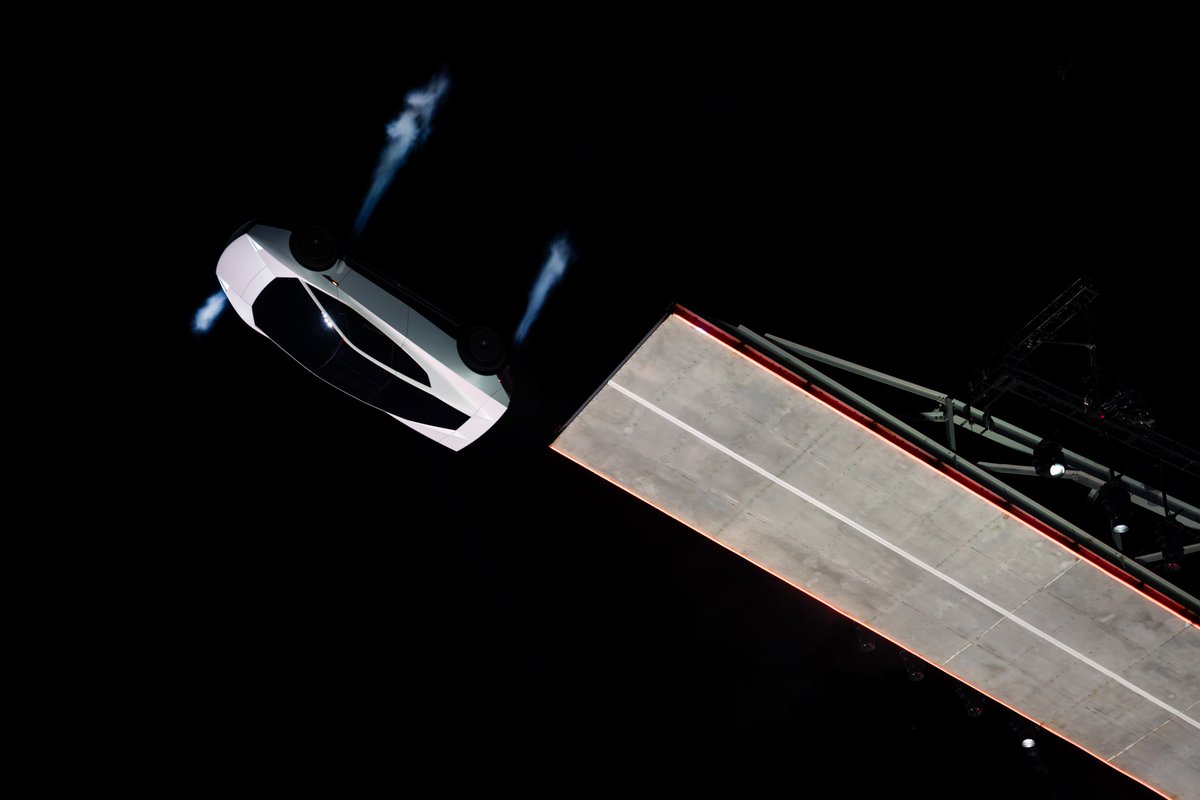
The thrusters made the car rotate in midair and leap over the other vehicles. Musk said it “flies like a rocket,” but it is different from a rocket that emits flames. The system uses cold-gas thrusters.
A rocket burns fuel and an oxidizer to produce hot gas. A cold-gas thruster does not burn anything. It simply releases gas that has been compressed in advance through a nozzle.
The principle is like blowing up a balloon and letting it go. The force is much weaker than that of a rocket, but the system is simple, does not produce flames and can be switched on and off repeatedly.
Cold-gas thrusters are used on spacecraft to make small changes in direction. SpaceX’s Falcon 9 rocket uses nitrogen cold-gas thrusters to flip around and orient itself as its first-stage booster returns after launch.
Musk said back in 2018 that he planned to modify the cold-gas thrusters used on Falcon 9 and install about 10 of them on the Roadster. Eight years later, that promise has become a physical product.
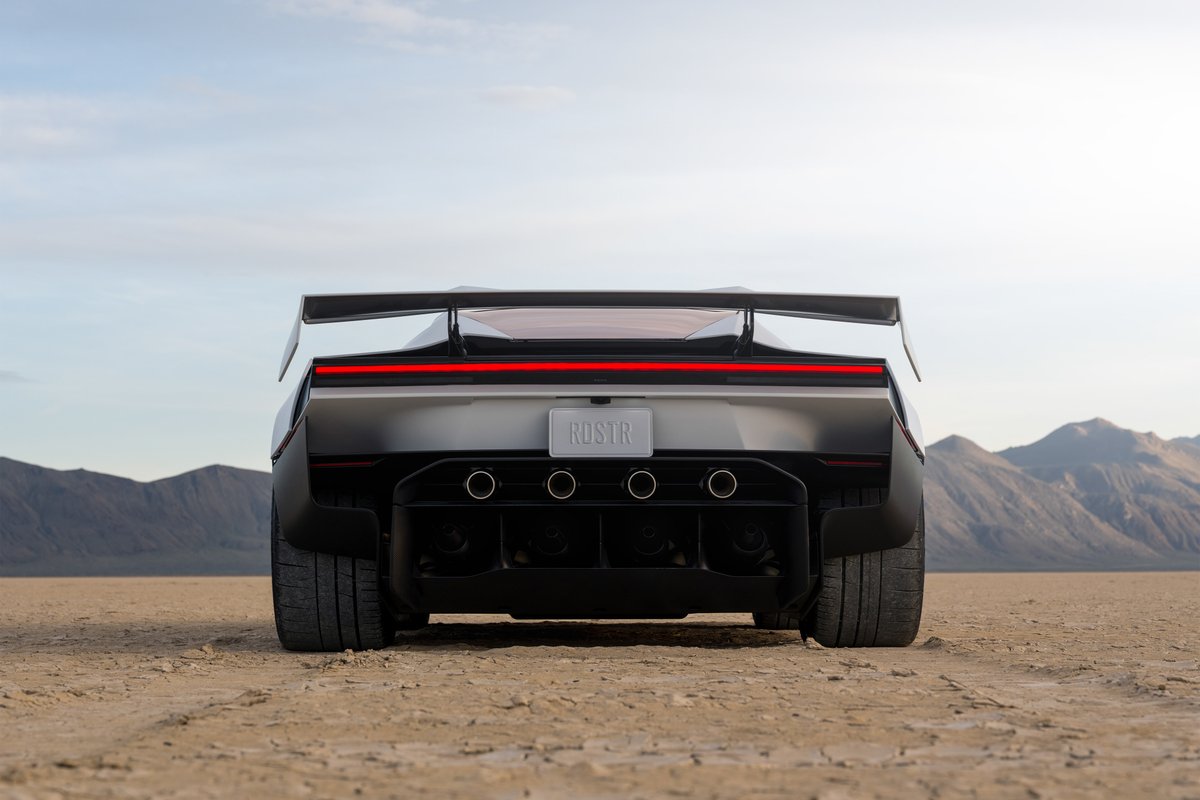
The Roadster uses air as its propellant. Lars Moravy, Tesla’s vice president of vehicle engineering, said during the demonstration that 10 nozzles connected to 600 liters of compressed-air tanks lift and rotate the car.
There are two tanks, containing about 250 kilograms of air. The pressure is 10,000 psi, or roughly 680 atmospheres—more than three times the pressure in a typical scuba tank, which is about 200 atmospheres. To withstand such pressure, the tanks must be composite overwrapped pressure vessels (COPVs), reinforced with carbon fiber.
They are the same kind of component SpaceX uses for helium tanks inside its rockets. Tesla said it filled all the available space inside the car with COPVs. Electrek speculated that the reason the flying “Rocket” version seats only one person is that the tank occupies the passenger seat.
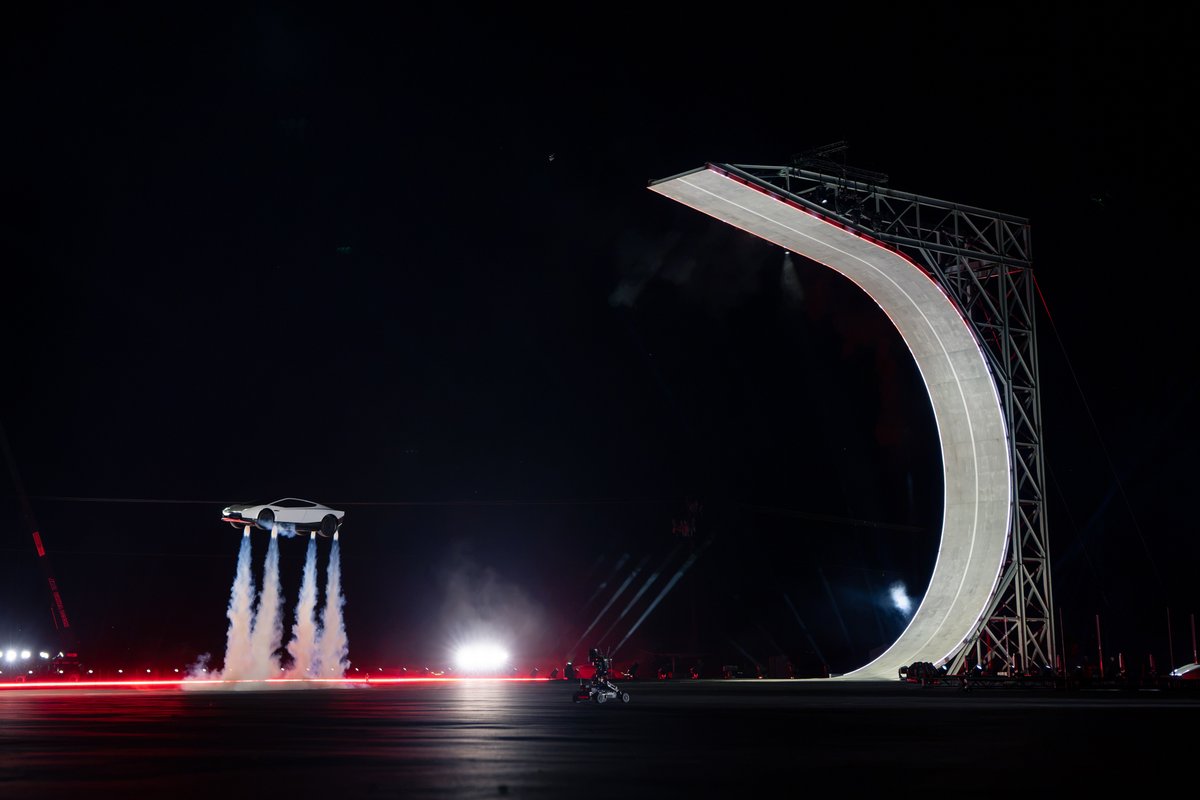
Four nozzles are clustered at the rear of the car. These are the main thrusters, which push the vehicle forward. The remaining nozzles are distributed along the sides and underneath, where they help control the car’s position in the air. These are the “attitude-control thrusters and rear main thrusters” Musk has described. Tesla said the thrusters produce four to five times more force than the tires can generate against the ground.
Why compare them with tires? A car’s acceleration has an upper limit. No matter how powerful the motor is, the car cannot accelerate beyond the force the tires can apply to the ground through traction. The tires would simply spin.
That is why accelerating from zero to 96 kilometers per hour in 1.9 seconds is often regarded as the limit for a production car. Thrusters bypass the tires. They propel the car directly by expelling air backward. Tesla therefore claims the racing-oriented Thrust can do the sprint in 0.9 seconds, and the Rocket in less than 0.59 seconds.
The leap works on the same principle. As the car drives forward, it expels air through nozzles underneath to rise, uses side nozzles to control its position, and then comes back down.
A compressor installed in the car refills the tanks. Musk said the car “inflates itself and can perform these maneuvers whenever you want.” Tesla touts the fact that, unlike a car with a solid-fuel rocket that must have its fuel replaced after a single use, the air does not need to be replaced.
◆ What it can and cannot do
The demonstration was real. But the system can do less than one might expect.
The car can stay in the air for only a few seconds. Expelling 250 kilograms of air through 10 nozzles quickly empties the tanks. Tesla has not disclosed how long it can hover, how long it takes to refill the tanks or how much electricity refilling requires.
There is also a risk that high-pressure air blasting out could send debris flying tens of meters, posing a hazard not only on public roads but even at a race track. Some media outlets have called the leap a “party trick” unrelated to performance, arguing that thrusters pointed upward lift the tires off the ground and actually reduce traction.
Tesla has also drawn a distinction. The flying “Rocket” version is a one-seater, available only to invited buyers, and will not be offered in some regions. It has not been approved for use on public roads. During a livestream, Musk said the car was not optimized for safety. On a podcast, he cited Ferrari and said people who put safety first should not buy a Roadster. He also said the goal was “not to kill anyone with this car.”
The price has not been announced. Reservations require a deposit of $50,000 (about 71 million won) for the road-going Performance version and $250,000 (about 356 million won) for the racing-oriented Thrust. Production is scheduled for 2028 at Tesla’s Gigafactory in Texas.
Deliveries, initially promised for 2020 when the car was unveiled in 2017, were pushed back to 2021, 2023 and 2024. The unveiling planned for Oct. 1 this year was also delayed until Oct. 15 because of strong winds. The promised range of 1,000 kilometers (620 miles) announced in 2017 has been reduced to more than 480 kilometers (300 miles).
◆ Why did Musk show this?
It was not about the money. Musk himself has said the car will not have a major effect on revenue. In 2023, he called the Roadster “small potatoes.”
Gary Black, managing partner of Future Fund and a Tesla shareholder who often criticizes Musk’s announcements, estimated that even if Tesla sold 3,000 cars a year and made $100,000 per vehicle, the impact on 2029 earnings per share would be about 6 cents—roughly 1.1% of the market forecast of $5.40.
Gene Munster, co-founder of Deepwater Asset Management and a known Tesla bull, described it as an “engineering flex,” rather than a commercial launch, saying it had no commercial value beyond making traditional automakers look unimpressive.
So what was the point?
First, it was about delivering on a promise. The Roadster, delayed for nine years, had become a frequent example cited by critics who accused Tesla of announcing products and never releasing them.
Before the unveiling, Musk said it would be “the most exciting demo ever,” whether it worked or not. After the demonstration, he said, “It worked.”
It also offered a chance to change the mood ahead of Tesla’s third-quarter earnings announcement on Oct. 21. Tesla deliveries fell 2% in the third quarter, and its stock was down 17% to 19% this year. The shares fell more than 1% during regular trading on the day of the demonstration, then rose 3% to 5% in after-hours and premarket trading the following day.
The next factor is brand value. Musk called the Roadster “the best of the last cars that will be driven by people.”
Tesla has ended production of the Model S and Model X, making room for production of its Optimus humanoid robot. It has also introduced the Cybercab robotaxi, which has no steering wheel or pedals. Tesla’s message is that the era of people driving cars is drawing to a close. The Roadster is meant to provide the most spectacular finale to that last chapter.
Tim Levin of InsideEVs said the car could revive Tesla’s image as an innovative company, but that the market has changed since 2020 and the Roadster is unlikely to make the same impact it would have then. Alphabet CEO Sundar Pichai posted congratulations, saying, “An autonomous version of this car would be amazing.”
The audience was also part of the spectacle. During the livestream, Musk said the presence of an audience could prove that the demonstration was not an AI-generated video. He asked people to tell others they had seen it in person, since it would be hard to believe even with their own eyes. In an age flooded with AI-generated videos, the point was to show that it had “really happened.”
Finally, there is Tesla and SpaceX. Musk emphasized that the demonstration was the result of close collaboration between engineers at the two companies. Afterward, speculation resurfaced on Wall Street that the two companies controlled by Musk could merge. A merger remains conjecture. What is clear, however, is that this is the first case of rocket components—a cold-gas thruster and COPVs—being installed in a car.
◆ Are flying cars on the way?
The Roadster is not an aircraft. Tesla has not applied to the Federal Aviation Administration (FAA) for aircraft certification. The compressed-air system was treated as a performance option for a road car, and the demonstration took place at a private test site. A car that rises into the air for a few seconds is a very different thing from an aircraft that carries people between cities.
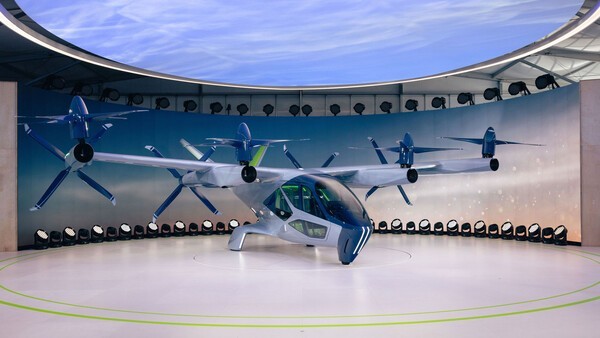
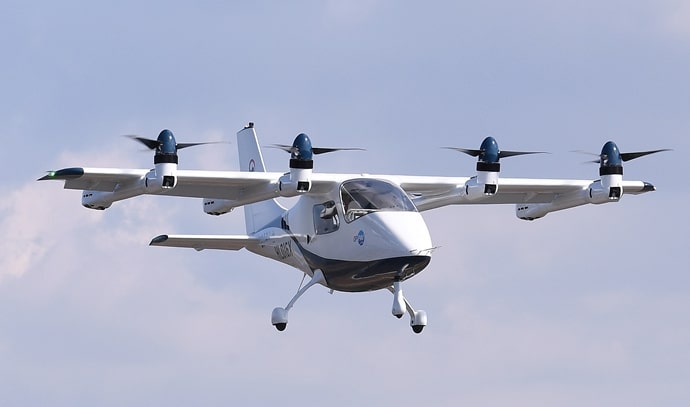
So how close are real flying cars? The most advanced option is the air taxi, known as an electric vertical takeoff and landing aircraft, or eVTOL. Like a helicopter, it takes off and lands vertically, but it flies quietly using multiple electric motors. It does not drive on roads. U.S. companies Joby Aviation and Archer Aviation are leading the field.
The FAA’s type-certification process has five stages. Joby is at the final, fifth stage, while Archer is at stage four. Even so, no company has yet received full commercial type certification from a Western aviation authority. Battery certification, noise standards, integration into airspace and pilot qualifications remain unresolved challenges.
China’s EHang received type certification from Chinese authorities in 2023, but delayed flight approvals from local authorities led it to withdraw its revenue forecast for this year. Even after receiving type certification, companies still need separate approval for routes and operations. There are also vehicles that can travel both on roads and in the sky.
U.S. company Alef Aeronautics’ Model A drives on roads and then takes off vertically. It received a special airworthiness certificate from the FAA in 2023, but the certificate is limited to exhibition and research use. The company lists a target price of $299,999 and claims to have thousands of reservations. Reservations are not confirmed orders.
AeroHT, a subsidiary of China’s XPeng, has conducted demonstration flights using a “mothership” that drives on the ground, carries a small aircraft and launches it into the air. Formal type certification has not been confirmed.
The Roadster is neither of these. It does not fly; it rises into the air for a few seconds. Its purpose is acceleration and stunts, not transportation. Because it is not subject to aviation regulations, Tesla could demonstrate a working vehicle right away without certification. That is why the Roadster took to the air before air taxis, which have spent years going through certification.
South Korea is focusing on air taxis. The Ministry of Land, Infrastructure and Transport has pushed back its target for commercializing urban air mobility (K-UAM) from 2025 to 2028. Demonstration trials have been conducted in Goheung and along the Ara Canal, and the designation of pilot operating zones for initial commercialization in 2028 began in August. Local governments and public institutions will design routes and airspace and submit applications. Supernal, Hyundai Motor Group’s U.S. subsidiary, is developing the aircraft.
◆ Challenges and opportunities left by the Roadster
The Roadster made several things clear. First is energy. Compressing 250 kilograms of air to 680 atmospheres requires a great deal of electricity. Tesla has not disclosed how much. The energy stored this way keeps the car in the air for only a few seconds.
To fly for several minutes or tens of minutes, a vehicle would need to carry far more electricity. But batteries are heavy. Adding more batteries makes the vehicle heavier, and lifting that heavier vehicle requires even more electricity. This is a challenge facing every air-taxi company. The problem can be solved only with batteries that store more energy for the same weight—in other words, batteries with higher energy density.
Regulation is another issue. Current aviation rules are built around two categories: airplanes and helicopters. A car that rises into the air for a few seconds like the Roadster, a vehicle that drives on roads and then takes off like Alef’s, and an air taxi that takes off vertically using multiple electric motors do not fit neatly into either category.
Without regulations, there can be no certification; without certification, the vehicles cannot carry passengers. That is why the Roadster cannot be used on public roads and Alef’s vehicle remains limited to exhibition use. For flying cars to become commercial products, existing frameworks will have to be revised or new ones created.
Other countries have moved toward creating new frameworks. In October 2024, the FAA established a new aircraft category called “powered-lift.” It covers aircraft that take off and land vertically like helicopters but fly like airplanes.
The FAA also established new operating rules, including requirements for pilot qualifications and training, as well as minimum safe altitudes. It was the first new category in about 80 years, since helicopters were added in the 1940s. Joby and Archer’s air taxis reached the final stage of certification after the new rules were introduced.
South Korea has taken an exemption-zone approach. The Urban Air Mobility Act, which took effect in April 2024, exempts most existing aviation laws—including the Aviation Safety Act, Aviation Business Act and Airport Facilities Act—from applying within demonstration and pilot operating zones designated by the Ministry of Land, Infrastructure and Transport.
Only the minimum regulations essential for safety, such as type and airworthiness certification, remain in force. The approach is to begin with flights in a limited area, identify problems and then expand nationwide. The designation of pilot operating zones that began in August is the first step. Aircraft certification, pilot qualifications, standards for takeoff and landing sites (vertiports) and noise regulations all remain to be addressed before commercialization in 2028.
There are also opportunities for South Korea’s domestic industries. Hyosung Advanced Materials manufactures carbon fiber in South Korea, while Iljin Hysolus mass-produces high-pressure tanks for hydrogen vehicles. Batteries and motors used in air taxis are also products in which South Korean companies compete in global markets.
After the demonstration, Musk wrote, “It turns out that flying cars will exist in the future.” The flight lasted a few seconds. Extending those few seconds to minutes or hours will be up to battery companies, aviation authorities and air-taxi companies—not Tesla.