
▶ The won-dollar exchange rate fell 10.4% in two months, from 1,501.4 won on July 10 to 1,345.9 won on September 11.
▶ Over the same period, the consensus forecasts for this year’s operating profits at Samsung Electronics and SK hynix fell by a combined 21 trillion won.
▶ The decline was 1.8% for Samsung Electronics and 5.1% for SK hynix. SK hynix, which is more heavily focused on memory products, was more exposed to exchange-rate changes.
▶ The third-quarter operating-profit consensus for the two companies also fell from a combined 199 trillion won to 188 trillion won.
▶ However, expectations for memory demand and price increases, driven mainly by AI servers, remain intact.
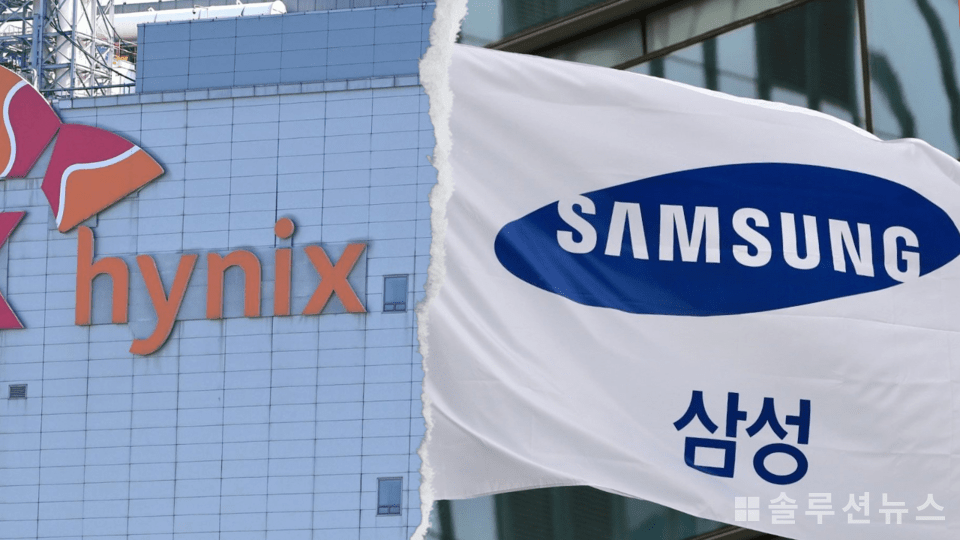
The won’s appreciation is lowering market expectations for the earnings of Samsung Electronics and SK hynix. As the won-dollar exchange rate dropped from the 1,500-won range to the 1,340-won range in two months, 21 trillion won was wiped from the two companies’ projected operating profits for the year. The notable point is the size of the decline. The forecast for SK hynix, which has a higher dependence on memory products than Samsung Electronics, fell much more sharply.
According to industry sources on September 13, the closing rate for won-dollar weekly trading on September 11 was 1,345.9 won. Compared with 1,501.4 won on July 10, this represents a decline of 155.5 won, or 10.4%, in two months. The high-exchange-rate effect that had boosted semiconductor companies’ earnings through the first half of the year has weakened rapidly.
◆ Forecasts fall by 21 trillion won
Changes in the exchange rate are being reflected in analysts’ earnings forecasts. The operating-profit consensus for this year, compiled by Yonhap Infomax based on the month preceding July 10, stood at 384 trillion won for Samsung Electronics and 277 trillion won for SK hynix, for a combined 661 trillion won. By September 11, the forecasts had fallen to 377 trillion won and 263 trillion won, respectively, reducing the combined estimate to 640 trillion won.
The operating-profit forecast that disappeared over the two-month period totaled 21 trillion won. Samsung Electronics accounted for 7 trillion won of the decline and SK hynix for 14 trillion won. In percentage terms, the decline was 1.8% for Samsung Electronics, compared with 5.1% for SK hynix. In other words, although both companies are experiencing the same won appreciation, market expectations for SK hynix’s earnings are falling more rapidly.
Third-quarter forecasts show the same trend. As of July 10, the third-quarter operating-profit consensus stood at 115 trillion won for Samsung Electronics and 84 trillion won for SK hynix, for a combined 199 trillion won. By September 11, the figures had fallen to 111 trillion won and 77 trillion won, respectively. The combined forecast for the two companies declined by 11 trillion won in two months to 188 trillion won.
◆ Why is SK hynix more affected despite the same exchange rate?
The difference can be found in the companies’ business structures. Semiconductor companies convert dollar-denominated revenue earned overseas into won. When the won appreciates, the amount of revenue recorded in won falls even if the company earns the same one dollar. Companies with high export ratios and greater exposure to dollar-denominated revenue are therefore more heavily affected by a stronger won.
SK hynix is overwhelmingly focused on memory semiconductors. Samsung Electronics, by contrast, has a more diversified business portfolio that includes smartphones, home appliances and displays in addition to semiconductors. Companies that benefit more when the exchange rate rises also face greater pressure when the exchange rate moves in the opposite direction.
SK hynix’s disclosed exchange-rate sensitivity also reflects this structure. In its semiannual report, the company estimated that a 10% decline in the won-dollar exchange rate would reduce profit before corporate taxes by approximately 4.75 trillion won, assuming that its foreign-currency assets and liabilities remained at their levels at the end of June. Given that the exchange rate has actually fallen by more than 10% over the past two months, this is a factor that cannot be ignored.
Samsung Electronics is also exposed to exchange-rate effects. Of its separate-basis first-half revenue of 258.6 trillion won, exports accounted for 245.7 trillion won, or more than 95%. DB Securities forecast that despite solid memory shipments and higher selling prices, third-quarter earnings could fall slightly short of market expectations because of unfavorable exchange rates and weakness in the mobile experience business.
◆ Exchange rates create headwinds while the memory market provides a tailwind
However, it would be premature to interpret the downward revision in operating-profit forecasts as a deterioration in the semiconductor market itself. While exchange rates are weighing on earnings, memory demand remains strong amid the expansion of the AI industry. Semiconductor companies are therefore facing both the headwind of a stronger won and the tailwind of AI-driven memory demand.
Market research firm TrendForce expects memory prices to continue rising in the third quarter, citing low inventory levels among memory manufacturers and demand for AI servers. Its analysis is that investment in AI servers is driving up demand for high-bandwidth memory and server DRAM, while available supply remains limited.