
As the AI boom drives a surge in data center construction, governments and cities around the world are moving to slow it down. Reuters reported on August 18 local time that it had compiled major regulatory cases from around the world.
The International Energy Agency (IEA) forecasts that global data center electricity consumption will rise to 945 terawatt-hours (TWh) by 2030, more than double current levels. That is more electricity than Japan uses in a year.
The spread of regulation is being driven by rising electricity prices and growing local opposition over water shortages, noise and land-price issues. At the same time, there is also pushback against the argument that excessive regulation could leave countries behind in the AI race.
In South Korea, too, where six out of every 10 data centers are concentrated in the Seoul metropolitan area, pressure on the power grid is growing. Although power-system impact assessments and incentives for regional dispersion are already in place, relocation progress has been slow.
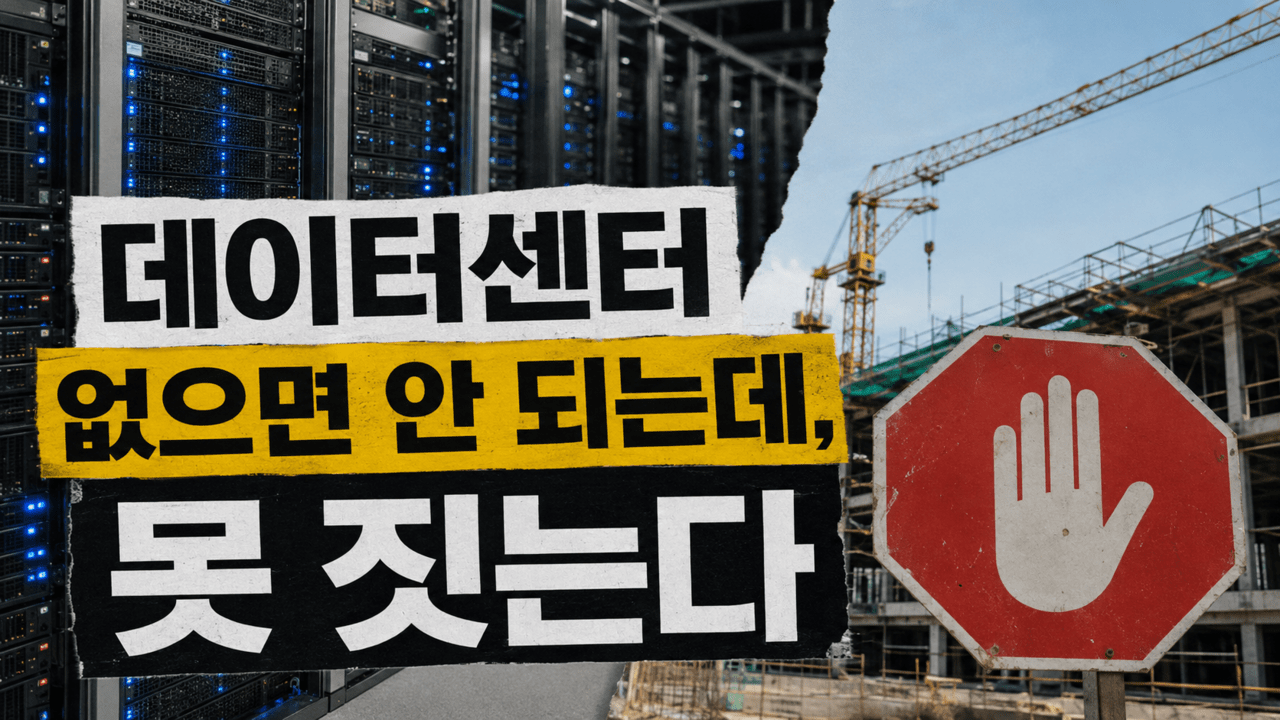
Data centers are now at war with the world.
Fuelled by the AI frenzy, data centers that were popping up around the globe are being hit with a series of setbacks. As these power- and water-hungry facilities move in, governments and cities have begun resorting to construction delays, location restrictions and even referendum-based bans.
Reuters analyzed key regulatory cases from around the world on the 18th local time and concluded that the spread of regulations is being driven by higher electricity costs, shortages of water and land, and growing burdens on local communities.
Data centers are essential infrastructure in the AI era. Every answer produced by AI services such as ChatGPT is calculated on servers inside data centers. The smarter AI becomes, the more servers it needs, and the larger those servers must be. That is why big tech companies are pouring hundreds of billions of dollars into data center construction each year.
The problem is that a single facility can consume as much electricity as an entire small city, while also using vast amounts of water to cool server heat. A conflict has emerged between governments trying to foster AI industries and residents shouldering the costs in daily life. The current moment is one in which countries are beginning to give different answers to the question of growth versus burden.
From construction delays to referendum bans
Regulatory efforts first flared in the United States, where data centers are most heavily concentrated. Northern Virginia is known as “Data Center Alley,” the world’s largest cluster. As hundreds of facilities moved in, transmission towers and substations pushed into residential areas, and complaints over electricity bills and noise multiplied. Public sentiment grew so heated that even the U.S. Congress saw bills introduced to halt data center construction.
State governments stepped in directly. New York Governor Kathy Hochul ordered a one-year delay on data center projects consuming more than 50 megawatts (MW) of power. Fifty MW is equivalent to the electricity used simultaneously by tens of thousands of households. It was the first sweeping moratorium at the U.S. state level, and New York plans to use the suspension period to establish environmental impact assessment standards.
Pennsylvania Governor Josh Shapiro signed an executive order. It requires data center projects to meet environmental standards and obtain community approval. Data centers were removed from the fast-track permitting category, and nondisclosure agreements between local governments and operators were also banned. The move addresses the practice of finishing contracts without residents even knowing what kind of facility is coming into their neighborhoods.
There have also been cases where residents made the decision themselves. In June, Monterey Park, a small city in California, voted in a referendum to permanently ban data center construction, becoming the first U.S. city to do so. In Maine, a bill imposing an 18-month moratorium on facilities exceeding 20 MW passed with bipartisan support but later collapsed after the governor vetoed it.
Europe moved earlier. Amsterdam, in the Netherlands, imposed a one-year moratorium in 2019 and has since banned all new construction and expansion until 2030, starting in April last year. The Dutch government has limited the number of places nationwide where ultra-large facilities can be built to just two. A Microsoft site was approved as an exception in January this year because its individual building size did not fall under the rule.
Dublin, Ireland, blocked new grid connections from 2021 until December last year because of pressure on the power network. When it reopened access, it attached conditions: data centers must have on-site generation facilities capable of producing the electricity they use.
In Denmark, a bill has been introduced to send new data centers to the very back of the queue for grid connections. The principle is that households, hospitals, industry, transportation and renewable energy should get power first, while data centers come last. The measure has broad support, with 80 percent of lawmakers backing it.
Australia has chosen to establish a management body. Prime Minister Anthony Albanese has announced plans to create an “AI Office” and introduce related legislation to oversee data center siting as well as electricity and water-use standards.
In Asia, Singapore is seen as a leading example. It completely halted approvals for new data centers in 2019 and resumed them conditionally three years later. The model was to admit only facilities with high energy efficiency and the use of green power. During the pause, demand shifted to neighboring Johor in Malaysia, where large-scale complexes were built. It is a case that shows how demand crosses borders when one country closes its door.
Doesn’t the AI boom need data centers?
The IEA expects global data center electricity consumption to rise from 415 TWh in 2024 to 945 TWh in 2030. That is more than a doubling in six years and more than the annual electricity consumption of Japan. In the United States, data centers are expected to account for nearly half of all additional electricity demand in the coming years.
AI training and response generation require tens of thousands of high-performance semiconductors to run simultaneously. Cooling systems that remove heat from the chips also consume electricity and water. Cooling accounts for a large share of operating costs in data centers, which is one reason they consume so much power. In Ireland, data centers now use about one-fifth of the country’s total electricity.
Water is also a serious issue. The amount of water used to cool a large data center in a single day can be enough to fill dozens of swimming pools. In drought-prone regions, competition arises with residents over drinking water and agricultural water supplies.
The burden also shows up in electricity bills. When power demand concentrates in one place, wholesale electricity prices rise, and the increase is passed on to household bills. In the United States, resistance has intensified as electricity rates have climbed in areas with dense data center clusters. Noise and land-value disputes have also followed the arrival of construction sites and substations.
Companies are not standing still, either. Microsoft has decided to restart a U.S. nuclear power plant that had been shut down so it can supply electricity to data centers. Amazon and Google have signed power supply agreements with companies developing next-generation small modular reactors (SMRs).
Investment in liquid-cooling technology, which cools servers with water instead of air to save electricity, is also growing. As in Dublin, where only facilities with their own generation capability are allowed access to the grid, self-sufficiency in power supply is becoming a criterion for business approval.
The counterargument is no less strong. Critics say blocking data centers would weaken the foundations of AI services and the cloud industry, while pushing investment and jobs to other regions. Even countries that have introduced regulations are emphasizing slowing the pace rather than imposing outright bans. They are using moratorium periods to set standards and allowing only facilities that meet the conditions.
The situation in South Korea
The domestic data center situation is no exception. According to government statistics, six out of every 10 data centers in South Korea are located in the Seoul metropolitan area, and new construction demand is also concentrated there.
With power plants in the East Coast and Honam regions while electricity-consuming facilities are clustered around Seoul, pressure on transmission networks is rising. Large power-intensive industrial facilities, such as the Yongin semiconductor cluster, are also expanding in the metropolitan area, forcing data centers to compete for electricity.
Under the Special Act on Activation of Distributed Energy, which took effect in June 2024, large-scale electricity users must undergo power-system impact assessments. Data centers that place excessive strain on the grid need to reconsider their locations.
The government also offers incentives such as electricity rate discounts and grid connection cost support for data centers that relocate outside the metropolitan area. Even so, relocation has been slow. That is because data center customers and operating personnel are concentrated in the Seoul area.
The regulatory trend is also creating a new market for Korean companies. As countries increasingly make power efficiency a condition for approval, demand for energy-saving cooling systems is growing.
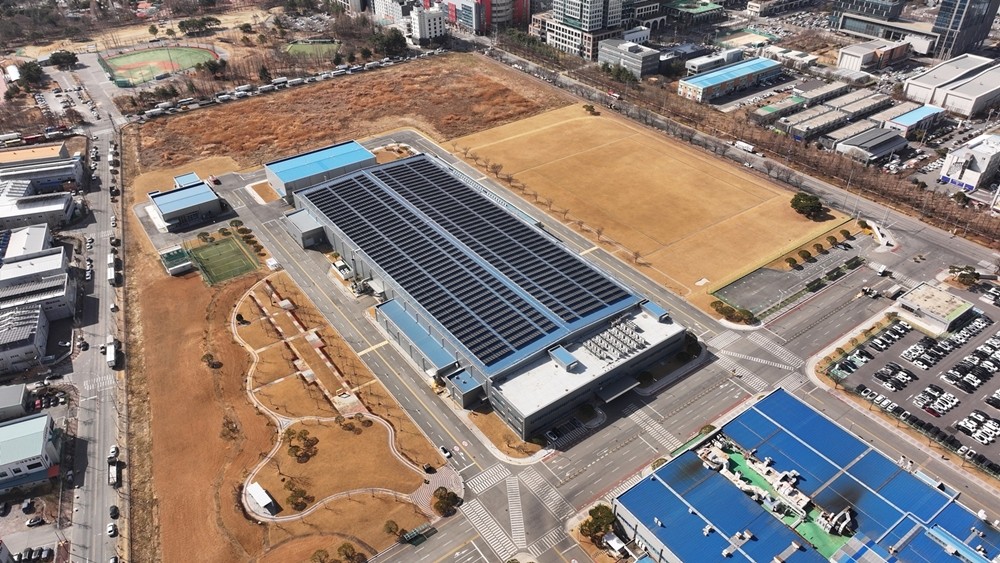
On the 19th, Samsung Electronics entered the cooling market by signing an investment agreement to build a manufacturing facility for AI data center cooling equipment at its home appliance plant in Gwangju.
If a national strategy of distributed deployment places AI infrastructure in regions with surplus power, and if that is linked to the development of the cooling and power-equipment industries, the regulatory wave could turn into an opportunity.
Three lessons stand out from overseas cases: requiring self-generated or renewable energy as a condition of approval, as in Ireland; legally setting power allocation priorities in advance, as in Denmark; and institutionalizing disclosure and resident consent procedures, as in Pennsylvania. The common thread is not blanket prohibition, but slowing the pace through conditions.
One solution being discussed is to build data center complexes in areas close to power plants and with ample electricity supply, while designing a shared-growth model that returns tax revenue and jobs to local communities.
Procedures that inform residents in advance about what kind of facility is coming in and how much electricity and water it will use could also help reduce conflict. It is also necessary to consider the fact that if approval hurdles are simply raised without offering alternatives, demand may flow overseas, as seen in Singapore.
AI competitiveness and the burden on power and the environment have become challenges that all countries will have to tackle together. New York bought time by using a moratorium to set standards, Singapore and Dublin are selectively allowing facilities under conditions, and Pennsylvania is emphasizing resident procedures. Each country is writing its own answer.
The examples so far show that countries that first establish rules for where and under what conditions data centers can be built can reduce conflict costs while also protecting investment.