
According to Reuters, the core technology behind robot dogs that walk on four legs like a dog came from research supported by the U.S. military, but it is China’s Unitree that has turned it into low-cost mass production and come to dominate the global market.
Unitree’s popular Go series is almost identical in dimensions to MIT’s “Mini Cheetah,” developed with U.S. defense support. Reuters said this was not the result of technology theft, but of learning from papers openly released by the United States.
The price gap is striking: U.S.-made robot dogs cost more than 230 million won, while Unitree’s mass-market model is around 2.2 million won. Reuters analyzed the difference as a result of China’s parts supply chain and government subsidies.
The use of robot dogs is expanding into surveillance, reconnaissance, and military applications. The U.S. Army even bought Unitree products under special approval because it had no viable American alternative.
The United States has placed Unitree on its list of Chinese military companies and is moving to restrict imports. But there are warnings that trade barriers alone will not build a domestic manufacturing base.
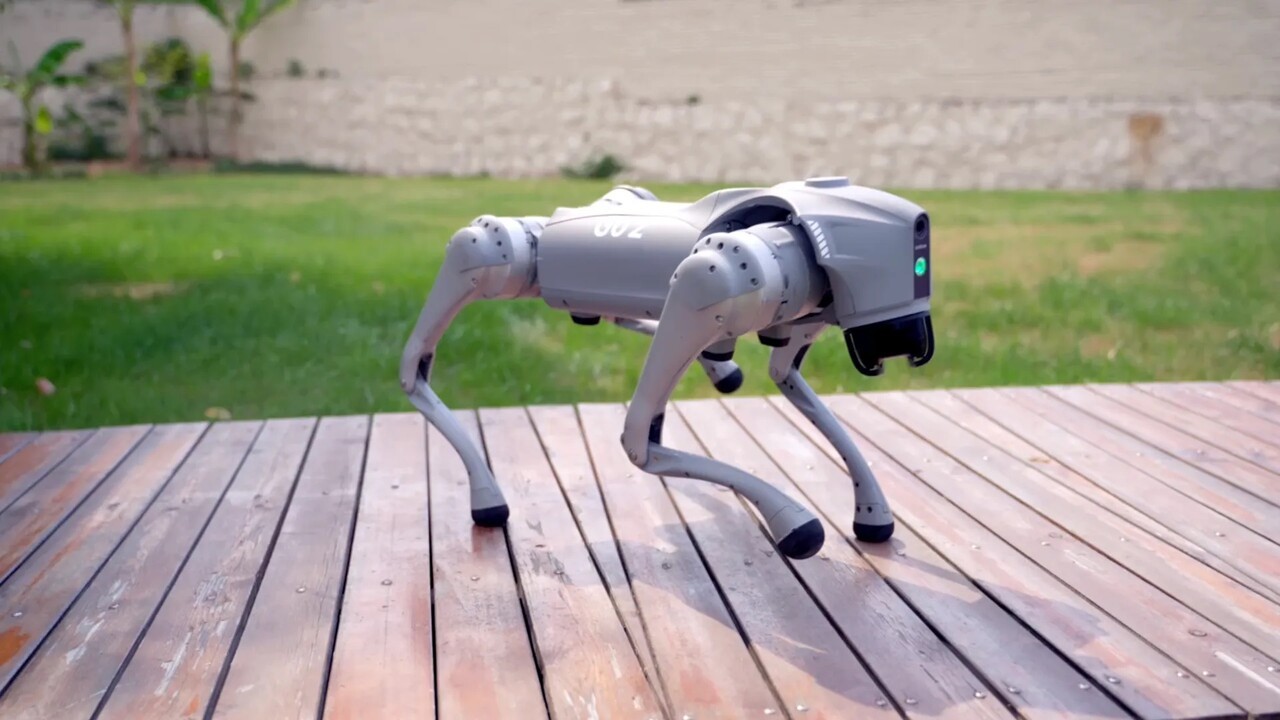
Chinese company Unitree is leading the world’s robot dog market using four-legged robot technology that developed from the U.S. military budget, Reuters reported on the 18th (local time).
Reuters said this in an investigative report tracing the rise of Chinese robotics company Unitree. Founded in 2016 by engineer Wang Xingxing, Unitree built its name by launching low-cost four-legged robots that walk like dogs, and later expanded its lineup to include humanoid robots. Last year, its revenue was about 1.7 billion yuan (about 330 billion won), with more than 40% coming from overseas.
◆ Where did robot dog technology come from?
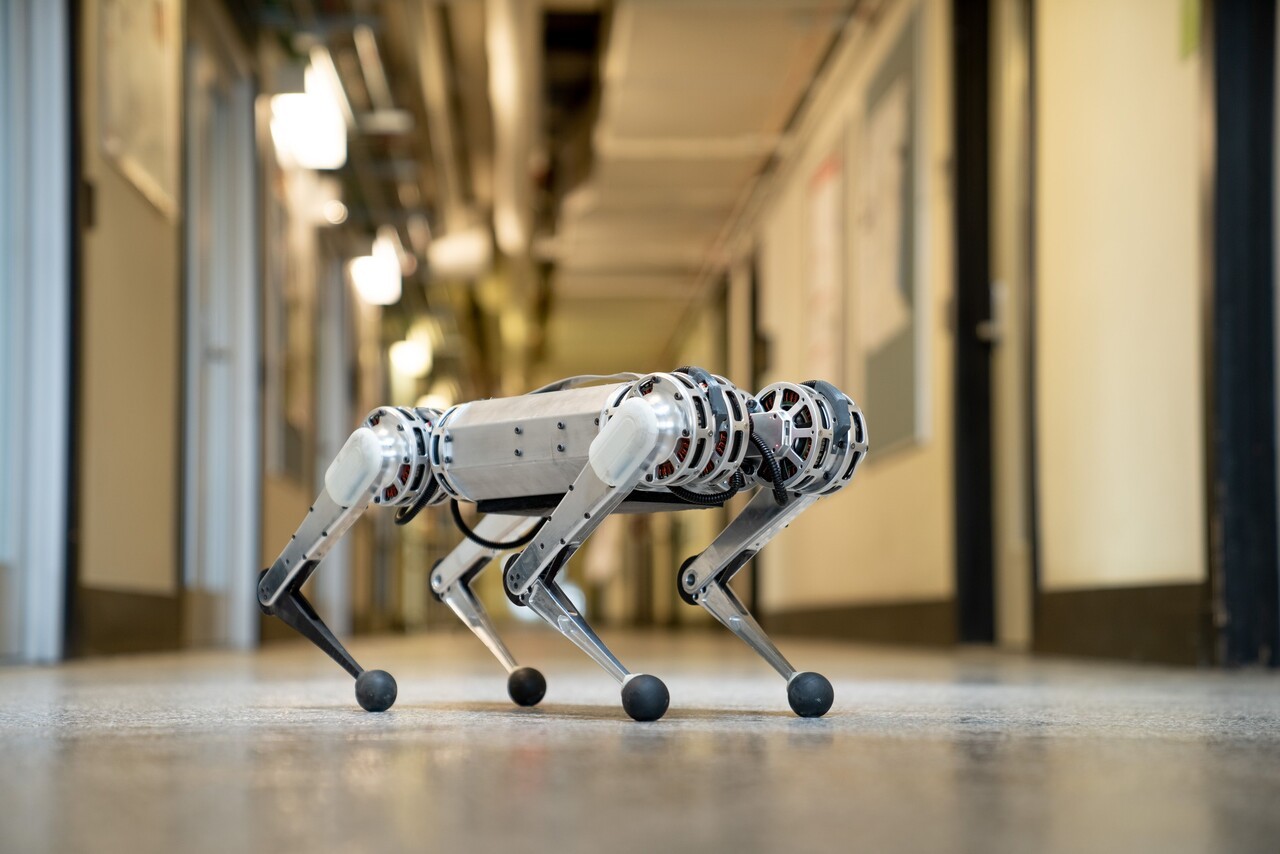
The core technology for robot dogs was developed at U.S. universities and research institutes. From 2010 to 2020, the U.S. Army ran the “Robotic Collaborative Technology Alliance” program, supporting researchers at the University of Pennsylvania, the Massachusetts Institute of Technology (MIT), Boston Dynamics, and NASA’s Jet Propulsion Laboratory.
In 2016, University of Pennsylvania researchers developed a design that removed the heavy transmission system from the robot’s body and attached motors directly to each leg. Because each leg could immediately sense the ground condition, the robot improved its ability to maintain balance on rough terrain. MIT, with support from DARPA, introduced the small quadruped robot “Mini Cheetah.”
Ben Katz, an MIT lab alumnus, told Reuters, “Unitree’s popular Go series is nearly identical in size to Mini Cheetah.” Wang Xingxing cited MIT and University of Pennsylvania research in his master’s thesis.
Those studies were not classified. U.S. researchers published their findings as papers on the belief that spreading research speeds scientific progress, making them available for anyone to read.
◆ Where did the price gap come from?
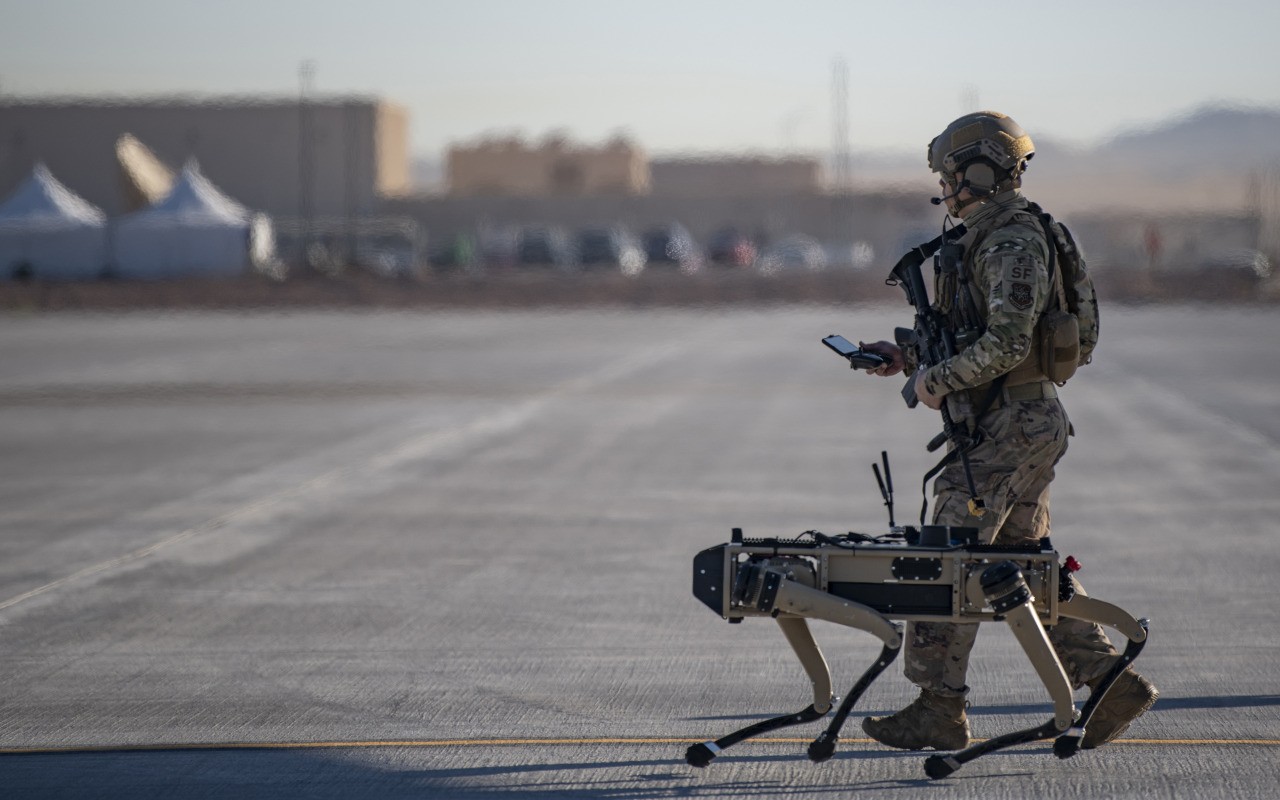
Ghost Robotics’ “Vision 60,” a U.S. robot dog commercialized from U.S. military research, sells for more than $165,000 (about 230 million won). Unitree’s industrial B series costs less than $100,000 in the U.S. market. Its entry-level “Go2” was launched at about $1,600 (about 2.2 million won).
Reuters said China’s parts ecosystem has created this gap. China has a dense network of suppliers for robot components such as motors, gears, actuators, and sensors.
Design revisions, parts procurement, and mass-production expansion happen quickly. Since the Chinese industrial-promotion plan announced in 2015, resources have been concentrated in robotics, electric vehicles, and clean energy, with support from local government subsidies.
U.S. manufacturers have not been able to escape reliance on Chinese parts. Reuters said Ghost Robotics tried to reduce its use of Chinese components, but could not find substitutes for magnets and some metal parts.
◆ The U.S. turns to import restrictions
The use of robot dogs is broadening beyond surveillance, reconnaissance, and work in hazardous areas to military applications.
Chinese state media have shown Unitree robots appearing alongside the People’s Liberation Army, and have also reported scenes of armed robot dogs taking part in military exercises.
The U.S. Marine Corps tested a Unitree Go1 fitted with a rocket launcher. The U.S. Army bought two Go2 units under special approval, saying there was no usable American alternative.
The U.S. Department of Defense placed Unitree on its list of Chinese military companies. It is also pushing to restrict imports of Chinese humanoid and quadruped robots. But there are claims that trade barriers may block foreign product sales, yet they will not replace them with a competitive domestic manufacturing industry.
This report has prompted analysis that in technological competition, production capability matters as much as invention. The challenge of quickly linking research achievements to mass production and business applies just as much to South Korea’s robot industry, which also has a manufacturing base.