
Annual deaths caused by rising temperatures linked to climate change could reach 430,000 by 2050, according to a report released on the 27th (local time) by the Climate Impact Lab, a climate research consortium led by researchers at the University of Chicago. The toll is expected to be 10 times higher in poorer countries than in wealthy ones.
Whether people live or die will depend on cooling. The report identified “cooling trap” regions in 18 countries, where exposure to extreme heat is high but increases in electricity use for cooling are unlikely. These areas are home to 676 million people, and an estimated 377,000 deaths a year are expected there.
The trapped regions are concentrated in northern sub-Saharan Africa, including Niger, Mali, Burkina Faso and Chad, as well as in South Asia, including Pakistan, Bangladesh, Nepal and Myanmar.
Income determines fate even under the same heat. Niger’s per-capita increase in electricity use is projected to be only one-ninth of Saudi Arabia’s, meaning that by 2050 Niger could see 27,000 more annual deaths than Saudi Arabia.
In low-income countries, the projected increase in per-capita electricity use is equivalent to keeping a single LED bulb lit for four months. Electricity demand for cooling in middle-income countries is expected to grow seven times faster than in low-income countries.
The report presents two solutions: reforming power markets to supply cheap and reliable electricity, and combining that with adaptation measures that rely less on electricity, such as early warning systems and passive cooling.
In an era when extreme heat threatens lives, the gap between countries that can turn on air conditioners and those that cannot is hardening into a gap in death tolls.
The Climate Impact Lab, a climate research collaboration led by University of Chicago researchers, released an adaptation roadmap report on the 27th analyzing how rising temperatures affect energy consumption. It found that by 2050, compared with historical climate conditions, about 430,000 additional people a year could die, with poor countries bearing 10 times the burden.
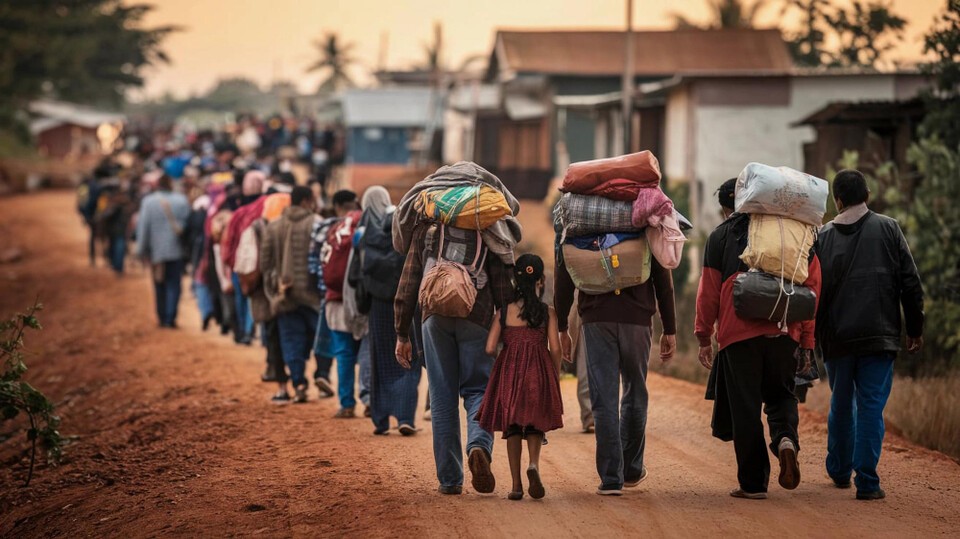
As the heat intensifies, electricity demand for cooling will rise, but residents of low-income countries with poor access to power are expected to be unable to fully benefit from cooling. (Photo: Solution News Magnific)
Globally, electricity use will rise. The report projects that average per-capita electricity consumption worldwide will increase by about 6 percent by 2050. The problem is that the scale of increase will vary dramatically by region, and electricity will not reach the places where it is needed most.
The report introduces a new concept: the “cooling trap.” It refers to places where heat exposure is at its highest but cooling is at its lowest—areas that face extreme heat while seeing little expected growth in electricity use for cooling. The researchers identified such regions in 18 countries, home to 676 million people.
Heat silently undermines health. As body temperature rises, the heart beats faster to release heat, and as sweating depletes water, the blood becomes thicker, placing stress on the cardiovascular system and kidneys. The elderly, people with chronic illnesses, and outdoor workers are the first to collapse. Cooling is considered the most reliable way to break that chain.
The report quantified the damage in the trapped regions. It estimated that in those areas alone, 377,000 more people will die from heat each year by 2050. All of them are residents of low-income or lower-middle-income countries. Most live in northern sub-Saharan Africa, including Niger, Mali, Burkina Faso and Chad, while the rest are in South Asia, including Pakistan, Bangladesh, Nepal and Myanmar.
As a counterexample, the report pointed to Gulf oil-producing countries. Bahrain, Kuwait and Saudi Arabia are as hot as sub-Saharan Africa, but because they use far more electricity for cooling and have room to increase it further, their death tolls are projected to be much lower.
Niger’s projected per-capita increase in electricity use is only one-ninth that of Saudi Arabia. Because of that difference, Niger is expected to suffer 27,000 more annual deaths than Saudi Arabia by 2050. Even with similar temperatures, the amount of usable electricity separates the two countries’ summers.
At that point, the conclusion is that not temperature but income determines life and death. Michael Greenstone, co-founder of the Climate Impact Lab and a University of Chicago economics professor, said, “Air conditioning is a life-saving device, and access to air conditioning in wealthy countries is unquestionably going to increase.” He added, “The research shows that too many countries cannot respond in the same way,” calling it “the enormous cruelty of climate change, in which the greatest sacrifice falls on the countries that contributed least to it.”
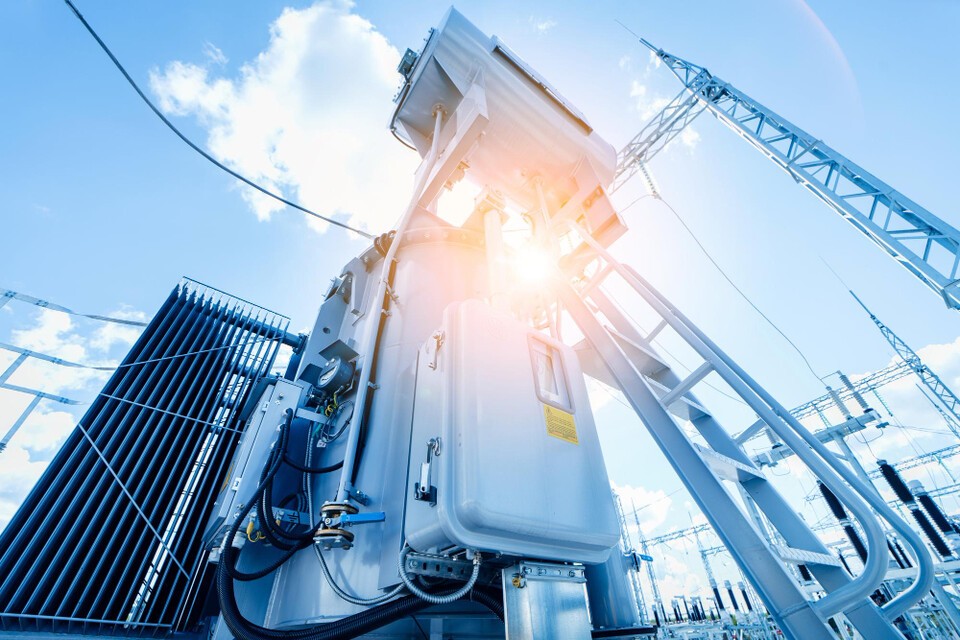
The mechanism behind the widening gap is surprisingly simple. As the planet gets hotter, cooling demand rises, and as incomes increase, people gain the ability to pay electricity bills.
In middle-income countries, where those two conditions align, electricity consumption for cooling is expected to grow seven times faster than in low-income countries because of climate change. As economies grow, so do air conditioners.
Low-income countries cannot climb onto that path. The report estimates that the increase in per-capita electricity consumption in low-income countries under warming will amount to only enough to power one LED bulb for four months. That is not even enough to light a single lamp, let alone run cooling.
Underlying this is a diagnosis of market failure: weak power grids, expensive electricity and frequent supply interruptions. It is a triple barrier—people cannot afford air conditioners, cannot run them even if they buy them, and may not be able to pay electricity bills even when electricity is available.
There is also criticism of the unfair structure. The greenhouse gases that heated the planet were emitted over decades mainly by wealthy countries running factories and driving cars. The amount emitted by countries such as Niger is negligible.
Yet the damage from heat falls disproportionately on the countries that emitted the least. Like being handed someone else’s restaurant bill, this has fueled international calls for wealthy countries to share the cost of adaptation in poorer nations.
That asymmetry between rich and poor countries was also confirmed in earlier reports. A health-focused report released in March by the Climate Impact Lab projected that 90 percent of the deaths caused by rising temperatures would occur in low- and middle-income countries. While high-latitude regions such as Scandinavia would see fewer cold-related deaths and a lower overall climate risk, poor tropical regions would move in the opposite direction.
Tamma Carleton, the report’s lead researcher, said at the time that the burden was extremely uneven and that this was not only because those places are hotter, but ultimately because of income.
The divide also exists within countries. In the health report, the United States was projected to see climate-related deaths fall by 30 to 60 per 100,000 people in northern states, while they would rise by 10 per 100,000 in southern states. The fact that the hottest and poorest regions are the first to break down applies both within and across borders.

The report offers two prescriptions. The first is to make electricity accessible. Professor Greenstone stressed that “it is a wake-up call that there is not much time left to improve how power markets work so they can supply cheap and reliable energy.”
Because large infrastructure such as power plants and transmission grids takes decades, small independent grids—installing solar panels and batteries in each village and generating and using electricity locally—are being discussed as a complement. It is similar to digging a well in a village while waiting for a water pipeline project to be completed.
Reducing reliance on electricity is the other half of the solution. Ashwin Rode, a researcher at the Climate Impact Lab, proposed better energy access alongside early warning systems and action plans for heat waves, expanded access to healthcare, and targeted support programs for vulnerable groups.
As noted in the previous installment, the World Health Organization has estimated that heat-wave response plans and early warning systems alone reduced deaths in Europe by about 80 percent. Sending heat alerts by text message, stopping outdoor work during the hottest hours, and having community health workers check on vulnerable households can all operate without a large power grid. In other words, safety nets that work without electricity have already been proven.
Passive cooling that changes buildings and cities belongs to the same category. It refers broadly to ways of lowering temperatures without electric switches, including painting roofs and walls light colors to reflect sunlight and increasing shade and green space.
Even in places without a power grid, indoor temperatures can be lowered. Like the light-colored road surface in Murcia, Spain, introduced in the Europe heat-wave feature, methods proven in wealthy countries can be adapted as low-cost solutions for poorer countries.
The two solutions must move together, though on different timelines. Use alerts and shade to get through this summer; bring in electricity to prepare for the summers of the next decade.
International mechanisms are also taking shape. The U.N. climate summit launched a loss-and-damage fund to support developing countries hit by climate disasters, and the United Nations has been advancing a plan to place all humanity under disaster early-warning systems by 2027. Whether funding and warnings actually reach cooling-trap regions is seen as the key challenge.
Still, Rode noted that “many adaptation measures have not yet been verified.” The Climate Impact Lab has created an “adaptation inventory” of proven measures and provides it to governments and aid organizations, with the goal of distinguishing between measures that sound good and those that actually saved lives. The purpose is to identify what worked and what did not—an approach in line with the thinking this series has pursued.
The same is true when viewed from Korea, as seen in Europe’s summer in the previous installment. Even Europe, with an air-conditioning penetration rate of 20 percent, lost thousands of people to heat waves, so it is easy to imagine the summer faced by cooling-trap regions with far lower penetration.
Cooling inequality exists within Korea as well. Households that have air conditioners but cannot turn them on because of electricity bills, as well as one-room residences and elderly people living alone who get through the summer with only a fan, are on the front lines of heat damage.
That is why the government supports vulnerable households’ cooling costs through energy vouchers and why local governments operate heat shelters.
There have been repeated calls to check whether the target groups and support amounts are keeping pace with the severity of heat waves. This shows that cooling traps exist not only between countries but also within a city block.
A role abroad is also being discussed. Korea is both a home to high-efficiency air conditioners and refrigeration equipment and a country that has risen from aid recipient to donor.
There is an argument that green official development assistance—such as spreading solar-linked cooling and low-power cooling technologies to cooling-trap regions—is both a humanitarian contribution and a way to open markets.
That means there is room for Korean companies and the government to participate in transferring proven adaptation measures that fit local conditions. There is also the view that technologies for surviving extreme heat could become an export item for the next generation.
Reducing greenhouse gases alone cannot avoid heat that has already been locked in, so preparation for surviving the heat must happen alongside mitigation. The figure of 430,000 is not a prophecy, but a warning.
It means the number can be reduced if electricity and countermeasures arrive in time. The speed at which electricity reaches people and proven solutions spread will determine whether that number comes down.