
World’s largest artificial intelligence (AI) company is reportedly offering to put part of itself on the government payroll first. OpenAI, the developer of ChatGPT, is discussing a plan to give the Trump administration a 5% stake in the company, the Financial Times (FT) reported on the 1st (local time), citing multiple sources.
The scale is eye-catching. OpenAI’s valuation was recently estimated at $852 billion, or about 1,323 trillion won. A 5% stake would be worth about $42.6 billion, or 66 trillion won. It is difficult to find a precedent in which a private company transferred such a large stake to the government without receiving anything in return.
OpenAI launched ChatGPT at the end of 2022 and helped ignite the current generative AI boom. In less than four years, its valuation has swelled into the 1,300-trillion-won range. A company at the center of the debate over wealth concentration is now appearing to propose a government-led solution to wealth distribution.
◆ Altman’s “equity sharing” plan brought to the White House
According to the FT, OpenAI CEO Sam Altman has been discussing the issue with President Trump, Commerce Secretary Howard Lutnick, and Treasury Secretary Scott Bessent. Altman is said to have long argued that giving up equity is the best way to share the profits created by AI with the public.
The plan is not limited to OpenAI alone. Similar proposals have also been floated for other U.S. AI companies such as Anthropic, Google, and Meta to contribute equivalent stakes to a public entity.
The model being cited is the Alaska Permanent Fund. The state of Alaska invests money earned from oil in stocks and other assets, and distributes the returns to residents as annual dividends. Created in 1976, the fund allows Alaska residents to receive cash each year. The idea is that just as the wealth generated by oil is shared among all residents, the wealth generated by AI should also be shared by the public.
This is not the first time such behind-the-scenes talks have surfaced. Summarizing U.S. media reports, Altman first proposed the idea to President Trump in early 2025, and in early last month there were a series of reports that preliminary discussions were underway between the government and major AI companies. Trump also publicly said last month that it would be a “beautiful thing” for the government to hold equity in AI companies, and that the American people should become “partners in this revolution.”
Political pressure is even stronger. Senator Bernie Sanders has argued that through a sovereign wealth fund, the public should own nearly half of AI companies. Altman is also reported to have recently discussed the matter with Sanders. The 5% proposal is being interpreted as a preemptive move by the company before tougher demands gain momentum.
◆ Intel’s lesson: “Give equity and they become an ally”
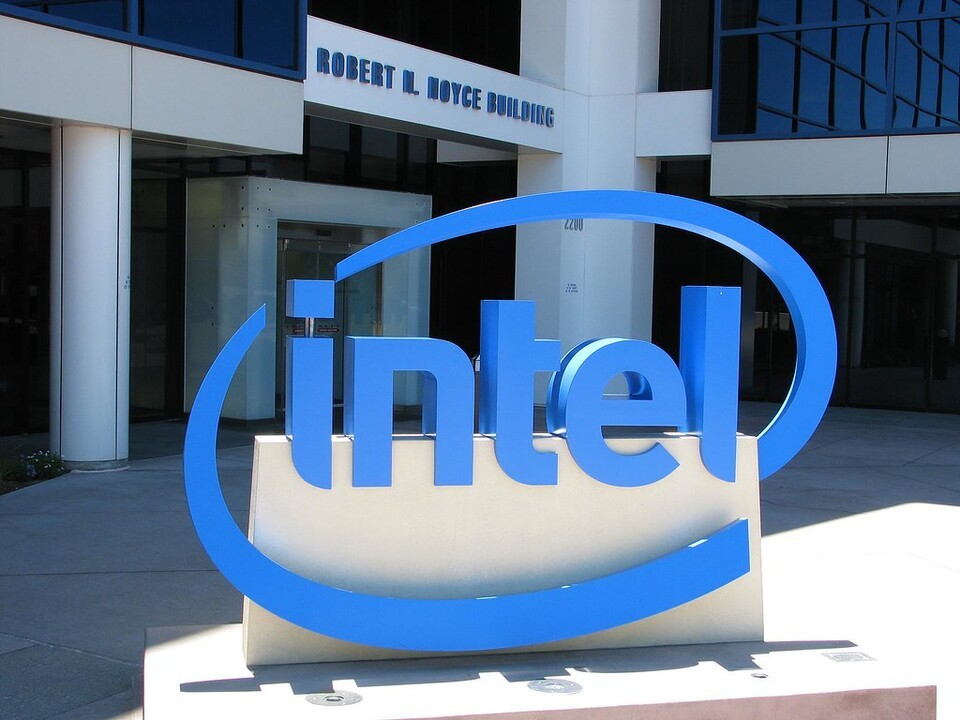
The key to reading this proposal lies, above all, in the Intel case. Last August, the U.S. government secured a 9.9% stake in Intel by converting semiconductor subsidies into shares. The deal was worth $8.9 billion, or about 13.8 trillion won, making the government the largest shareholder overnight, ahead of BlackRock.
The structure of the deal is even more telling. The government did not spend new money. It converted the $8.9 billion in subsidies Intel had been promised under the CHIPS Act, along with Pentagon support, into 433 million new shares. Formally, it became a “quiet shareholder” with no board seat or management intervention rights. Commerce Secretary Lutnick said at the time that the government would not interfere in Intel’s management.
Trump’s stance changed completely before and after the deal. He publicly called Intel CEO Lip-Bu Tan, a Malaysian-born executive, “pro-China” and demanded his resignation. Once the stake acquisition was completed, his assessment changed to describing Tan as “a person with an amazing success story.” In effect, criticism turned into support once the government became a shareholder.
The market reaction was dramatic as well. Intel shares rose more than 5% on the day the government stake purchase was announced, and are up more than 140% so far this year. Trump claimed in May that the value of the government’s holdings had exceeded $50 billion, or about 77.7 trillion won. The market appeared to view the government, as the largest shareholder, as effectively serving as a survival guarantee.
Intel was only the beginning. The Trump administration has also reached into strategic sectors such as rare earths and quantum computing. Trump himself has spoken of a so-called “national capitalist” vision, in which tariff revenue, corporate equity, and weapons exports are bundled together to help the national treasury. Analysts say that under this administration, the government entering strategic companies as a shareholder has become less an exception than the rule.
The AI industry has been watching this closely. The calculation has emerged that giving up equity could turn political risk into a friendly relationship and even raise corporate valuation. FT also noted that transferring equity to the government could ease backlash by strengthening ties with policymakers while providing a rationale for sharing wealth with the public.
◆ Soaring electricity bills and job insecurity: the AI industry cornered
There are also urgent reasons why OpenAI would bring out a 66-trillion-won card. Public resistance to AI in the United States is becoming increasingly serious.
The most immediate issue is electricity bills. AI data centers are massive computing facilities that consume huge amounts of power. A single cutting-edge large data center can use power comparable to the output of one nuclear reactor.
Prices have risen sharply in regions where data centers are concentrated. According to U.S. Energy Information Administration data, electricity rates rose 13% in Virginia and 15.8% in Illinois over the past year. That is two to three times the national average increase. The added cost of the power grid is ultimately being passed on to households, analysts say.
Public sentiment is already turning into action. In the first quarter of this year alone, more than 20 data center projects worth $42 billion were canceled due to local opposition. Add to that anxiety over AI replacing jobs and concerns about cybersecurity, and the backlash has widened. A Pew Research Center survey found that negative views of data centers outweighed positive ones regardless of where respondents lived. Political leaders heading into the November midterm elections are finding it hard to ignore this mood.
As investment grows, so do the points of friction. U.S. Big Tech plans to pour more than $750 billion into AI infrastructure. Moody’s has forecast that global AI data center investment will reach $3 trillion by 2030, much of it concentrated in the United States. For Trump, who campaigned on controlling electricity costs, the backlash spreading even into Republican strongholds is a burden.
The regulatory environment has also hardened. Last month, the U.S. government imposed export controls on Anthropic’s latest models, “Feable5” and “Mythos5.” Although the controls were lifted about three weeks later, the episode confirmed that a single government decision could halt the services of cutting-edge models. With OpenAI and Anthropic preparing for initial public offerings as early as late this year, political risk is also becoming valuation risk.
◆ A country where the government becomes a shareholder: Congress and conflicts of interest remain
There are many hurdles before the plan can become reality. Sources said the discussions are still in an early stage and that implementation may require legislation in Congress. Neither the White House nor OpenAI has issued an official response to the report.
It is also unclear whether other companies would join. Altman’s proposal assumes that major AI firms would collectively contribute equity. However, Anthropic said in early last month that it was not in discussions with the government over equity. Google and Meta have also made no official statement.
The principle itself is even more contentious. Some experts warn that if the regulator also becomes a shareholder in a specific company, serious conflicts of interest would arise. There are concerns that safety regulations could be enforced more loosely out of fear of depressing the value of the stake. David Sacks, who has handled White House AI policy, and the conservative think tank Cato Institute have criticized the idea of the government selectively investing in specific companies as undermining free-market principles.
On Wall Street, some are taking a longer view. Although this administration promises to be a “quiet shareholder,” there are worries that a future administration could use the stake as leverage to intervene in management. Since equity once acquired by the government is difficult for companies to buy back, analysts say the precedent itself may matter more than the 5% figure.
There is also a different perspective. If the returns from government-held equity are used for household dividends or public purposes, it could ease the problem of AI-generated wealth flowing mainly to a handful of corporations and investors. OpenAI and Anthropic have previously argued that public funds or sovereign wealth funds are needed so citizens can share in the benefits of AI progress.
Questions also remain from a corporate governance perspective. OpenAI started as a nonprofit foundation and has been shifting to a for-profit structure. If the government also appears on the shareholder register ahead of a public listing, the calculations surrounding board composition and decision-making structure could become even more complicated.
What is clear is the direction of travel. Government equity participation, which began with semiconductors, is spreading to AI. The government is moving from simply handing out subsidies to stepping inside companies as a shareholder. Analysts say this signals a shift in U.S. industrial policy from market-driven to state-led.
For Korean companies and investors that invest in the U.S. market or do business with American Big Tech, Washington politics has become a variable that can influence corporate value as much as earnings. Whether the 66-trillion-won proposal passes through Congress will likely become a test case for redefining the relationship between government and business in the AI era.