
Samsung Electronics announced on the 19th that it will supply more than 1,000 high-efficiency heating, ventilation and air conditioning (HVAC) solutions to more than 100 mosques in eight major Saudi Arabian cities, including Riyadh and Al-Ramah.
The supplied product is the circular system air conditioner “360 Cassette.” It incorporates Islamic traditional patterns into the panel and applies a low-noise design to suit the characteristics of worship spaces.
With its patented “booster fan” technology, it delivers cool air evenly to open mosques with high ceilings, and the outdoor units are designed to operate stably even in external temperatures above 50 degrees Celsius.
Samsung Electronics signed an MOU with local partner Gurus Charity in June. It is expanding its B2B supply channels in the Middle East, following public transportation and schools, into religious facilities as well.
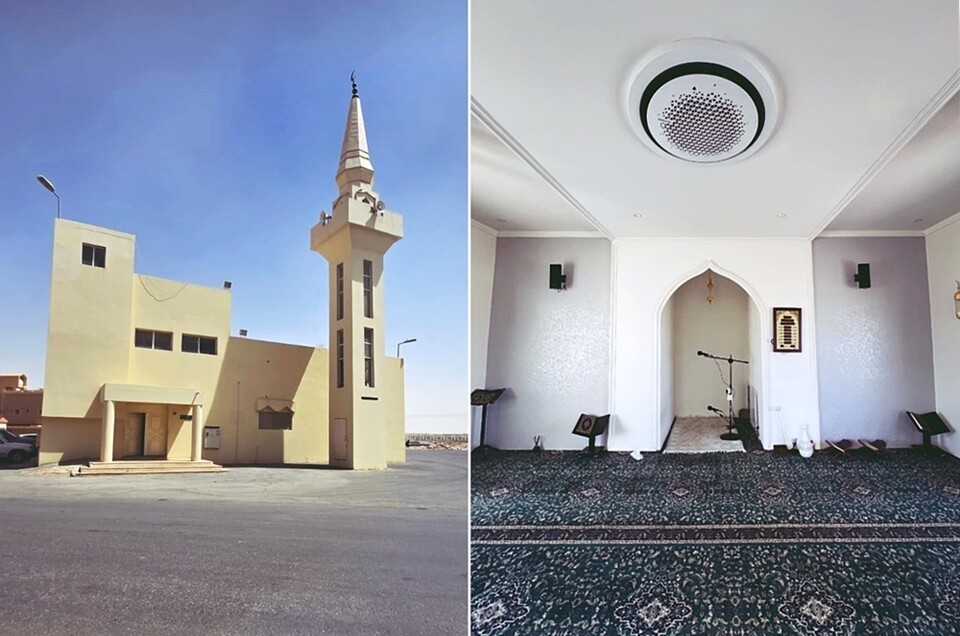
Samsung Electronics is supplying cooling and heating equipment to more than 100 Islamic mosques in Saudi Arabia. The company said on the 19th that it will provide more than 1,000 HVAC solutions to mosques in eight major cities, including the capital Riyadh and Al-Ramah.
The supplied product is the round-structured system air conditioner “360 Cassette.” The company explained that it provides uniform cooling throughout the space and quiet operation, taking into account the spatial characteristics of religious facilities.
◆ Circular instead of square… design tailored to the characteristics of religious facilities
Samsung Electronics said this product is the world’s first to apply a circular design instead of the existing square shape. It also reflected Islamic traditional patterns in the product panel. The company said the design was intended to harmonize with the interior and architectural style of religious facilities.
Industry observers say that for orders from religious facilities, understanding the cultural meaning of the space is as important as performance specifications in determining whether a contract is won. If the appearance of equipment conflicts with the atmosphere inside the worship hall, it is difficult to be selected by the client, even if the performance is excellent.
The circular structure distributes air evenly in all directions. It is considered advantageous for maintaining similar temperatures across a large prayer hall by reducing the concentration of cool air in a single direction.
The design change is interpreted not merely as an aesthetic improvement, but as an example of designing form and performance together, as it is linked to better cooling uniformity as well.
A low-noise design was also applied. This is understood as reflecting the fact that mechanical noise is a sensitive factor in worship spaces where prayer and meditation take place.
Reflecting Islamic traditional patterns in the product is interpreted as a response tailored to the expectations of the religious institutions that placed the order. Since the equipment is visible on the ceiling of the prayer hall, its appearance is believed to have been treated as one of the contract conditions.
The supply scale covers more than 1,000 units for more than 100 mosques, or roughly 10 units per site on average. Industry sources say this is closer to a city-wide project than a simple site-by-site delivery. It is analyzed as a large order made possible by localized design that integrates cooling equipment into the spatial composition of the facility.
◆ Booster fan and heat resistance up to 50 degrees… 대응 to high temperature and open structures
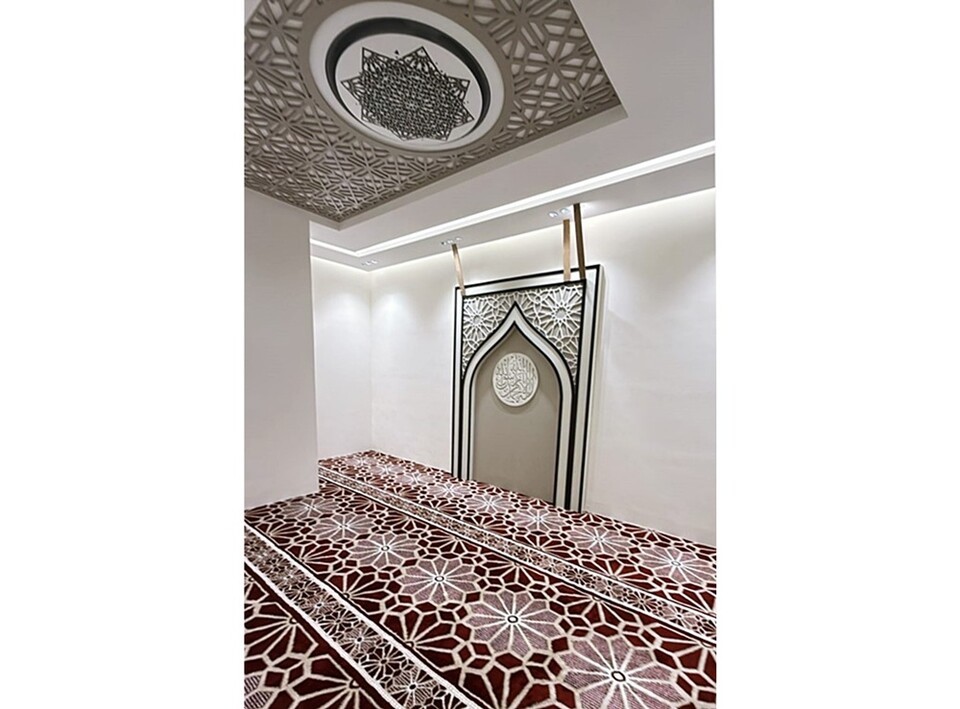
Mosques have high ceilings and open interior structures. In conventional ceiling-mounted air conditioners, airflow hits the blades that direct the wind and loses force. Because cool air does not travel far and instead falls directly below the unit, cooling efficiency in spaces with high ceilings has long been considered poor.
The cooling load is also heavy. In regions with high outdoor temperatures, the difference between indoor and outdoor temperatures widens, requiring greater cooling capacity even for the same floor area. Industry analysts say the technical challenge of this supply was how to achieve uniform cooling under conditions combining open structures and a hot climate.
Samsung Electronics responded with its patented “booster fan” technology. The technology reduces airflow loss caused by the blades and sends cool air broadly and far in a horizontal direction. The company said this allows cool air to be delivered evenly throughout mosques with high ceilings and open structures. The ceiling-mounted installation also improves use of floor space.
The booster fan works by pushing cool air horizontally over a long distance, spreading it throughout the space. It is regarded as a technology that complements the limitations of conventional systems, where cool air stays only directly beneath the unit.
The outdoor units are designed to provide stable cooling performance even in environments where the outside temperature exceeds 50 degrees Celsius. The specifications were developed with Saudi Arabia’s extreme summer heat in mind. Analysts say that in a local environment where cooling runs for long hours, high-efficiency equipment can help reduce facility operating costs.
As cooling hours lengthen, the power costs borne by facilities also increase. That is the background for why high-efficiency equipment that delivers the same performance with less electricity is becoming a key selection criterion for facility managers.
There is also the view that supply records proven in high-temperature environments can be used as reference cases for future orders in other Middle Eastern or similarly hot regions.
◆ June local MOU… expansion from transportation and education to religious facilities
Samsung Electronics signed a memorandum of understanding (MOU) in June with local partner Gurus Charity, which is promoting a mosque renovation project. The company said it plans to continue expanding supply cooperation for mosques in Saudi Arabia through this contract.
Since the company signed an agreement with a partner engaged in mosque renovation projects, observers say it has secured a continuing supply channel for facilities with ongoing refurbishment demand. It is seen as a move aimed not only at new construction but also at replacement demand for existing mosque equipment.
B2B performance in the Middle East is on an upward trend. Last year, the company supplied system air conditioners to Riyadh public transportation facilities. It also supplied the building integration management solution “b.IoT” to the private school Royal Grammar School Guildford Dubai (RGSGD) in Dubai, UAE. Its supply base has expanded from transportation and education to religious facilities. The trend is interpreted as the company building supply records across different sectors with different clients and facility types.
“This supply is a case that demonstrates the competitiveness of customized HVAC solutions reflecting the characteristics of worship spaces and local culture,” said Lim Sung-taek, vice president of Samsung Electronics’ DA Division. “We will continue to expand our Middle East B2B HVAC business with a variety of HVAC solutions that reflect regional environments and customer needs,” he added.
Analysts say this also aligns with the company’s shift from a business structure centered on consumer appliances such as televisions and refrigerators toward broader supply of building-level equipment.
The HVAC business is characterized by large contract sizes and long revenue cycles, as equipment is supplied through consultation with clients from the building design stage and then maintained afterward. Since past supply performance becomes a benchmark for follow-up orders, this contract is expected to serve as a stepping stone for additional orders in the Middle East.
Industry observers expect that, as construction and renovation demand continues in the Middle East, companies with proven supply records will have an advantage in winning follow-up projects.
Challenges were also noted. Ensuring a stable local operating system for installing and managing equipment spread across more than 100 sites will be just as important a test as the supply record itself. Whether this ordering approach, which combines technical specifications with an understanding of local culture, will extend to markets outside the Middle East will likely be determined by future supply performance.