
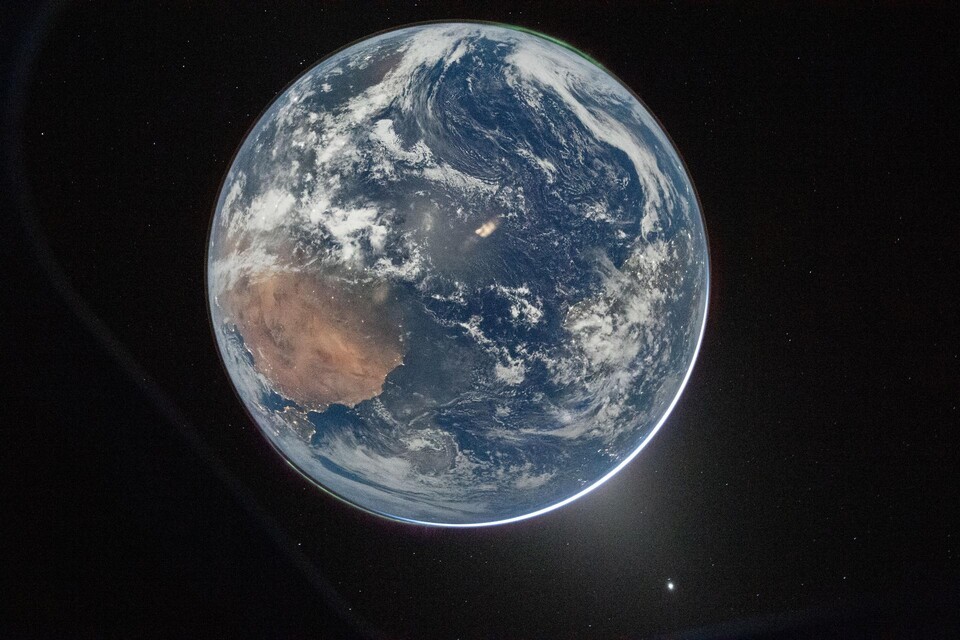
On April 2, 2026, NASA astronaut and Artemis II mission commander Reid Wiseman took a photograph of Earth from the window of the Orion spacecraft. The photo was taken after completing the lunar orbit insertion burn and shows two auroras (upper right and lower left) and the zodiacal light (bottom right) occurring during Earth’s solar eclipse. (Source: NASA)
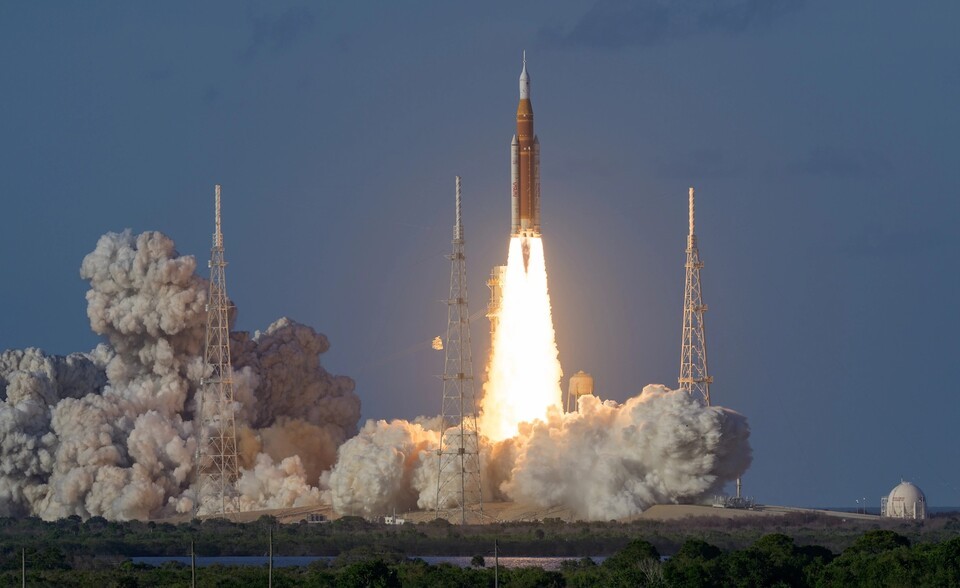
Humanity has left Earth once again. It’s been 54 years since the last time. NASA’s crewed lunar exploration project, Artemis II, successfully launched on the 1st (local time). On the 2nd, having completed the translunar injection burn, four astronauts exited Earth’s orbit for the first time since the end of the Apollo program in 1972, closing a gap of over half a century.
The crew members are commander Reid Wiseman, pilot Victor Glover, mission specialist Christina Koch (all from NASA), and Canadian Space Agency’s Jeremy Hansen. The Orion spacecraft they are aboard is currently flying towards the moon.
The translunar injection refers to the moment the spacecraft exits Earth’s orbit and heads towards the moon. By reigniting the rocket to increase speed and change direction, the spacecraft enters a path dominated by lunar gravity. This burn must be successful to start the lunar journey.
Once the burn was completed, Commander Wiseman took a photograph of Earth from the window of the Orion spacecraft. The photo, released by NASA, captured two auroras near the poles and a triangular zodiacal light at the bottom right.
Zodiacal light is the light created when sunlight scatters off tiny dust particles spread across Earth’s orbital plane. It is difficult to see from Earth due to light pollution but is clearly visible from space.
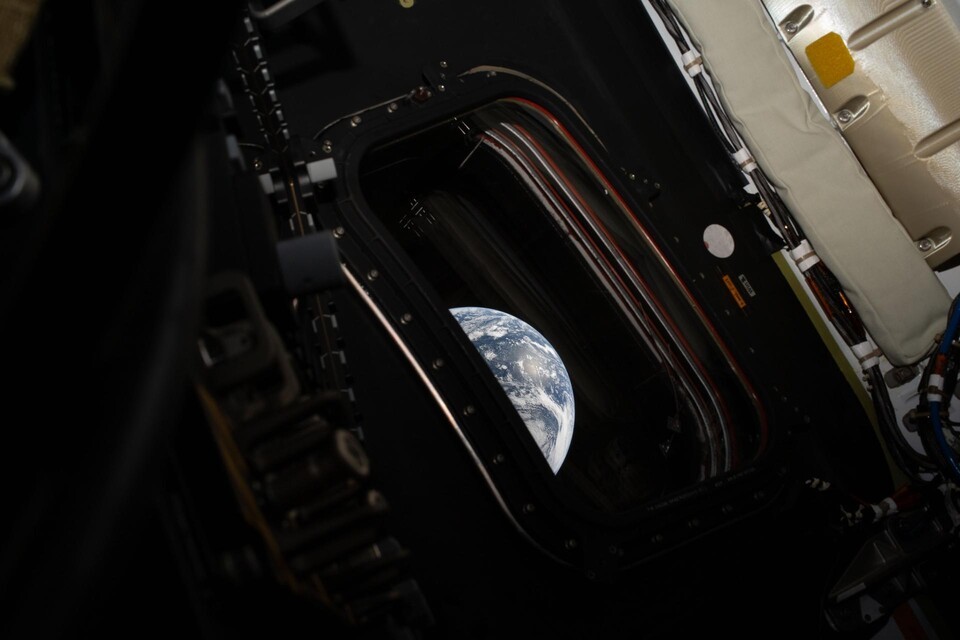
By the 3rd (local time), the spacecraft was flying about 160,000 km from Earth. Ground control scheduled the first orbital trajectory correction burn (OTC) for 6:49 PM (US Eastern Time) that day.
This involves applying thrust for about 8 seconds to adjust the velocity by 0.2 m/s. Although it seems minor, this slight adjustment can change the final destination by hundreds of kilometers on the long journey of hundreds of thousands of kilometers.
Artemis II’s closest approach to the moon will be on the 6th (Korean time on the 7th morning), passing through 7,400 km above the far side, setting a new record for the furthest manned spaceflight. The previous record of approximately 400,000 km was set by Apollo 13 in 1970. During the 40 minutes passing the far side, all communications with Earth will be cut off.
This 40-minute period is the most anticipated moment of the mission. The moon keeps the same side facing Earth due to synchronous rotation and revolution, meaning the far side has never been directly seen by human eyes. During a six-hour loop around the moon, astronauts will observe and photograph about 20% of the sunlit far side.
The NASA ground science team has already identified observation targets, including the Orientale Basin, Pierazzo Crater, and Ohm Crater. These terrains will be seen directly by the human eye for the first time.
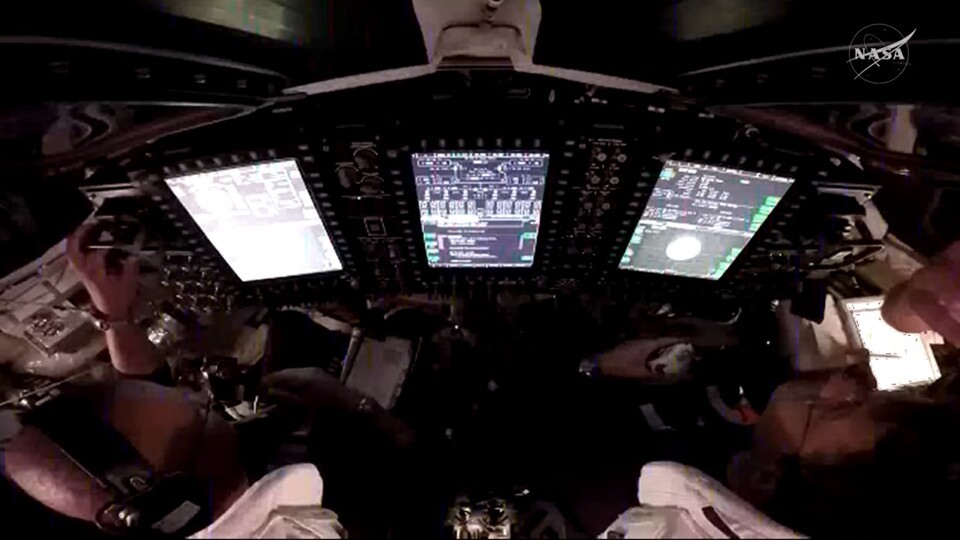
Preparations for lunar observations began on the 3rd. Two hand-held cameras were equipped with 80-400mm telephoto lenses and 14-24mm wide-angle lenses. The team tried to secure the equipment and adjust their movements within the cramped cabin without bumping into one another. The cabin size is likened to two minibuses stuck together.
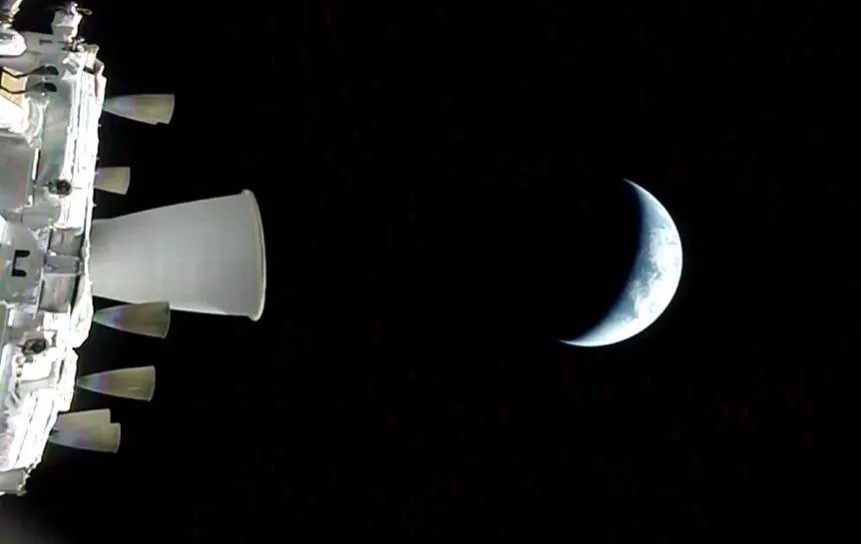
Even during distant space flights, the crews’ schedule is tightly arranged. On April 3rd, their activities included cardiopulmonary resuscitation and airway obstruction response training, emergency communication system checks, and medical kit inspections. Just like on Earth, emergencies can occur anytime in space. The difference is that one cannot expect immediate help.
In communication, new technology was tested. Christina Koch activated the optical communication system aboard Orion, connecting with two ground bases in the United States. High-definition images and mission data were transmitted to Earth.
This technology can send data at much higher speeds than conventional radio frequencies, and this mission will demonstrate its reliability for future moon and Mars explorations.
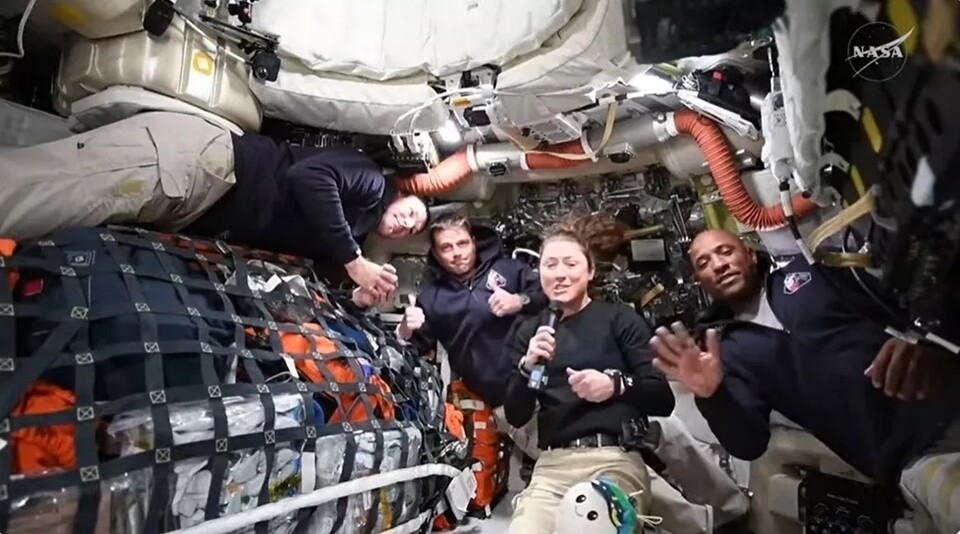
Pilot Victor Glover spoke via video call with Earth, saying, “It’s really cool and beautiful.” As the first Black astronaut to go to the moon, he remarked, “Wherever you’re from, whatever you look like, we are all one,” while gazing out at the universe through the window.
Artemis II will not land on the moon. This mission is for orbiting and returning, validating flight processes, while the data and experience gained on this journey will form the basis for the following lunar landing mission, Artemis III. Humanity’s return to the moon is being made step by step.