
China’s Leju Robotics and Dongfang Precision have launched an automated production line in Foshan, Guangdong Province, where humanoid robots are produced every 30 minutes. While the production capability is among the world’s best, the AI brain technology necessary for autonomous operation in the field remains incomplete. Industry insiders are confronted with a structural imbalance of ‘hardware excess, software void’ and are seeking solutions.
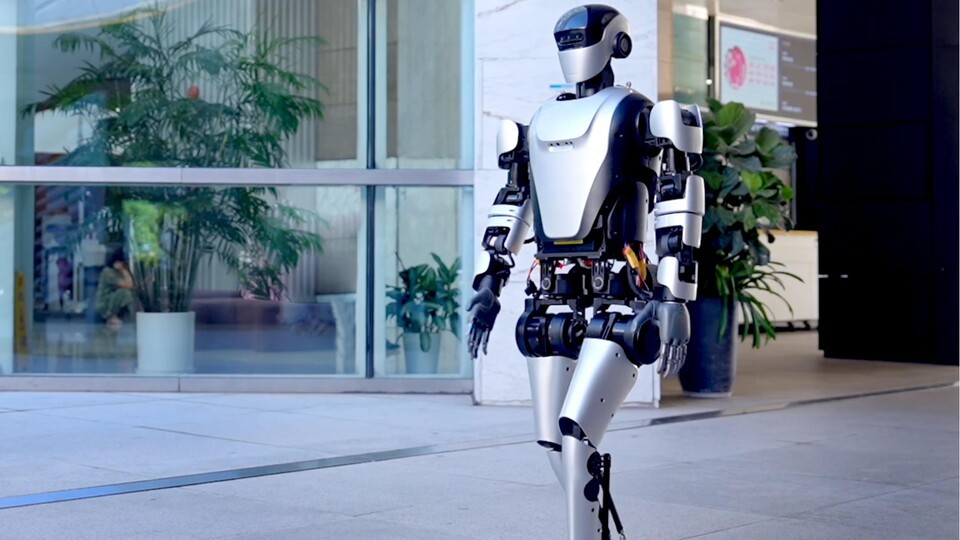
The factory where robots produce robots has started operating.
At this production line in Foshan, Guangdong Province, a humanoid robot departs from the end of the conveyor belt every 30 minutes.
This translates to 48 units a day, or 1,440 units a month. The jointly established production line by Leju Robotics and Dongfang Precision can produce over 10,000 finished products annually after processing 24 precision assembly processes and passing 77 quality inspections. This marks a more than 50% increase in production efficiency compared to previous manual and semi-automated methods.
However, a puzzling paradox exists in front of this factory. Despite the world-leading production speed, these robots still have a long way to go before they can work autonomously in the field.
Some units have already been deployed in the field. Last October, humanoid robots were deployed at an engine factory in Beijing to handle container transportation tasks. CATL, a battery company, has also begun mass production by deploying humanoids on their production line.
Still, many believe these success stories are overstated. They argue that these robots are only functional in environments tailored for simple repetitive logistics tasks and stop working with minor variables.
Industry experts define 2025 as a ‘proof of concept’ stage from ‘0 to 1’ and 2026 as an early commercialization phase from ‘1 to 10’. The operation of the 10,000-unit production line signals this transition but is not the complete outcome.
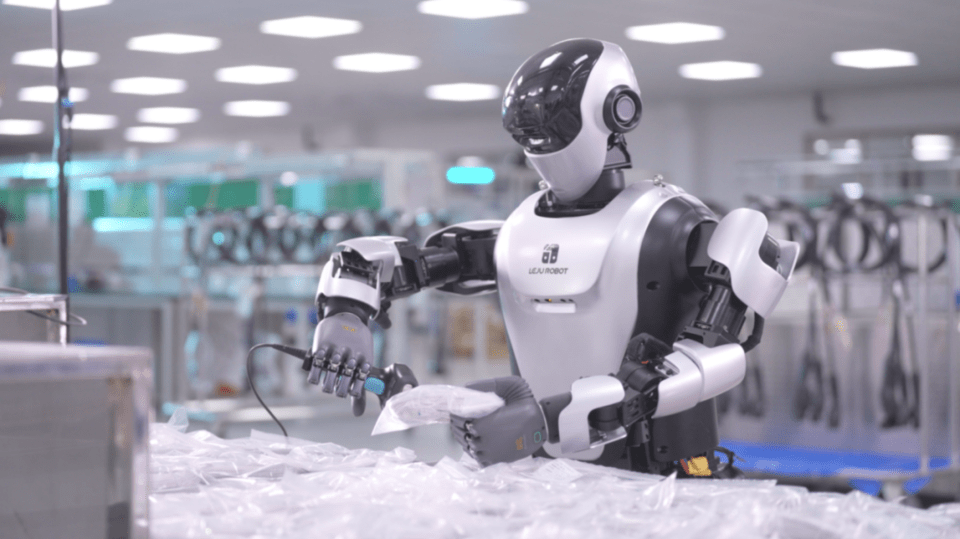
For humanoid robots to function properly in actual work environments, merely walking and picking up objects is insufficient. They must be capable of self-assessment and response even if the lighting changes, the order of work shifts, or unexpected situations arise. This requires AI capable of performing both ‘cerebellum’ (motor control) and ‘cerebrum’ (situational assessment) functions.
Leju Robotics openly acknowledged this point, identifying reinforcement learning-based motor control and tailored situational assessment model development as core tasks following a 300 billion won investment. While the body can be quickly produced, the AI that makes those bodies practically usable is still under research.
According to a report by global IT market research firm Gartner at the beginning of the year, fewer than 20 companies worldwide will use humanoid robots in actual production processes in the manufacturing and logistics sectors by 2028. The lack of technical completeness, difficulty integrating with existing processes, and high maintenance costs were cited as barriers.
Three main solutions are being observed by the industry.
▲ The first is a ‘specialization strategy’. This involves introducing robots optimized for specific tasks rather than general-purpose robots first. Renault, a French car manufacturer, recently decided to introduce 350 bipedal robots from startup Wandercraft.
The distinct feature of this robot is the absence of a ‘head’. The rationale is that in manufacturing lines with numerous repetitive tasks, a head filled with costly visual and auditory sensors might be more of a cost and breakdown factor.
▲ Another solution is the competition to secure ‘AI learning data’. Like Hyundai, using constantly operating production sites as real testbeds to continuously accumulate data on unforeseen situations encountered during robot operations. The more data is collected, the better the AI becomes in decision-making, and the better the robots can autonomously respond to new situations.
▲ Finally, developing AI that operates without prior learning. Previously, robots needed thousands of repeated learning sessions whenever encountering new objects or environments. Recently, some companies have begun incorporating models into robots that can develop actions based on situational observations without prior examples. South Korea’s Neuromeka is developing the humanoid EIR with the so-called ‘zero-shot AI,’ targeting commercialization in the first half of the year.
The reason mass production isn’t the real battleground
The total corporate value of Chinese humanoid robot companies has already surpassed 200 billion yuan, around 41 trillion won. National support is also substantial. A 9,700 ㎡ humanoid robot mass production technology verification platform has opened in Beijing, accessible to supply chain companies, universities, and research institutions.
The speed of development is indeed impressive. In 2025, China’s humanoid robot shipment surged by over 650% YoY, reaching 18,000 units. The industry defines 2026 as the stage for full-scale mass production and market expansion.
However, Gartner points out a different core issue. The current competition is shifting from ‘who makes it faster’ to ‘who operates it longer and more stably in the field’. With each robot costing 200 to 300 million won, mass production becomes a stockpile of inventories if they don’t work properly after field deployment.
Leju Robotics’ production line is evidence that the humanoid industry has surpassed hardware limitations. The distance between the bodies completed every 30 minutes and the brain that makes those bodies usable in the field—that is indeed the current frontline of this industry’s battle.