
Key takeaways
▶ Samsung Electronics is negotiating with major customers over supply prices for high-bandwidth memory (HBM) in 2027.
▶ The transition to HBM4, combined with tight supply, could push Samsung’s average HBM selling price to more than twice this year’s level, according to market forecasts.
▶ KB Securities expects Samsung’s HBM selling prices in 2027 to rise by more than 100% from this year. Market researcher TrendForce also forecasts a 121% increase in the average HBM selling price next year.
▶ Samsung began mass production and shipments of its sixth-generation HBM4 in February. Supply of HBM4 is set to ramp up next year. HBM4 uses 1c DRAM and a 4-nanometer logic base die.
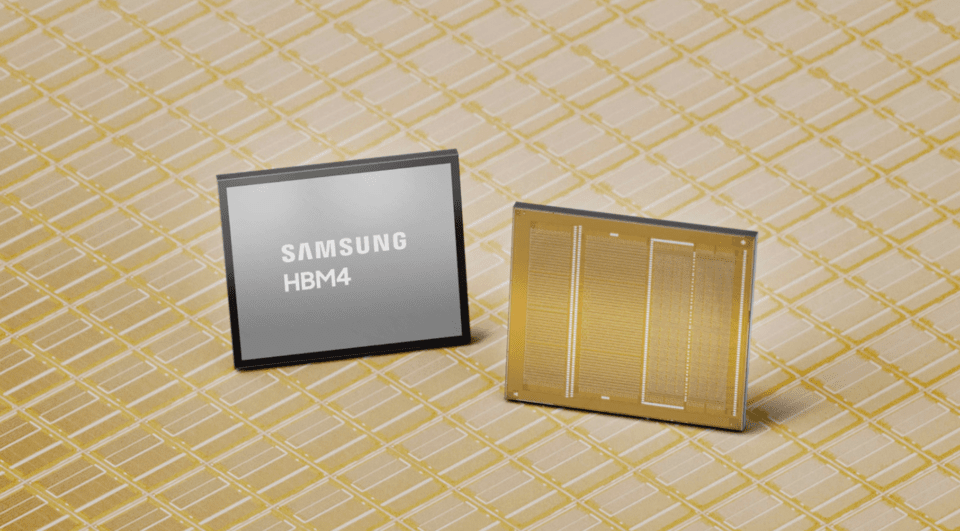
Forecasts are mounting that Samsung Electronics’ high-bandwidth memory (HBM) prices will rise sharply next year. Its main products are shifting from HBM3E to HBM4, while tight supplies of AI memory and rising prices for conventional DRAM are adding to the upward pressure.
According to industry sources and securities analysts on the 7th, Samsung is negotiating HBM supply prices for 2027 with major customers. Discussions over next year’s supply volumes with key customers, including Nvidia and Broadcom, are underway, and price negotiations are reportedly nearing their final stage.
The market believes Samsung has proposed substantially higher prices for HBM4 than for the previous-generation HBM3E. However, the prices currently being discussed are offers made during negotiations, and final contract prices have not yet been set.
From HBM3E to HBM4: Average prices could double
The biggest driver of the price increase is the generational transition in HBM. Samsung began mass-producing HBM4 in February and shipped commercial products to customers. HBM4 is rapidly becoming the centerpiece of Samsung’s HBM business, replacing HBM3E.
Analysts expect average selling prices (ASPs) for HBM to rise significantly as a result.
KB Securities forecasts that Samsung’s HBM selling prices in 2027 will be more than 100% higher than this year. It expects HBM4’s share of sales to expand from about 40% this year to around 80% next year, with HBM4 lifting the average selling price across Samsung’s HBM portfolio.
On September 29, market researcher TrendForce forecast that the average selling price of HBM industry-wide would rise 121% in 2027 compared with this year.
TrendForce cited continued growth in AI server demand amid tight HBM supply, the increasing share of the relatively expensive HBM4, and expanded HBM4E production from the second half of next year.
Rising conventional DRAM prices are also lifting HBM’s value
Rising prices for conventional DRAM are also affecting HBM price negotiations. TrendForce forecasts that conventional DRAM contract prices will rise 10–15% in the fourth quarter of this year compared with the previous quarter. Demand for high-performance memory, particularly for AI servers, is growing, prompting DRAM makers to prioritize server and HBM products when allocating production capacity for advanced process nodes.
HBM and conventional DRAM share production capacity. As HBM output increases, fewer wafers and less advanced-node capacity are available for conventional DRAM.
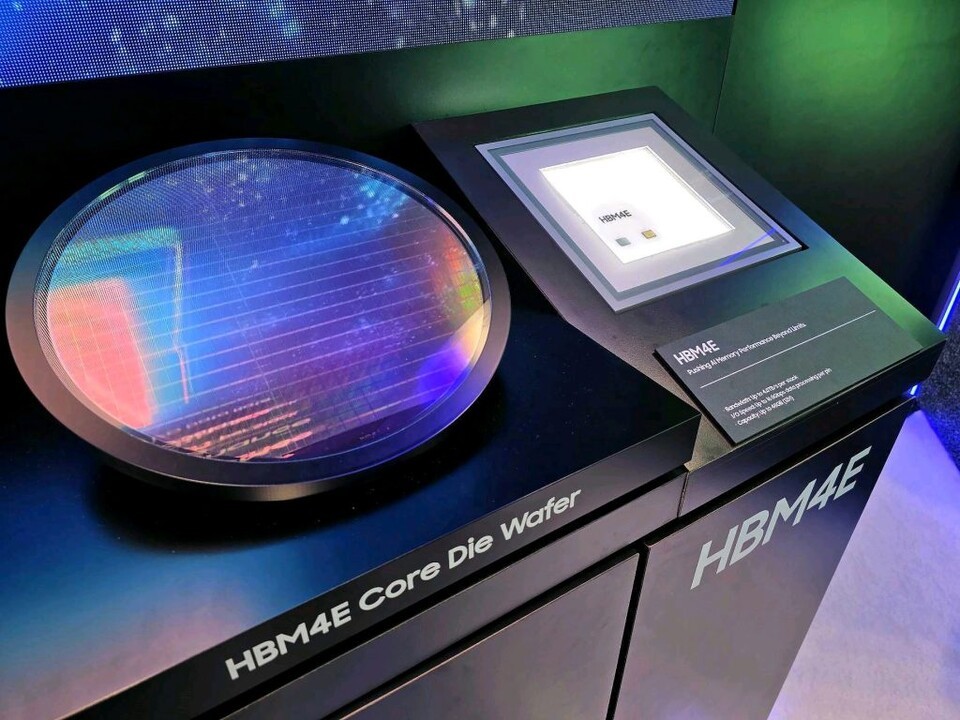
HBM also consumes more wafer area than conventional DRAM. Industry sources say HBM requires substantially more wafer area than conventional DRAM of the same capacity.
Samsung itself expects HBM to account for nearly 30% of total wafer production capacity in the DRAM industry next year, up from about 20% currently.
In effect, expanding HBM production is putting pressure on conventional DRAM supply, while rising conventional DRAM prices are in turn strengthening HBM’s pricing power.
HBM4 uses a 4-nanometer base die, raising manufacturing costs
HBM4 is also more difficult to manufacture than its predecessors, adding to the factors driving prices higher. Samsung’s HBM4 stacks 1c DRAM, the sixth generation of its 10-nanometer-class DRAM, and uses a logic base die made with Samsung Foundry’s 4-nanometer process.
Whereas HBM3E and earlier products were made primarily using memory processes, advanced logic processes have become much more important with HBM4. The product’s price is affected not only by DRAM production costs but also by the cost of advanced foundry processes.
Samsung’s HBM4 reliably delivers data transfer speeds of 11.7 gigabits per second per pin and supports speeds of up to 13 Gbps. When announcing mass production in February, Samsung said it had secured stable yields from the outset by using 1c DRAM and a 4-nanometer base die.
Next year’s HBM prices are likely to reflect not only supply shortages but also the greater manufacturing complexity and higher costs associated with the transition to HBM4.
Micron has already signed 2027 contracts at higher prices
Competitor Micron is also pushing up HBM prices for next year. On its recent earnings call, Micron said it had already sold a substantial portion of its 2027 HBM output and that prices were significantly higher than in 2026.
Micron CEO Sanjay Mehrotra said HBM price increases would begin to have a fuller impact from 2027, narrowing the profitability gap between conventional memory and HBM.
With Micron already securing higher prices in actual 2027 contracts, Samsung and SK hynix are also in a more favorable position in their price negotiations.
TrendForce likewise expects the HBM supply shortage to continue through 2027, given rising demand for AI servers and limited production capacity.
HBM to account for a larger share of Samsung’s DRAM revenue
As both prices and shipments increase, HBM is expected to make up a larger share of Samsung Electronics’ DRAM business.
Hana Securities expects HBM4 shipments to major customers to ramp up in 2027, bringing HBM’s share of Samsung’s total DRAM revenue to around 15%.
However, higher prices will not necessarily translate directly into increased profits. HBM4 yields, the pace of customer qualification, actual contract prices, and supply volumes by product will all be factors. The high HBM4 prices being discussed in the market are not yet final prices agreed with customers.
The key question is how much the price and shipment increases will contribute to Samsung’s results as it ramps up HBM4 supply next year.