
The subscription model in which users pay monthly for health management is being put to the test in the Korean wearable market. Oura, the world’s No. 1 smart ring maker, has entered Korea with a ring-shaped device and a paid membership bundled together.
The Finnish company Oura held a press briefing at Lotte World Tower in Songpa-gu, Seoul, on the 18th and said it will officially launch the “Oura Ring 5” in Korea on the 25th. This is its first official entry into the Korean market since the company was founded in 2013.
According to market researcher Omdia, Oura accounted for about 74% of global smart ring shipments in the first half of last year. Samsung Electronics and India’s Ultrahuman each followed with 9%. Oura’s revenue last year exceeded $1 billion, and its paid membership base reached 5 million.
How can a ring measure health?
A smart ring is a device that shines light into blood vessels in a finger using sensors inside the ring to read the body’s condition. It collects signals such as heart rate, body temperature, and blood oxygen day and night. Because it is lighter than a watch and can be worn while sleeping, it is well suited for sleep tracking.
One reason ring-type devices, which entered the market later than wrist-worn devices, have grown is wearing fatigue. Many users find smartwatches cumbersome because they must be charged every day and are bothersome to wear while sleeping. Ring-type devices have a lower profile, making it easier to collect uninterrupted data around the clock.
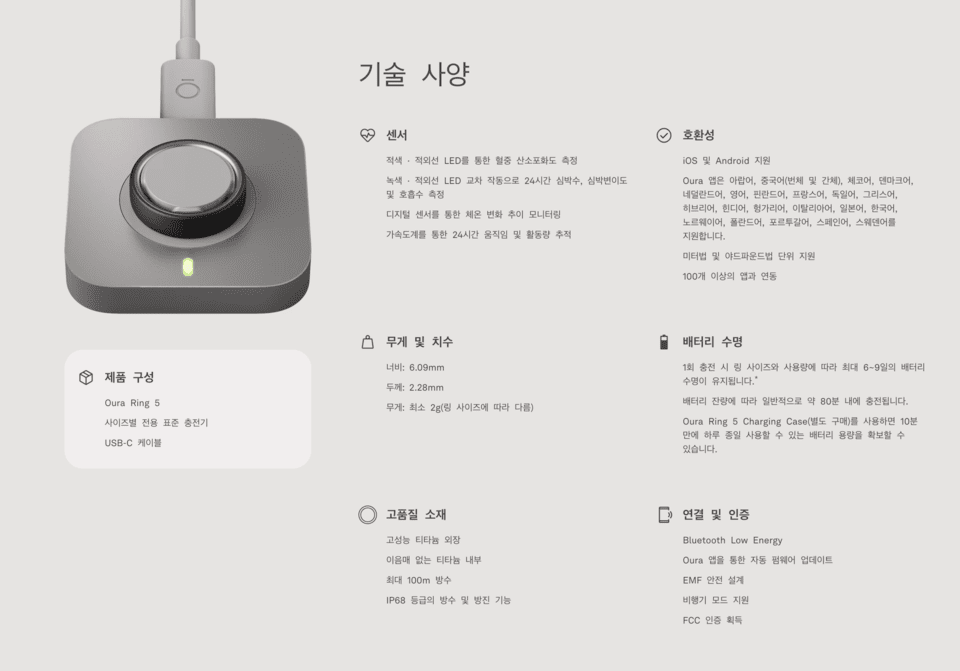
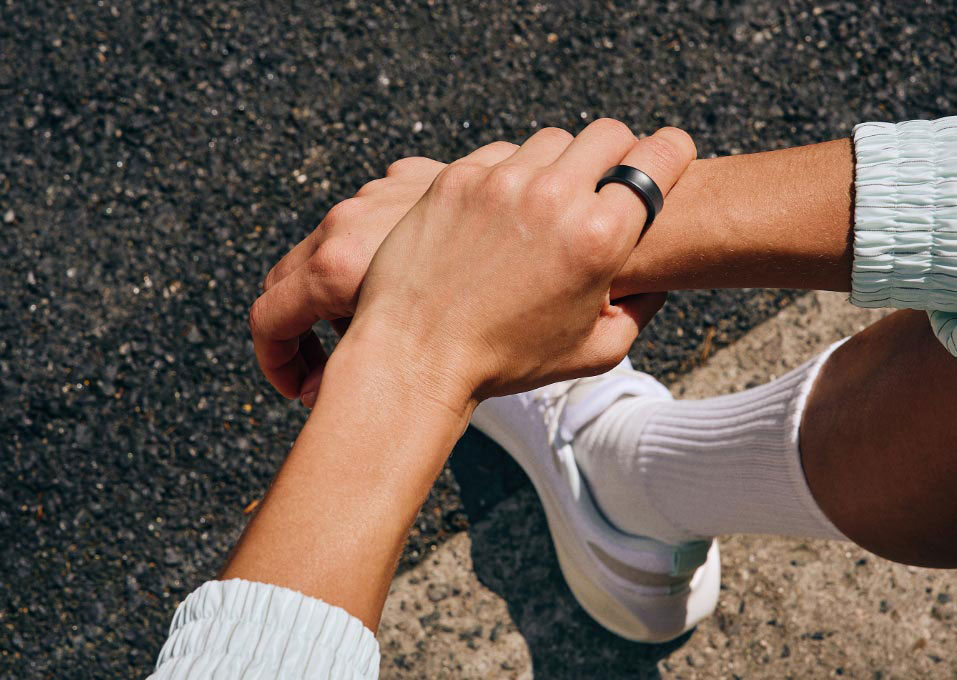
The Oura Ring 5 measures 6.09 mm in width and 2.27 mm in thickness, reducing its bulk by about 40% compared with the previous model. It lasts up to seven days on a single charge and supports water resistance down to 100 meters. Using the signals it collects, it analyzes more than 50 indicators, including sleep, activity, and stress.
The company also explained how it maintained accuracy while shrinking the device. Brian Lynch, Oura’s senior vice president of hardware, said, “We maintained signal quality by using a stronger light emitter and placing the sensors closer to the skin.” The thinner the ring becomes, the better the fit, which helps with measurements that continue through the night.
The features rely on accumulated data. It includes “symptom radar,” which alerts users in advance to signs of illness when unusual biological signals are detected, and stress tracking that shows the flow of tension and recovery in 15-minute increments. It also provides health information for women’s life stages, from menstrual cycles to pregnancy and menopause.
For sleep analysis, the company has applied technology accumulated over 12 years. It says it has refined its algorithms with the goal of approaching the accuracy of polysomnography, the sleep test performed in hospitals.
Compared with Galaxy Ring
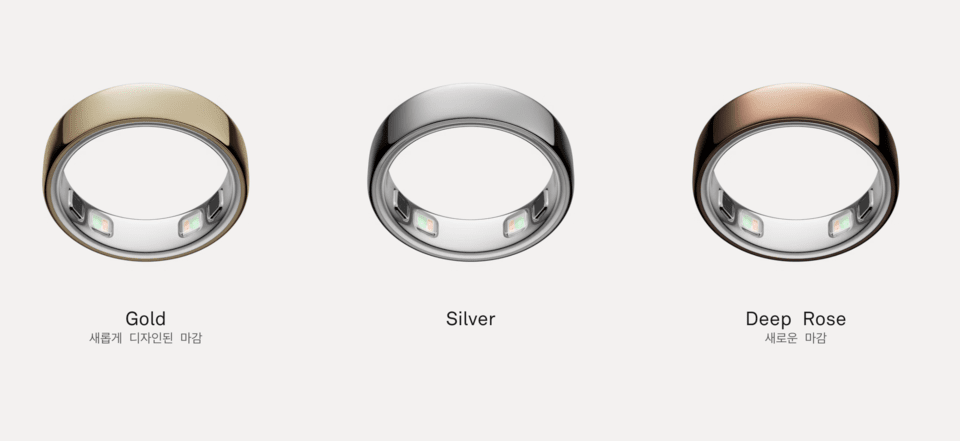
The biggest difference is how users pay. The Oura Ring 5 is priced at 630,000 won or 780,000 won depending on color. To view health analysis and personalized advice, users must subscribe to a membership costing 9,400 won per month, or 112,800 won per year. Without membership, only basic scores are visible, while detailed analysis is locked.
If used for two years, the device and subscription cost at least 850,000 won in total. The Galaxy Ring was launched in Korea in 2024 at 499,400 won, and it provides health analysis through the Samsung Health app without any separate subscription fee. The price gap felt by consumers extends beyond the device price itself.
Samsung Electronics has not released a successor to its first Galaxy Ring, which debuted in 2024. Last month, President Roh Tae-moon said, “We won’t release new products as if we were doing so periodically,” emphasizing technological refinement. The two companies have long been aware of each other, with Samsung even filing a lawsuit in U.S. court before the Galaxy Ring launch in 2024 seeking confirmation that it had not infringed Oura’s patents.
Oura highlights its 12 years of biometric data and analytics technology as its differentiator. It also emphasizes that it supports both Apple’s operating system and Android, so it is not tied to a specific smartphone. George Abbott, Oura’s head of Asia-Pacific, said, “We are the company that created the smart ring market and the market leader.”
What will it take for paid health management to take hold?
The key question is whether Korean consumers will pay monthly for health advice. Korea’s wearable market is centered on smartwatches, and there is a strong perception that health apps should be free. Abbott also acknowledged the subscription model as “a challenge that requires explaining its value.”
Korean consumers are not necessarily reluctant to subscribe in general. They are already familiar with music, video, and delivery memberships. They also spend hundreds of thousands of won per month on gyms and personal training. The issue is that people are not convinced the health advice provided by an app is worth the money. Making users feel the accuracy of measurement and the usefulness of the advice is considered a more difficult task than selling the device.
The company cites retention rates as evidence. More than 80% of customers who have used the membership for a year continue subscribing. About half of members started the service through recommendations from family or friends. The company argues that people who try it recognize its value.
It has also laid the groundwork for entering the Korean market. From the 25th to the 7th of next month, it will open a pop-up store at Lotte World Mall to offer hands-on experience, and it will operate 34 service centers nationwide along with a Korean-language call center. It also said subscription revenue will be reinvested in research and development and that it will not sell health data to third parties.
In the United States, corporate welfare programs and insurers have increasingly provided Oura devices to employees and policyholders. This is a way to tap demand for corporate health management rather than relying solely on individual consumers’ wallets. Analysts say the subscription barrier could be lowered in Korea as well if the product is combined with corporate welfare or medical screening services.
Consumers should consider their needs when choosing. For those who want to manage sleep problems or find watches uncomfortable, a ring-type device can be an alternative. If the subscription fee is a burden, it is reasonable to compare total costs with the free-analysis Galaxy Ring or even a smartwatch.
The domestic smart ring market is still in its early stage. With Oura’s entry, choices have expanded, and Samsung Electronics may also feel pressure over the timing of a successor model. Whether the paid health management model takes root is likely to be reflected in Oura’s subscription retention rate over the next year.