
SpaceX continues expanding its satellite internet network using reusable launch vehicles.
On the 11th at 11:58 a.m. local time, SpaceX launched a Falcon 9 rocket from Launch Complex 40 at Cape Canaveral Space Force Station in Florida. The Starlink 10-19 mission carried 29 upgraded Starlink satellites into low Earth orbit. After liftoff, the rocket climbed along a northeast trajectory, and the satellites were deployed into orbit 64 minutes after launch.
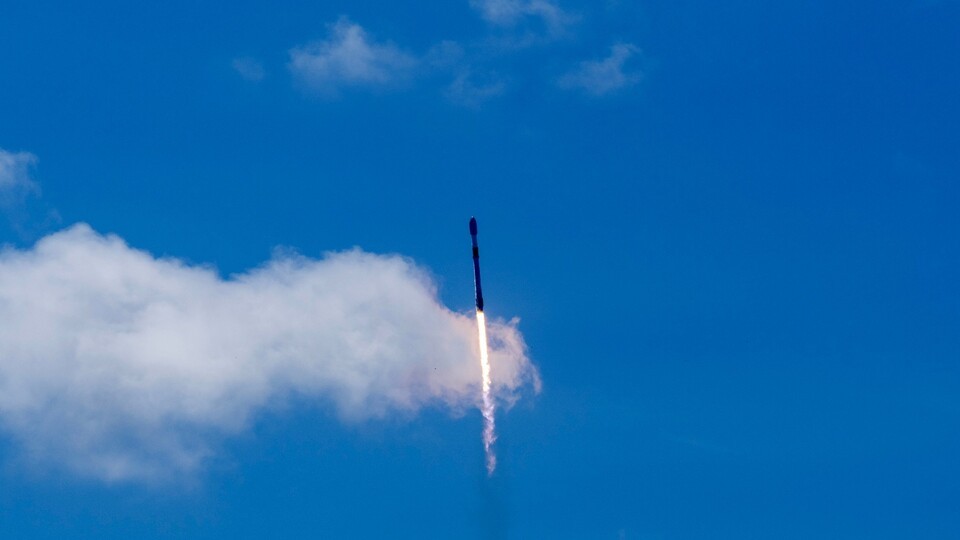
Falcon 9 is a reusable rocket that recovers and reuses its first-stage booster. After separating the second stage carrying the payload, the first stage reorients itself and lands on the ground or on an unmanned drone ship at sea. Unlike the traditional method of discarding the rocket after each launch, this system lowers costs by using the same vehicle repeatedly.
The booster used in this mission was flying for the 18th time. It has handled missions including Crew-9, a crewed spaceflight; the launch of Firefly’s Blue Ghost 1 lunar lander; Framon2, a private crewed flight in polar orbit; as well as communications satellite launches and Starlink missions. About eight minutes after launch, it landed on an unmanned recovery ship in the Atlantic and was retrieved again.
The launch had been delayed by one day. It had originally been scheduled for the 10th but was canceled due to weather conditions. The U.S. Space Force’s 45th Weather Squadron forecast an 85% chance of favorable weather during the launch window, and the mission proceeded normally.
Using a booster 18 times would have been hard to imagine just a few years ago. SpaceX has established the process of inspecting and refurbishing recovered vehicles before launching them again as a standard procedure. This has helped reduce rocket manufacturing costs and preparation time, narrowing the launch interval to just a matter of days.
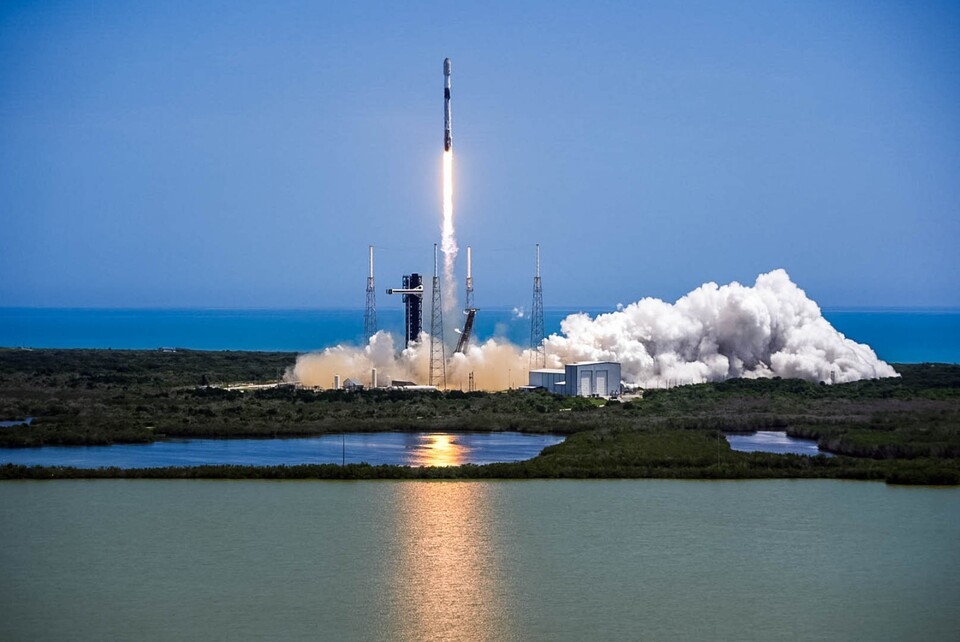
Launch frequency is accelerating rapidly. Starlink 10-19 was the 93rd Falcon 9 launch this year and the 72nd dedicated to Starlink. On the 8th, 24 Starlink satellites were launched from Vandenberg Space Force Base in California, marking the 50th West Coast launch.
The number of Starlink satellites in orbit has reached 10,939. Of those, 10,923 are currently operational. The cumulative number launched stands at 12,692, while 1,753 have reentered the atmosphere and burned up after reaching the end of their service life. It is the largest satellite constellation ever created by humanity.
As the constellation grows denser, service quality improves. Starlink is used to provide internet access to mountainous areas, at sea, and in disaster zones where terrestrial communications networks do not reach. Because more satellites are needed to reduce latency and stabilize speeds, repeated launches are seen as critical to the business.
The satellites launched were placed into orbital planes serving mid-latitude regions, targeting densely populated areas with strong demand for ultra-high-speed internet. After entering the launch orbit, the satellites move on their own to the target altitude using their onboard propulsion systems.
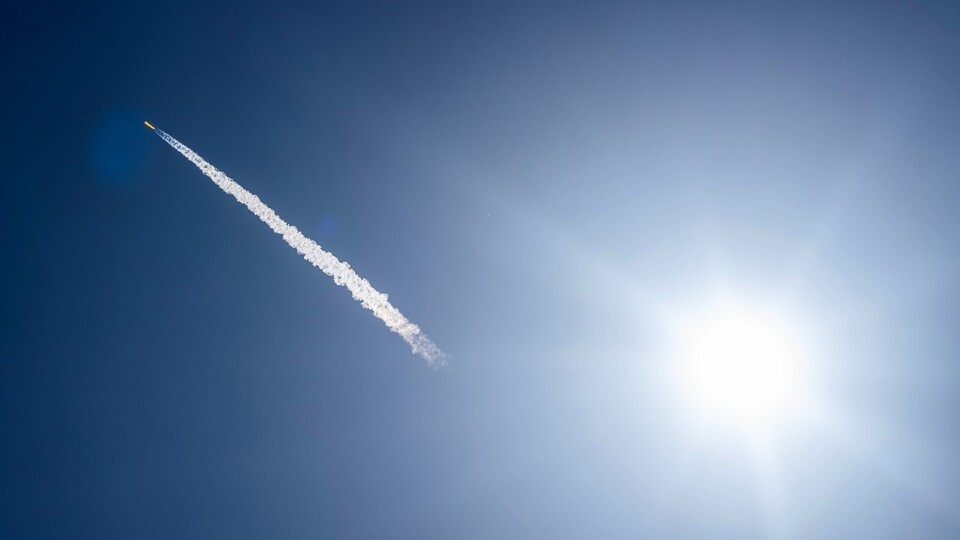
The pace of launches has also brought new burdens on the space environment. As the number of objects in orbit increases, managing collision risk has become a constant challenge.
At present, 10 Starlink-related close-approach cases with a high probability of collision are being tracked, but no cases are considered to represent a high risk. Five satellites that have reached the end of their service life and are approaching reentry are also being observed.
Debris has also become an issue. On the 5th, the upper stage of a Falcon 9 launch from January last year drifted between Earth and the Moon for more than a year before crashing into the far side of the Moon. It reportedly struck near the Einstein crater at a speed of 8,690 kilometers per hour.
Competition in the satellite internet market is also intensifying. Late entrants including Amazon have begun building their own satellite networks, but their launch capability and launch frequency are seen as far behind. In other words, the outcome of the satellite network business depends on how often rockets can be launched.
The implications for South Korea’s space industry are also significant. As operators that lower launch costs through reuse dominate the market, securing a means of launching satellites is directly tied to business sustainability.
Korean satellite companies still depend on foreign launch vehicles to send their satellites into space. With the revision of the Space Development Promotion Act announced yesterday easing procedures for domestic repeated-launch approvals, securing the capability to increase launch frequency is now seen as the next challenge.