
Under the U.S.-Iran ceasefire, tanker traffic through the Strait of Hormuz has resumed, and Brent crude has fallen to the mid-$70s per barrel.
About 70% of South Korea’s oil and 54% of its naphtha pass through the Hormuz route, making diversification of import sources and reducing dependence urgent tasks.
[One-minute summary]
▶ U.S. President Donald Trump claimed that as much as 19 million barrels of oil passed through the Strait of Hormuz in a single day, a record high.
▶ With the U.S.-Iran ceasefire and the resumption of nuclear talks, the blockade has been lifted and Brent crude has fallen to the mid-$70s.
▶ Of the oil South Korea uses, about 70% is imported from the Middle East, and 99% of that passes through Hormuz. A blockade would be a direct blow.
▶ U.S. intelligence says Iran could shut the strait at any time. Supply-chain risks remain.
▶ The way out is to diversify import sources, reduce oil dependence, maintain strategic reserves, and monitor strait indicators continuously.
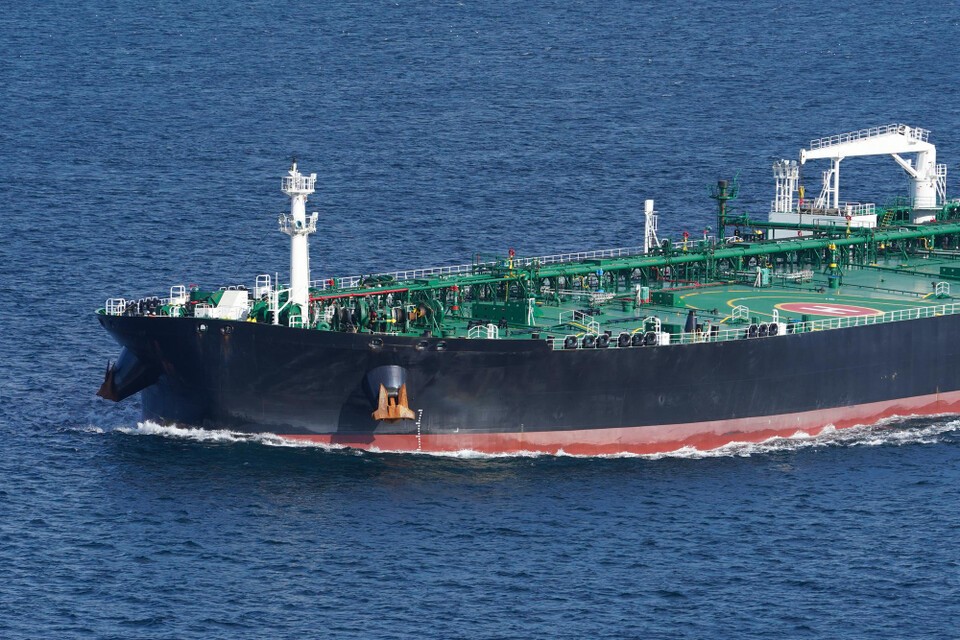
Oil tankers are once again setting out to sea from the Strait of Hormuz. As the United States and Iran entered follow-up nuclear talks after their ceasefire, the world’s largest oil shipping route, which had been blocked, is moving back toward normal operations.
U.S. President Donald Trump presented this trend as a diplomatic achievement. On the 23rd (local time), he posted on Truth Social that 19 million barrels of oil flowed through the Strait of Hormuz last Monday, calling it a record high. He added that oil prices were falling and the world was becoming safer.
◆ Prices fall as the blockade is lifted
The effects of the ceasefire are already appearing in prices. Brent crude was trading at $75 to $77 per barrel, while West Texas Intermediate (WTI) was in the low $73 range. Compared with the war period, when prices at one point came close to $100, the decline is clear.
During the blockade period, passage essentially came to a halt. Daily cargo volume, which normally exceeded 20 million barrels, had at one point fallen to between 2 million and 5 million barrels. After the U.S. and Iran signed an agreement on the 17th to end the war, the blockade was lifted and traffic has been recovering rapidly.
Iran has also acknowledged the change. Iranian Foreign Minister Abbas Araghchi said sanctions on crude oil and petrochemical exports had been lifted, the blockade had been removed, and part of frozen assets had been released. The U.S. side said it planned to release the full text of the agreement this week.
◆ Questions remain over the “record-high” figure
The 19 million barrels cited by President Trump has not yet been independently verified.
There is also a contrary interpretation. According to data from the International Energy Agency (IEA), average traffic through the strait before the U.S. attack on Iran was around 20 million barrels per day. That is more than the figure the president called a record. Ship-tracking data also do not fully align. According to one maritime intelligence firm, 109 vessels crossed the strait from Saturday through Monday, the highest for a three-day period since the war began, but still below the prewar daily average of 140 ships.
What matters more than whether the figure is correct is the direction of the market. The market is already easing concerns about supply disruptions. As partial easing of sanctions on Iran and the reopening of the strait coincide, the risk premium is being stripped away.
Risk has not disappeared. U.S. intelligence believes Iran could shut the strait at any time if it chooses. The possibility of threats to navigation in the Red Sea’s Bab al-Mandab Strait via the Houthis in Yemen has also been raised. The ceasefire does not mean the blockade is over; it is closer to a temporary pause while the ability to blockade remains intact.
◆ South Korea’s 70% bill, and the way out
At this point, the bill South Korea has been handed is not light. Roughly 70% of the oil South Korea uses comes from the Middle East. According to a Korea Institute for Industrial Economics and Trade analysis, 99% of Middle Eastern oil passes through Hormuz. More than half of naphtha, a petrochemical feedstock, also depends on this strait for imports. If the strait is blocked, the structure would shake not only refining and petrochemicals but also power generation and exports overall.
The channel through which price shocks spread is also narrow. The Korea Institute for Industrial Economics and Trade estimates that a 10% rise in global oil prices increases domestic manufacturing production costs by an average of 0.71%. A report from the Hyundai Research Institute found that in 2024, South Korea’s oil dependence rate was the highest among the 37 OECD member countries. It consumes 5.63 barrels per $10,000 of GDP.
Then perhaps now, with the blockade lifted, is the time to check preparedness. Structures must be changed during calm periods when crises are not yet reflected in prices so the next shock can be endured.
The outline of solutions is already clear. One axis is to broaden import sources beyond Hormuz. If Saudi Arabia sends oil via pipeline to Yanbu on the Red Sea side, South Korea can import that oil; some refiners also receive crude at the port of Fujairah in the UAE, outside the strait. However, the Red Sea is also not free from Houthi threats, so securing supply lines outside the Middle East remains a challenge.
Stockpiles and monitoring systems form another axis. The government says it is continuously tracking traffic conditions, freight rates, and insurance costs, and will consider releasing strategic reserves if necessary. For liquefied natural gas (LNG), more than 80% of imports already come from outside the Middle East, reducing short-term shocks.
The more fundamental exit is to reduce oil dependence itself. That is a long-term task involving industrial structure and the energy mix. The closing and reopening of the strait can happen repeatedly. Rather than feeling relieved that the blockade has been lifted, it is more realistic to build the strength needed to withstand the next one now.
There are also clear indicators companies can watch immediately. By tracking Brent prices, war-risk insurance premiums, the number of vessels transiting the strait, and port congestion together, they can read where the risk is heading. Today, when oil tankers are moving again, may be the calmest day to prepare for what comes next.