
Wireless communication equipment, the companies that build the backbone of telecom networks, are a group of stocks that has been rising sharply in the domestic market. A number of stocks have doubled in price in less than half a year. Yet it is not well known what these companies actually make or why they are drawing attention.
◆ Wireless communication equipment stocks: companies that build the skeleton of telecom networks
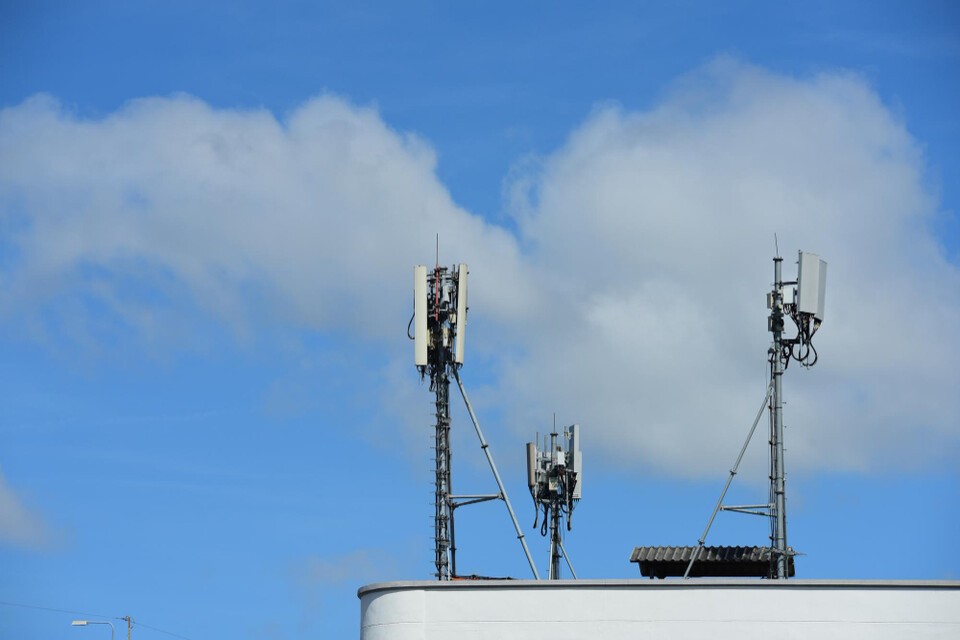
Wireless communication equipment refers to the gear that lays the path where mobile phone signals travel. When people make calls or watch videos, the signals pass through base stations installed in many places. A base station is a midpoint that connects a mobile phone to the communication network.
Companies that make the parts and equipment that fill base stations are grouped as wireless communication equipment stocks. Representative products include antennas that send and receive signals, filters that remove noise, and power components that increase output so signals can travel farther. Relay equipment that connects indoor communications and optical components that carry signals using light also fall into this area.
Their sales depend on how much telecom carriers spend on networks. When carriers install new base stations, equipment orders increase; when investment stops, work dries up. That is the structural reason the industry’s stock prices swing with the telecom investment cycle.
◆ AI RAN: the technology that gives base stations intelligence

The key term recently lifting this sector is AI RAN. RAN, or radio access network, refers to the outermost part of a communications network made up of base stations and antennas. Adding artificial intelligence to this is AI RAN.
Traditional base stations processed signals only according to fixed rules. AI RAN can read network conditions on its own and adjust traffic. It automatically allocates resources during busy hours and reduces wasted power. In other words, the communications network becomes much smarter.
The market expanded as Nvidia CEO Jensen Huang identified this technology as a next growth engine. The idea is to put Nvidia’s graphics processing units, which are used for AI computing, into base stations as well.
The strategy is to expand from money earned in data centers into telecom networks. As Nvidia opens up the market, telecom carriers will inevitably invest in new equipment, and expectations have formed that the benefits will flow to component and equipment companies.
◆ Three separate tailwinds arrived at once
What turned expectations into stock prices was timing. Different kinds of positive developments overlapped at nearly the same time.
The U.S. Federal Communications Commission (FCC) reopened spectrum auctions on the 2nd, local time. It was the first since it regained auction authority. Up to 800 MHz of additional spectrum could be released. A carrier that secures new spectrum must install equipment suited to it. It is, in effect, a preview of large-scale capital spending.
The broader U.S. trend of pushing out Chinese telecom equipment, including Huawei, is also an opportunity for domestic companies. Korean firms are being mentioned as suppliers to fill the gap left by Chinese equipment. Add to that the AI RAN expectations sparked by Nvidia, and the market has interpreted it as the starting line for a new telecom investment cycle.
The stock response was swift. Leading stocks in the sector surged 70% to 140% from the start of the year in a short period. Some jumped more than 20% in a single day. That explains why the entire sector has been volatile.
◆ For expectations to become earnings… the challenge for investors and the industry
One point needs to be noted here. Current stock prices already reflect expectations, not earnings. A share price that has doubled in half a year is closer to a result of pulling forward profits that have not yet been earned.
The solution is to distinguish expectations from actual results. Even within the same telecom equipment sector, the degree of benefit differs depending on whether a company is likely to actually supply the U.S. market and whether its core products are aligned with the AI RAN trend.
That is why brokers recommend stock-by-stock selection rather than blanket buying. For investors, the key is to check whether telecom carriers actually execute their capital expenditure plans and whether that money is recorded as sales for domestic companies.
The industry’s task is equally clear. Spectrum auctions and AI RAN have only opened the door to opportunity. To walk through it, companies must win global telecom carriers over with technology rather than price. Whether they have the quality and supply capacity to replace Chinese equipment will determine the success or failure of this cycle.
Telecom networks are a long-term investment area that, once built, are used for years. Whether this trend ends as a short-lived theme or solidifies into an earnings-backed rally will ultimately be a matter for the numbers to prove. The pace at which expectations turn into reality will be the inflection point that decides what comes next.