
China’s BYD has launched a plug-in hybrid electric vehicle (PHEV) offensive in the Korean market. It is the company’s second push after electric vehicles. At the Busan Mobility Show in June, it will unveil its next-generation PHEV, the “Sealion 6 DM-i,” and officially launch it in the second half of the year.
The real problem is not BYD’s entrance itself. Hyundai Motor and Kia withdrew all PHEV models from the domestic market at the end of 2021, when the Niro PHEV was discontinued. That gap has remained empty for more than five years.
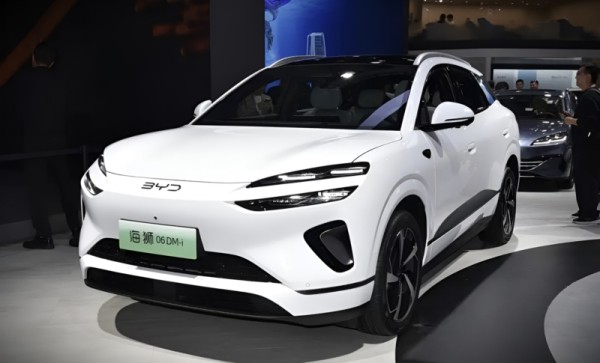
A PHEV that removes charging anxiety, the fastest path to mass adoption
The specifications of the Sealion 6 DM-i, BYD’s first PHEV, are clearly aimed at the Korean market. Combining a 2.5-liter turbo engine with dual motors, it can travel up to 2,100 kilometers on a single charge and full tank. That is enough to go from Seoul to Busan and back twice with distance to spare. In electric mode alone, it can run more than 200 kilometers, and its combined fuel economy reaches 34.5 kilometers per liter.
What this means goes beyond a simple spec race. It addresses the two biggest anxieties Korean consumers have about EVs: insufficient charging infrastructure and reduced driving range in winter. The idea is to commute on electricity in everyday life and rely on the engine for long-distance travel. There is no need to search for charging stations.
Consumers are already leaning in that direction. According to the Korea Automobile & Mobility Association, domestic hybrid vehicle sales rose from around 120,000 in 2020 to more than 410,000 in 2025. That is nearly a fourfold increase in five years, driven by consumers who want environmental benefits while avoiding the chronic inconvenience of EVs.
The imported car market looks similar. According to the Korea Automobile Importers & Distributors Association (KAIDA), eco-friendly vehicles accounted for 87.7 percent of imported car sales in January. Hybrids alone made up 66.6 percent. Gasoline and diesel together accounted for only 12.3 percent. The market has already been reshaped by eco-friendly cars.
The real reason domestic PHEVs disappeared
That raises the most uncomfortable question: why did domestic PHEVs vanish? The answer lies in subsidy policy.
When the government excluded PHEVs from the low-emission vehicle category, purchase subsidies disappeared. As a result, manufacturers voluntarily withdrew PHEVs whose price competitiveness had weakened. Hyundai and Kia continue to export PHEVs to Europe and North America, but not to the domestic market.
The consequences of that decision have now boomeranged back four years later. While Korea became a PHEV-free zone, BYD built a technological advantage by selling more than 2 million PHEVs annually in the global market alone. Its next-generation hybrid system, DM-i, is one of its most refined electrification weapons. In other words, it has pulled out its strongest card at a time when the Korean market is defenseless.
KGM, formerly SsangYong Motor, is planning a domestic PHEV return at the end of 2026 with a PHEV version of either the fully redesigned Rexton or its new SE10 model. But if BYD secures the market six months earlier, it will have the advantage of an early mover. Hyundai and Kia still have not announced any domestic PHEV launch schedule.
On the spot where the “cheap Chinese car” stereotype collapsed, there is now a PHEV vacuum
BYD’s pace in Korea has already exceeded expectations. Eleven months after its first delivery in April 2025, it sold 10,075 units, setting the record for the fastest imported brand to surpass 10,000 sales. In January 2026 alone, it registered 1,347 vehicles, ranking fifth among imported brands. That put it ahead of established names such as Audi, with 847 units, and Volvo, with 1,037.
The key point is that BYD no longer remains trapped in the image of a “cheap Chinese car.” Its weapon is vertically integrated cost competitiveness from batteries to finished vehicles. By offering prices nearly 10 million won lower than comparable domestic EVs, it has created a rational option for Korean consumers.
If PHEVs are added to the mix, the nature of the threat changes. A full lineup that can absorb demand not only for EVs but also for hybrids would be complete. If Tesla shook the market with a single EV lineup, BYD is weaponizing both EVs and PHEVs in a multi-layered strategy. In addition, Chinese brands such as Zeekr and Xpeng are also expected to enter Korea one after another this year.
Where is the solution? From subsidies to industrial policy
There is no single answer to the crisis. But the starting point most experts point to is a shift in policy paradigm. Their view is that subsidy-driven promotion policies may actually have created an environment favorable to Chinese cars.
Overseas policy responses point clearly in one direction. The United States is channeling tax benefits toward vehicles produced domestically through the Inflation Reduction Act (IRA). The European Union has introduced the Industry Acceleration Act (IAA). Japan, whose industrial structure is similar to Korea’s, has also included EVs in its tax incentive program to promote domestic production in strategic sectors. All of them place greater weight on production competitiveness than on simple market expansion.
Choi Chul, a senior researcher at the Korea Institute for Industrial Economics and Trade, said, “Rather than focusing only on expanding EV adoption, the government should make policy efforts centered on lowering domestic production costs through taxes, infrastructure, and ecosystem building.”
At the same event, Korea Automobile Importers and Manufacturers Association Chairman Jung Dae-jin warned, “The burden of business restructuring in the parts industry and the difficulty of securing technology and talent are growing, and weakening the basis for finished vehicle production could over the long term lead to hollowing out of the domestic manufacturing sector.”
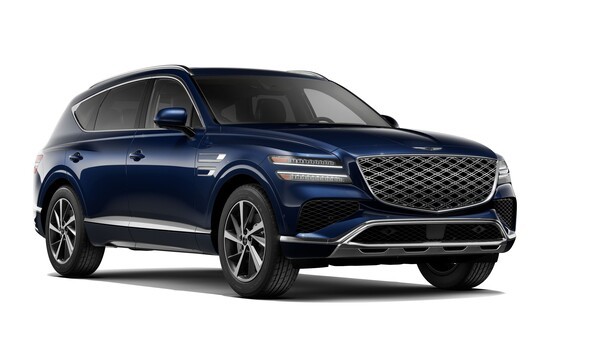
The automakers’ own decisions can no longer be delayed either. The structure in which Hyundai and Kia supply PHEVs to overseas markets while ignoring the domestic market is no longer sustainable. As Genesis plans to introduce its first hybrid model, the GV80 Hybrid, in the second half of 2026, there are growing calls inside and outside the industry for domestic PHEV lineups to be reviewed quickly as well.
Still, the barrier in the Korean market remains high, and Hyundai-Kia’s dominance is solid
Separate from the sense of urgency, there is an important fact to note: BYD is not in a position to threaten Hyundai and Kia overnight in Korea. The structure of the Korean auto market is not so easily broken by Chinese brands.
Hyundai and Kia control more than 80 percent of the domestic market, including internal combustion vehicles. Brand trust, resale value, and after-sales service networks built over decades create entry barriers that BYD cannot easily imitate in the short term.
The numbers show the gap clearly. Hyundai Motor has more than 600 official service centers in Korea. BYD is currently expanding with a target of 35. That is a gap of more than 17 to 1.
In a market like Korea, where the country is small but drivers are demanding, a lack of after-sales service coverage is a fatal weakness. The same goes for used-car residual values. In some European countries, BYD vehicles have seen steep price drops relative to new-car prices within one or two years of launch. That leaves the risk of losses at the time of resale three to five years later for Korean consumers as well.
Software localization is another decisive weakness. There have been repeated complaints that T map and Kakao Navi, which Korean drivers use every day, do not integrate properly, and that the Korean translations in the infotainment system feel awkward.
While the hardware has advanced rapidly, the software is still viewed as being based on the Chinese domestic market. If the everyday conveniences Korean consumers expect from a car are not met, price alone will eventually hit its limit.
Prejudice against Chinese cars is still alive. According to Consumer Insight surveys, the willingness to buy a Chinese EV has risen from the 50 percent range to the 60 percent range, but the share that actually turns into purchases remains low. Curiosity and purchasing decisions are different dimensions. In the same price range, the tendency for Korean consumers to choose Hyundai and Kia has not been broken.
Hyundai and Kia are responding quickly as well. They are directly countering BYD’s price range with affordable EVs in the 30 million won range, such as the Casper Electric, EV3, and EV4.
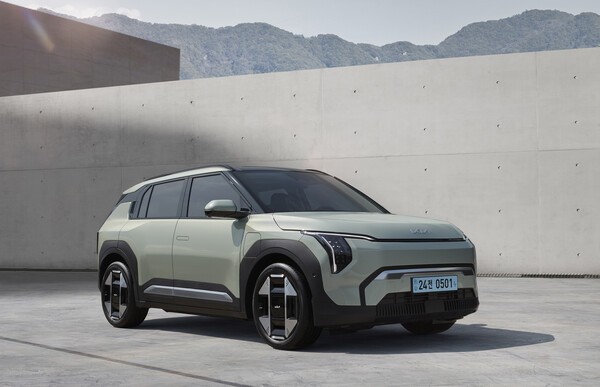
The fully redesigned hybrid Seltos sold 4,983 units in March alone, returning to first place in the small SUV segment. In the same month, the EV3 recorded 4,468 units, pushing the Kona down and taking a de facto second place. That means BYD will need considerably more time to catch up in price, product appeal, and lineup diversity.
The problem is complacency
Still, it is clear that this lead will not last forever. Even if it is not easy for Chinese cars to establish themselves in Korea, if BYD pressures the market with a full lineup combining PHEVs, EVs, and autonomous driving, there is enough potential to shake the rational consumer base in the 30s and 40s.
Cracks have already begun to appear in the EV market. The Tesla shock was decisive. According to the Korea Automobile Mobility Industry Association (KAMA), Tesla’s Model Y sold 50,397 units in Korea in 2025, accounting for 26.6 percent of the passenger EV market as a single model.
That was a 169.2 percent surge from the previous year. The facelifted “Juniper” model, produced at Tesla’s Shanghai factory, drew buyers with its price competitiveness. As a result, Hyundai Motor fell to third place with 55,461 units, overtaken by Tesla’s 59,893 units for the first time. Kia kept first place with 60,609 units, but its lead over Tesla was only 716 vehicles.
Hyundai and Kia’s 80 percent share in the internal combustion market has fallen to 52 percent in the EV market. That is a drop of 6 percentage points in a single year. If Tesla lowers prices further and BYD enters with PHEVs on top of that, the defense line for market share could weaken even more. The baseline for the home market is already shifting.
The solution has two pillars. The government must redesign PHEV subsidies and move away from subsidy-centered promotion policy toward one that strengthens industrial competitiveness.
As in the U.S. IRA, the EU IAA, and Japan’s strategic-sector domestic production incentive system, tax and infrastructure policies are needed to anchor production bases at home.
The automakers must also release the PHEV lineups they supply to global markets in the domestic market and fill the gap themselves. If either of these pillars is missing, BYD will continue to find room to slip in.
The Sealion 6 DM-i is not just another new model. It is a signal flare aimed precisely at a four-year policy vacuum in Korea’s automotive industry.
Fortunately, the Korean market is still Hyundai and Kia’s home turf, and it is not a structure that will easily collapse. But as Tesla has shown, the phrase “home turf” is no longer absolute.
To preserve this advantage, policy and industry must move together. BYD’s card will be unveiled in Busan in June, and only two months remain until then.