
Iran is attempting to rewrite the rules for passage through the Strait of Hormuz. Kazem Gharibabadi, Iran’s Deputy Foreign Minister, disclosed in an interview with Russian Sputnik News on the 2nd (local time), that Iran is drafting a passage monitoring protocol in collaboration with Oman. Although Iran claims the purpose is to ensure safe passage and provide better service, the implications go beyond.
Deputy Minister Gharibabadi emphasized, “We are currently in a state of war,” and stated, “It is inevitable to restrict and prohibit navigation for aggressor countries and their supporters.” This means that ships from the United States, Israel, and countries participating in sanctions against Iran will not be able to pass through the strait.
Separately, on March 30, Iran’s Parliamentary Security Committee approved a bill imposing a passage fee of approximately 2 million dollars (around 3 billion KRW) per ship.
The Strait of Hormuz, through which about one-fifth of the world’s offshore crude oil transport passes, lies within the territorial waters of Iran and Oman. The practical route for large oil tankers is only a 9 km wide waterway on the Iranian side.
Even before the war, Iran used the blockade of the strait as a diplomatic pressure card. Now, it is different. Iran has actually seized control of the strait and is establishing a legal and institutional framework. Bloomberg News pointed out that the number of ships passing through the strait per day dropped from 135 to 6 within a month of the outbreak of the war, indicating that Iran achieved the most significant strategic victory of the war.
There is a structural reason for Iran to pursue a joint protocol with Oman. By involving Oman, which holds the territorial waters on the opposite side of the strait, the legal legitimacy of the control is enhanced. Oman is a country that has maintained diplomatic channels while enduring military conflicts with Iran.
From Iran’s perspective, collecting transit fees can be portrayed as the “cost of security services” by coastal states, similar to the Suez and Panama canals.
However, the United Nations Convention on the Law of the Sea (UNCLOS) stipulates that fees cannot be levied simply for passing through international straits. The fact that Iran has only signed but not ratified the agreement serves as the basis for exploiting this gap.
The United States immediately opposed the move. Secretary of State Marco Rubio strongly criticized Iran’s plan to charge transit fees as “illegal and dangerous to the world.” President Trump clarified his determination to reopen the strait, even mentioning that the US Navy may escort the oil tankers directly. French President Macron demarcated the possibility of forcibly reopening the strait as “unrealistic.”
Internally in Iran, the hardline stance is rather strong. A bill demanding withdrawal from the Nuclear Non-Proliferation Treaty (NPT) has been submitted to parliament. Deputy Minister Gharibabadi himself mentioned that skepticism about NPT compliance is rapidly spreading, citing the fact that nuclear facilities in Bushehr, Ardakan, and Natanz have already been attacked as evidence of the international community’s failure to protect them.
China criticized the attacks on nuclear facilities as “violations of the UN Charter, international law, and IAEA regulations” siding with Iran. Essentially, the confrontation between the US and China is also being reproduced in the strait issue.
Iran’s actions are not wartime control measures. It is interpreted as laying the groundwork to change the legal status of the Strait of Hormuz even after the war ends. Iran has persistently demanded recognition of the strait control rights from the United States at the negotiating table.
The move to bring up the NPT withdrawal card at the same time is in the same context. It is a strategy to link nuclear issues with strait control to expand its leverage in ceasefire negotiations.
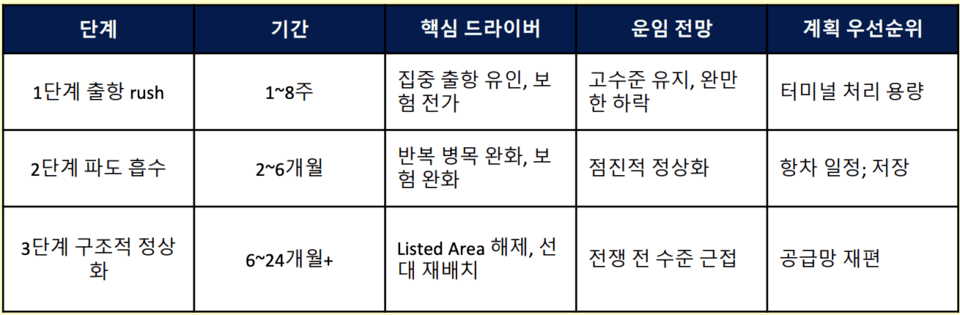
The Hajin Promotion Corporation released a special report on the 2nd, titled ‘Hormuz Transit Resumption and Market Normalization Lag,’ predicting that it could take up to two years for market normalization even if transit resumes. This implies that even after the physical blockade is lifted, legal and commercial uncertainties remain.
Approximately 84% of the crude oil heading to Asian markets pass through this strait. The ramifications of the new order Iran is forming are directly felt in Korea, which has a high dependence on energy imports.
Analysis suggests that if the Strait of Hormuz blockade lasts more than three months, the average production cost of domestic manufacturing could rise by up to 11.8%.
The report released by the Industrial Research Institute on March 19 pointed out that the shock is not limited to oil prices. The dependence on Middle Eastern industrial raw materials such as naphtha, anhydrous ammonia, and helium means that energy supply disruptions simultaneously extend to the supply chains of petrochemicals, semiconductors, and fertilizers.
Experts share a consensus that this risk is not a one-time event but a repeatable structural vulnerability.
▲ The immediate card is strategic oil reserves. The issue is not the quantity but the release speed and terminal processing capacity. Considering the rush of departures that could occur right after the blockade is lifted, an emergency plan to prevent port bottlenecks should come first. A port operation plan to handle an additional backlog of 4 to 8 weeks should be devised now.
▲ Restructuring supply lines is realistically about expanding imports of American oil. Though the transportation cost is a disadvantage, with the Trump administration directly recommending purchases, it can also be used as a trade negotiation card. The Saudi Red Sea route and UAE Fujairah transshipments should be carried out concurrently, but since there are unstable factors in both routes, a decentralized strategy that does not rely on a single alternative is necessary.
▲ The mid-to-long-term task is structural transformation. The key is to reduce the dependency on fossil fuels in the transport sector and also to diversify the procurement of industrial raw materials to regions outside the Middle East. This crisis is a structural risk that could be repeated. If the pace is not accelerated now, the same position will be faced in the next crisis.