
SK Hynix has formally endorsed the use of English within the company. Samsung Electronics has also implemented a guideline from this month that requires all documents exchanged between domestic and international branches to be written in English. The two pillars of the semiconductor industry are moving in the same direction. This is not just a language campaign.
From emails to department names, this is the choice of SK Hynix.
SK Hynix’s AI infrastructure division recently informed its members to include both Korean and English when composing emails. They are also working on changing department names to English and transitioning their business systems to English. In executive meetings, the use of English nicknames is even recommended.
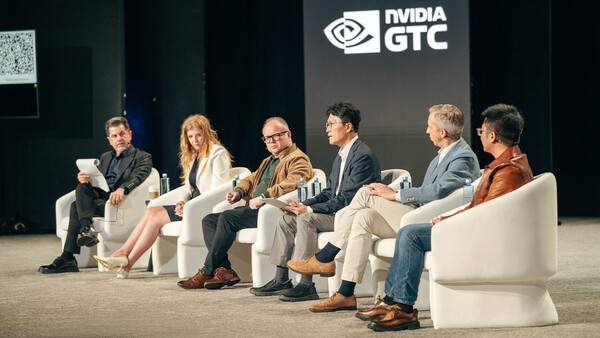
While the term “pilot” is used, the direction is clear. It is expected that this measure will eventually expand to other departments. From March 9, recruitment for global internships in the areas of research and development (R&D) and business is underway. At the communication event held at the end of last month at the Icheon Campus, it was stated that efforts would be made to enable everyday use of English.
The customer has changed.
The change stems from a shift in the customer profile. SK Hynix’s largest customer is NVIDIA. Through the delivery of HBM (High Bandwidth Memory), SK Hynix has become the biggest beneficiary of the AI semiconductor boom. In addition to NVIDIA, American big-tech companies like Google, Microsoft, and Amazon are also listed as core clients.
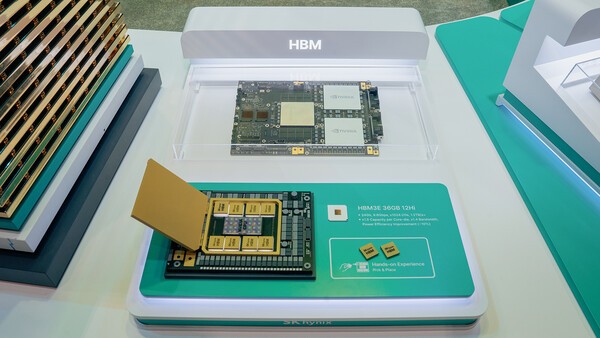
All technology consultations, product planning, and sales meetings with them are conducted in English. The structure where discussions held internally in Korean are then translated into English is disadvantageous in both speed and accuracy. Reducing one stage of communication becomes a competitive edge.
Samsung Electronics understood the same trend. Samsung Electronics, Samsung Display, and Samsung Biologics have implemented guidelines from this month requiring all documents shared between domestic and international branches to be written in English. Through the STEP program introduced in 2022, domestic employees continue to work at overseas branches, and overseas staff work at the South Korean business sites. Samsung Electronics Chairman Lee Jae-yong advised new employees in 2023, stating, “I hope you will study foreign languages more,” and emphasized that “learning a foreign language is learning the thoughts, values, and history of that country.”
English is not a tool but a strategy.
The expansion of English work environments is not merely to enhance communication convenience. It is also directly linked to the recruitment of global talent. For highly skilled international experts who do not speak Korean to adapt to work after joining, the organization’s language must be English. A friendly English-speaking environment becomes a prerequisite for domestic semiconductor companies to secure the world’s top-level engineers and management talent.
Global competitors such as TSMC, Intel, and Qualcomm already operate using English as their basic language. The realization is spreading that Korean companies must have the same conditions to compete within the talent pool.
Of course, the burden on site is not light. The change of business language into English presents a major psychological barrier to employees unaccustomed to English. Fears of reduced productivity also arise. Both Samsung’s full support of the exam fees for seven foreign language conversation exams twice a year and SK Hynix’s expansion of opportunities to participate in English education are measures to bridge this gap.
The domestic semiconductor industry is currently engaged in a fierce language competition, as intense as the technology competition. Writing a single email in English may seem trivial, but it constitutes a contest of who can move faster on the global stage.